
How to Identify and Heal from Unresolved Trauma
Unresolved trauma does not always announce itself loudly. Sometimes it lives quietly beneath the surface of your daily life, shaping your reactions, relationships, and sense of safety without you fully realizing it.
You may tell yourself that what happened was “in the past,” yet certain situations still trigger intense emotions, physical tension, or patterns you wish you could change.
As a therapist, I meet individuals who are functioning well on the outside while carrying unprocessed pain internally. If you have ever felt confused by your own reactions or wondered why certain wounds still feel tender, this conversation is for you.
Subtle Signs Your Past May Still Be Affecting You
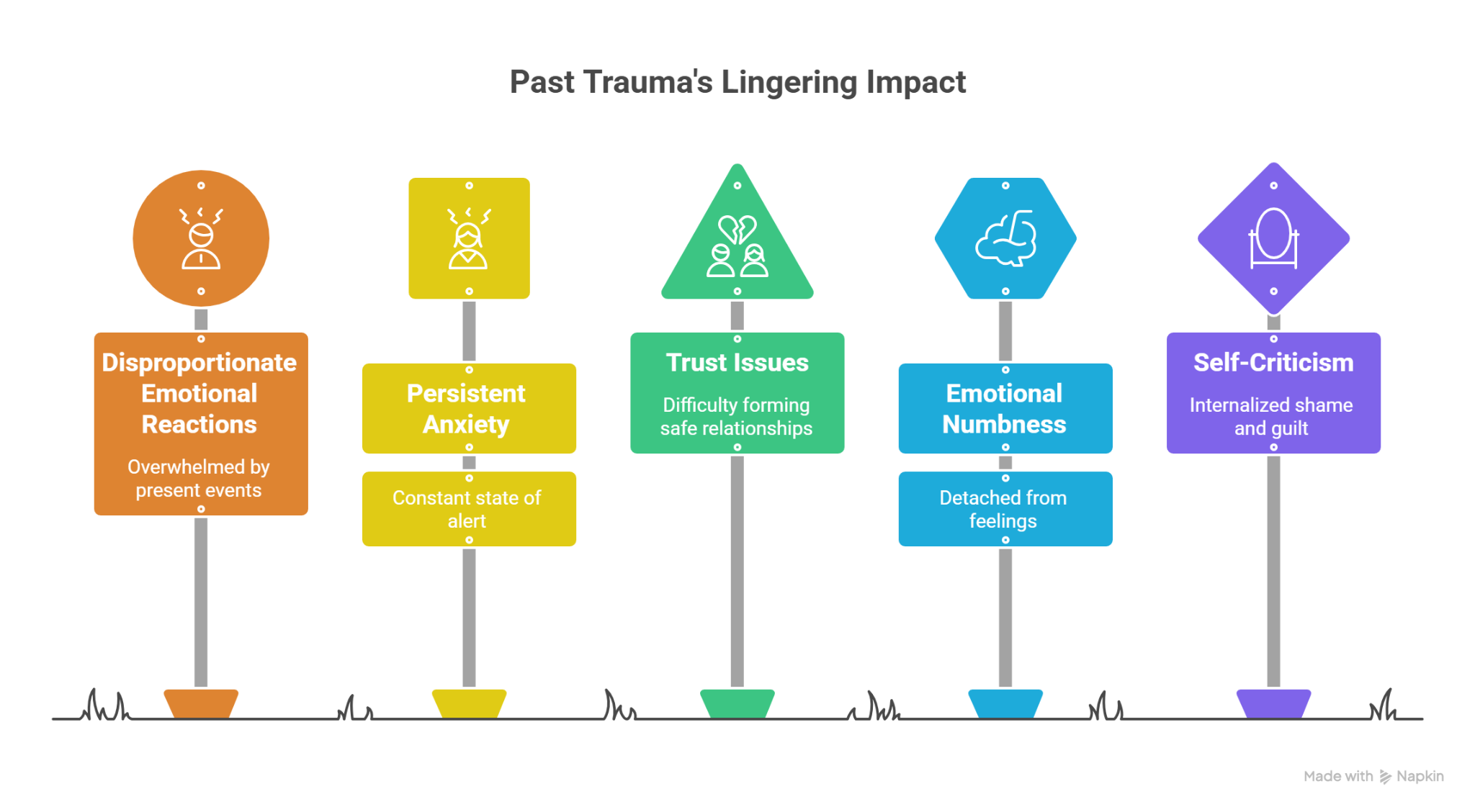 Trauma is not only defined by catastrophic events. It can include experiences where you felt overwhelmed, powerless, or unsupported. When those experiences are not fully processed, they may continue influencing your nervous system and emotional world.
You might notice:
- Strong emotional reactions that feel disproportionate to the present situation.
- Persistent anxiety or hypervigilance.
- Difficulty trusting others or feeling safe in relationships.
- Emotional numbness or detachment.
- Patterns of self-criticism or shame.
These responses are not character flaws. They are adaptive strategies your mind and body developed to protect you. Over time, however, protective strategies can become limiting.
When we gently explore these patterns in therapy, they begin to make sense within the context of your history.
How Unresolved Trauma Shows Up in Relationships
One area where the trauma that is not treated frequently appears is in your relationships. You may long for closeness while simultaneously fearing vulnerability. You might pull away during conflict or become highly sensitive to perceived rejection.
Common relational impacts include:
- Avoiding difficult conversations.
- Expecting abandonment or betrayal.
- Feeling responsible for managing other people’s emotions.
- Struggling to set healthy boundaries.
If early experiences taught you that connection was unpredictable or unsafe, your nervous system may remain on alert. That alertness can shape how you interpret tone, body language, or silence.
Understanding this connection can shift your internal narrative from “What is wrong with me?” to “What happened to me?”
The Nervous System and Why Your Body Remembers
Trauma is not only a cognitive experience. It is physiological. Even when your conscious mind wants to move forward, your body may still react as though the threat were present.
You may experience:
- Rapid heartbeat in certain environments.
- Muscle tension or headaches.
- Digestive discomfort during stress.
- A freeze response when confronted.
These reactions are linked to your fight, flight, or freeze response. When trauma remains unprocessed, that system can become overactive.
In therapy, I work on emotional regulation and grounding techniques to help your body learn that the present moment is safe. Healing involves both the mind and the nervous system.
Differentiating Between Child and Adult Trauma Experiences
Trauma can occur at any stage of life, and the timing matters. Early experiences shape core beliefs about safety, worth, and trust. Later traumatic events may reinforce or challenge those beliefs.
Support for child trauma can help address wounds formed during developmental years, when your sense of identity was still emerging.
If traumatic experiences occurred later in life, therapy focused on adult trauma can help process those memories and reduce their emotional intensity.
Both pathways require compassion. There is no hierarchy of pain.
Emotional Patterns That Often Signal Unresolved Trauma
Rather than focusing only on specific events, it can be helpful to notice recurring emotional themes in your life.
| Emotional Pattern | Possible Underlying Wound | Healing Focus |
| Chronic shame | Early criticism or neglect | Building self-compassion |
| Fear of abandonment | Inconsistent caregiving | Developing secure attachment |
| Hyper-independence | Betrayal or unmet needs | Learning safe interdependence |
| Emotional numbness | Overwhelm or repeated stress | Gradual reconnection with feelings |
This table is not diagnostic. It is a framework to help you reflect. At times, when we identify patterns, we can trace them back to experiences that were never fully processed.
Why Avoidance Can Keep You Stuck
Avoidance is one of the most common coping mechanisms connected to unresolved trauma. You might avoid certain places, conversations, memories, or emotions. In the short term, avoidance reduces distress. In the long term, it can reinforce fear.
You may tell yourself:
- I do not want to think about that.
- It was not that bad.
- Other people have had it worse.
Neglecting your pain does not make it disappear. In fact, suppression intensifies symptoms over time. Healing does not require reliving trauma in overwhelming detail. It involves approaching your experiences gradually and safely, commonly with professional support.
Therapeutic Paths Toward Lasting Recovery
Healing is not about erasing the past. It is about integrating it in a way that no longer controls your present.
In my IFS-based work, I may draw from evidence-based approaches such as:
- Trauma-informed cognitive therapy.
- Mindfulness-based stress reduction.
- Attachment-focused interventions.
- Somatic awareness techniques.
I focus on creating safety first. From there, we explore memories and beliefs together at a pace that feels manageable. You remain in control throughout the process.
Final Thoughts
If you suspect that unresolved trauma may be influencing your thoughts, relationships, or sense of safety, know that you are not alone. Many capable, high-functioning individuals carry invisible wounds. The fact that you are reflecting on this possibility already shows courage.
With my compassionate support, your nervous system can learn safety, your beliefs can shift toward self-worth, and your relationships can feel more secure.
If you are ready to explore these patterns in a safe and confidential space, I’d love to hear from you. Book your first session now!
FAQs
- How do I know if I have unresolved trauma?
If past experiences continue to trigger intense emotions, avoidance, or relationship difficulties, it may indicate lingering effects that would benefit from exploration.
- Can untreated trauma surface years later?
Yes. Trauma responses can emerge or intensify during life transitions, stress, or significant relationship changes.
- Is therapy necessary for healing trauma?
While some people find relief through personal practices, therapy provides structured guidance, emotional safety, and evidence-based tools that speed up healing.
- Will talking about trauma make it worse?
When approached gradually and within a supportive environment, discussing trauma typically reduces its emotional intensity rather than increasing it.
- How long does trauma recovery take?
Recovery varies for each person. Factors such as the type of trauma, available support, and your readiness all influence the pace of healing.
