
Navigating the Pain of Post Traumatic Stress Infidelity
When trust is broken in your relationship, the emotional impact can feel unbearable. For some people, the experience goes beyond sadness or anger and begins to resemble trauma.
Post-traumatic stress infidelity is a term used to describe the intense emotional and physiological reactions that can follow betrayal. If you find yourself replaying what happened, feeling on edge, or questioning your sense of reality, you are not overreacting. Your nervous system may be responding to a profound rupture in safety.
As a therapist, I have sat with many individuals and couples dealing with this painful situation. The reactions you may be experiencing are not signs of weakness. They are human responses to loss, shock, and broken trust.
When Betrayal Feels Like Trauma in Your Body and Mind
Infidelity can shatter your assumptions about your relationship. You may have believed you were safe, valued, and secure. When that foundation is disrupted, your body can respond as though it has experienced a threat.
You might notice:
- Intrusive thoughts or mental images.
- Difficulty sleeping.
- Sudden waves of anger or grief.
- Hypervigilance about your partner’s behavior.
- Trouble concentrating at work or home.
These symptoms mirror trauma responses because betrayal affects attachment. When the person you rely on for emotional safety becomes the source of pain, your nervous system struggles to recalibrate.
This is why the experience of post-traumatic stress infidelity can feel so destabilizing. It touches both your heart and your sense of reality.
Why Your Nervous System Reacts So Strongly
Attachment bonds are powerful. They are wired into you biologically. When that bond is threatened, your brain may shift into survival mode.
You may find yourself scanning for signs of further betrayal. Small inconsistencies might feel amplified. Even neutral events can trigger suspicion or panic.
This response is not about being controlling. It is about trying to regain a sense of safety.
Understanding this biological component can reduce self-judgment. Instead of asking, “Why can’t I just move on,” you might begin asking, “What does my nervous system need to feel secure again?”
The Symptoms of Post-Traumatic Stress Infidelity
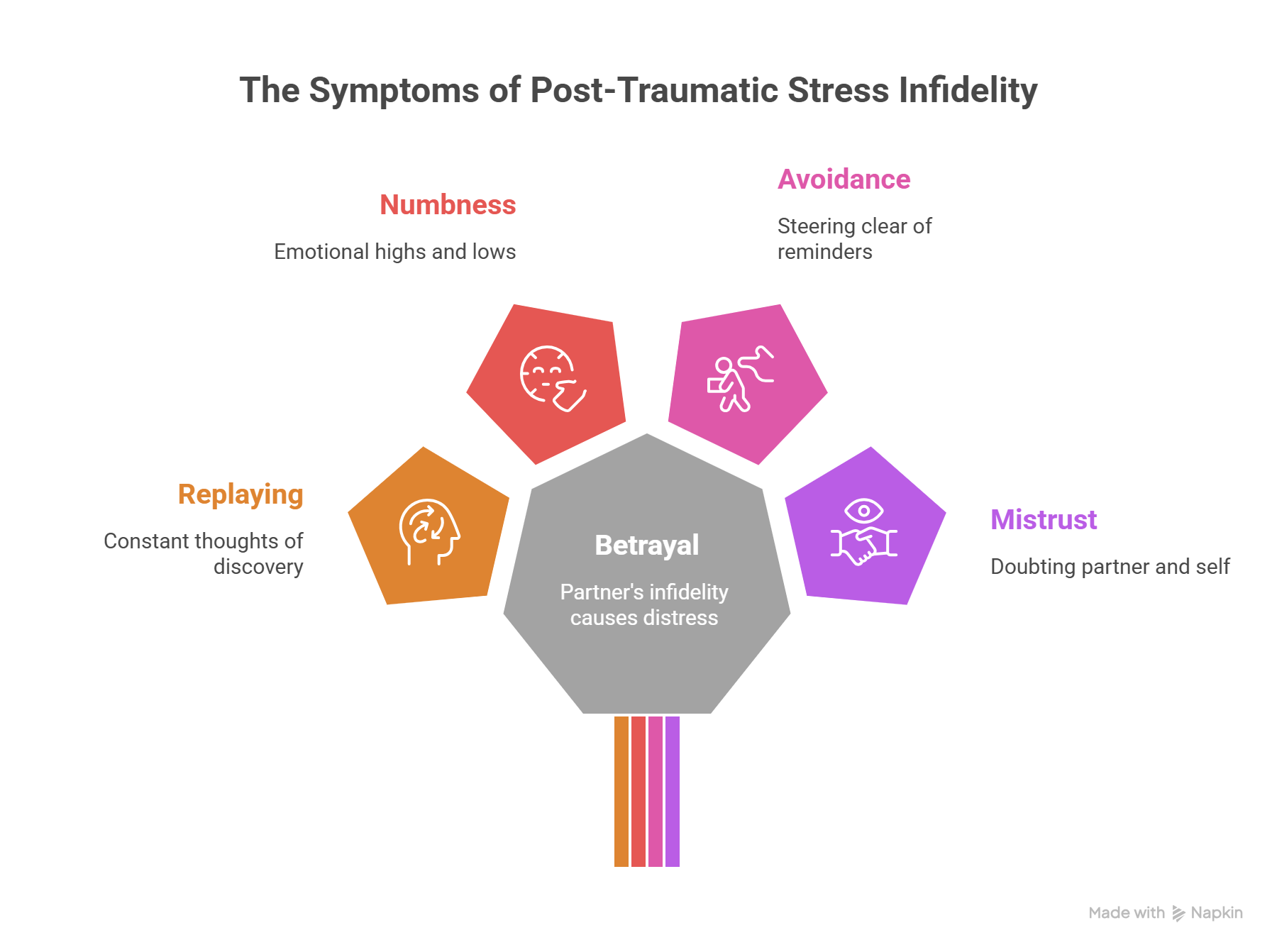 The phrase “post-traumatic stress” captures the depth of distress some people experience after betrayal. While not everyone will meet the criteria for post-traumatic stress disorder, many share similar symptoms.
Common experiences include:
- Replaying conversations or discovery moments.
- Emotional numbness alternating with intense emotion.
- Avoiding places or events that constantly remind you of the affair.
- A loss of trust not only in your partner but also in your own judgment.
You may question your intuition. You may wonder how you missed the signs. Self-blame can quietly take root.
Part of healing involves separating responsibility. Your partner’s decision to betray trust is not a reflection of your worth.
The Impact on Your Identity and Self-Esteem
Infidelity affects more than the relationship. It can impact how you see yourself.
You might think:
- Was I not enough?
- Am I foolish for trusting?
- Will this happen again?
These thoughts are understandable, yet they can erode self-esteem. The betrayal may trigger earlier wounds related to abandonment or rejection. In some cases, working through the experience connects to deeper layers of adult trauma that predate the current relationship.
Healing requires compassion toward yourself. You did not cause someone else’s betrayal.
Deciding Whether to Rebuild or Move Forward
One of the most difficult questions after infidelity is whether to stay or leave. There is no universal answer. The right decision depends on your values, your partner’s accountability, and your emotional safety.
If both of you are willing to engage honestly, structured support through marital and couple therapy can provide a space to process pain and rebuild trust. My therapy can help clarify what repair would require and whether both partners are ready to do that work.
If you choose to move forward independently, therapy can also support you in rebuilding confidence and redefining your boundaries.
Rebuilding Safety Within Yourself Before Rebuilding the Relationship
An overlooked step in healing from post-traumatic stress infidelity is restoring your internal sense of safety.
Before focusing solely on the relationship, consider:
- Can I regulate my emotions during difficult conversations?
- Do I have support outside this relationship?
- Am I caring for my physical well-being?
Grounding techniques, journaling, and reconnecting with trusted friends or family can help stabilize you. When your nervous system feels calmer, you are better able to evaluate your next steps.
Practical Steps for Managing Triggers and Intrusive Thoughts
Triggers may appear unexpectedly. A location, a date, or even a song can activate distress.
You can begin managing triggers by:
- Naming what is happening in the moment.
- Slowing your breathing intentionally.
- Reminding yourself that you are in the present.
- Setting boundaries around transparency and communication.
The experience of post-traumatic stress caused by infidelity involves a tension between needing reassurance and fearing further disappointment. Clear agreements, consistent behavior from your partner, and time are essential components of rebuilding trust.
Wrapping Up
If you are struggling with the aftermath of betrayal, know that your reactions make sense. Post-traumatic stress infidelity reflects the profound impact broken trust can have on your nervous system, identity, and sense of security. You are not dramatic. You are responding to pain.
If you want to explore your next steps in a safe and confidential space, I encourage you to reach out. Together, we can work toward restoring stability, clarity, and emotional resilience.
FAQs
- Can infidelity really cause trauma symptoms?
Yes. Betrayal can activate the same stress responses seen in other traumatic experiences, especially when attachment bonds are disrupted.
- Is it normal to replay the discovery moment repeatedly?
Intrusive thoughts are common after betrayal. They lessen with emotional processing and support.
- Should I stay in the relationship for the sake of stability?
Staying or leaving is a highly personal decision. It is important to evaluate emotional safety, accountability, and your long-term well-being.
- Can trust truly be rebuilt?
Trust can be rebuilt when there is consistent transparency, accountability, and a shared commitment to repair. It takes time and effort from both partners.
