
Is Social Anxiety a Disability? What You Need to Know
Is social anxiety a disability? This is a question that you might frequently think about.
Many people who struggle in social situations ask whether what they are experiencing is “serious enough” to qualify as a disability, or whether they should simply push through it.
The answer is not always easy to understand. It depends on how social anxiety affects your daily life, your work, your relationships, and your overall functioning.
As an IFS therapist, I sit with individuals who reduce their own distress. You might tell yourself that you are just shy, overly sensitive, or not confident enough. Yet the impact on your life may feel much bigger than those words suggest.
Understanding how social anxiety is defined clinically and legally can bring clarity and, perhaps more importantly, self-compassion.
What Thoughts and Emotions Does Social Anxiety Bring?
Social anxiety is more than occasional nervousness before a presentation or meeting someone new. It involves a constant fear of being judged, embarrassed, or negatively evaluated in social or performance situations.
You may notice:
- Intense worry before social events.
- Avoidance of conversations, meetings, or gatherings.
- Physical symptoms like sweating, shaking, or rapid heartbeat.
- Replaying interactions afterward and criticizing yourself.
At its core, social anxiety reflects a deep concern about belonging and safety. Your nervous system may interpret social situations as threatening, even when you logically know they are not dangerous.
This is not a personal weakness. It is a stress response that has become overactive.
Clinical Definitions and When Social Anxiety Becomes Impairing
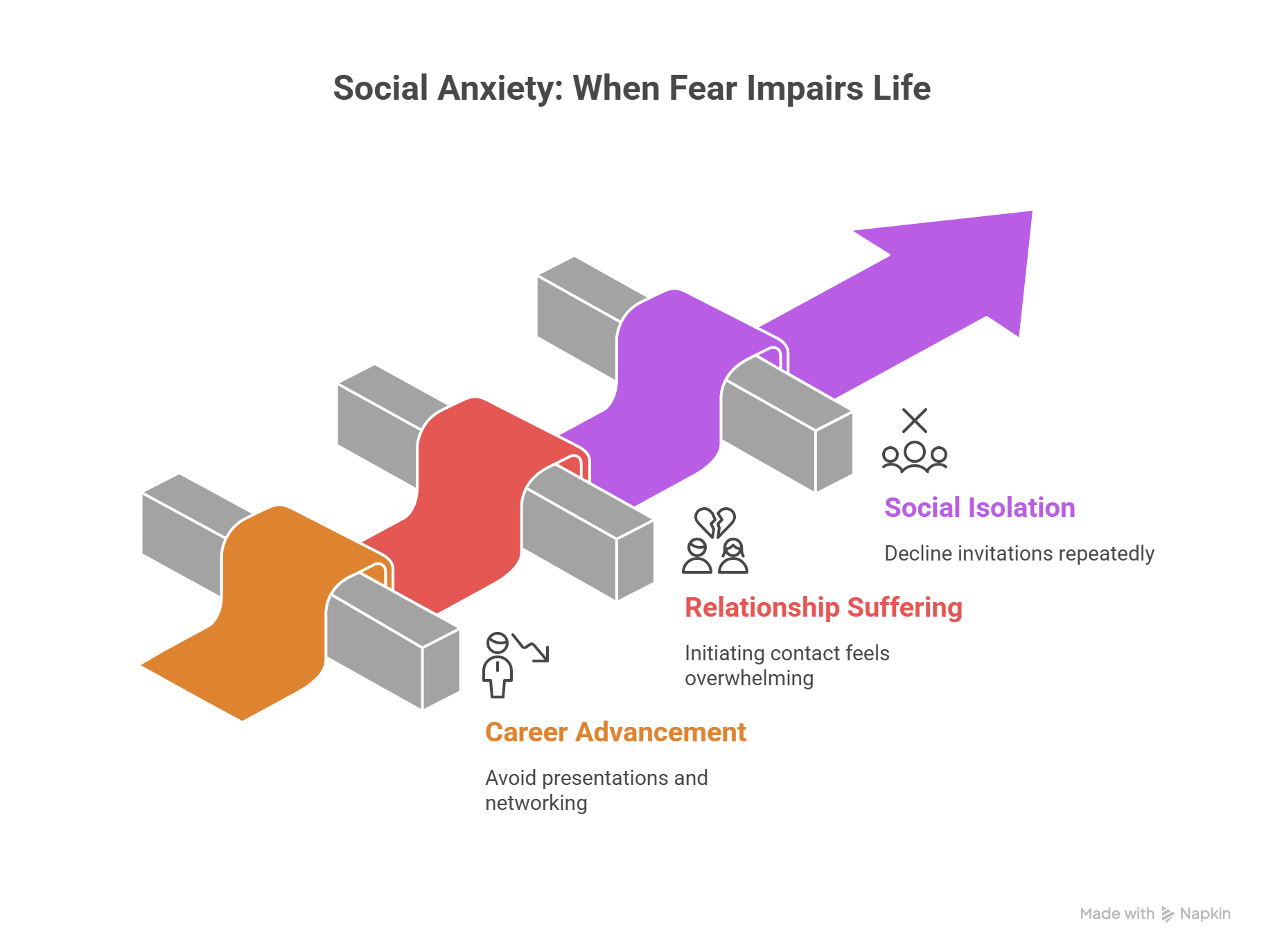 From a clinical perspective, social anxiety disorder is diagnosed when fear and avoidance significantly interfere with your life. The primary word here is interfere.
You might find that:
- Your career advancement is limited because you avoid presentations or networking.
- Your relationships suffer because initiating contact feels too much.
- You decline invitations repeatedly and feel isolated as a result.
When symptoms consistently disrupt important areas of functioning, clinicians consider both the severity and the duration of distress. It is not about how anxious you feel compared to someone else. It is about how anxiety impacts your ability to live the life you want.
If you are struggling in this way, seeking support for anxiety through my therapy can help you better understand what is happening and begin building coping strategies tailored to you.
Is Social Anxiety a Disability in Legal Terms
The question “Is social anxiety a disability?” takes on a different meaning in legal contexts. In the United States, mental health conditions can qualify as disabilities under laws such as the Americans with Disabilities Act if they substantially limit one or more major life activities.
Major life activities include:
- Working.
- Communicating.
- Interacting with others.
- Learning.
If social anxiety significantly restricts your ability to perform these activities, it may meet the legal definition of a disability. This could make you eligible for workplace accommodations, such as modified presentation requirements, remote work options, or adjusted communication expectations.
However, not every experience of social anxiety automatically qualifies. The determination depends on documentation, severity, and functional impairment.
If you are considering requesting accommodations, consulting with a licensed professional can help clarify your situation.
The Emotional Impact of Labeling Social Anxiety as a Disability
For some people, the idea of calling social anxiety a disability feels validating. It acknowledges that your struggle is real and worthy of support. For others, the label may feel heavy or stigmatizing.
You might worry:
- Will this define me?
- Will others see me differently?
- Does this mean something is permanently wrong?
In therapy, I encourage you to view labels as tools rather than identities. A diagnosis or legal classification can open doors to resources and accommodations. It does not capture your full humanity or potential.
Whether or not you choose to embrace the term “disability,” your distress deserves attention and care.
When Social Anxiety Is Connected to Earlier Trauma
In some cases, social anxiety is not just about fear of embarrassment. It may be rooted in earlier experiences of bullying, criticism, neglect, or other forms of relational trauma. If you learned early on that social environments were unsafe or unpredictable, your nervous system may remain on high alert.
Support for adult trauma can be an important part of healing if past experiences continue to shape your present reactions. When we gently explore those earlier wounds during counseling, we discover that your anxiety developed as a form of protection.
Understanding this context can shift your inner dialogue from self-blame to self-understanding.
Treatment and the Possibility of Change
Regardless of whether social anxiety meets a legal definition of disability, it is treatable. Evidence-based approaches such as cognitive behavioral therapy, gradual exposure, and mindfulness-based strategies can reduce symptoms and increase confidence.
In my work together, I might focus on:
- Identifying negative thought patterns.
- Practicing emotional regulation skills.
- Building tolerance for discomfort.
- Developing compassionate self-talk.
You do not have to eliminate anxiety completely to live fully. The goal is not perfection. It is flexibility and resilience.
As you explore the question, is social anxiety a disability, remember that support is available whether or not you pursue a formal label.
Ending Reflections
If you have been quietly asking yourself, is social anxiety a disability, know that the answer depends on both context and impact.
Clinically, it becomes significant when it disrupts your daily functioning. Legally, it may qualify if it seriously limits major life activities. Emotionally, it matters whenever it causes you distress.
If social anxiety is limiting you, I invite you to reach out. In therapy, we can look into the roots of your anxiety, strengthen coping strategies, and help you move toward greater ease and confidence.
FAQs
- Can mild social anxiety qualify as a disability?
Mild or occasional anxiety typically does not meet the legal criteria for disability. The condition must considerably limit major life activities.
- Do I need a diagnosis to receive workplace accommodations?
In many cases, documentation from a licensed professional is required to support accommodation requests.
- Is social anxiety permanent?
No. While it can be persistent, many people experience meaningful improvement with therapy and skill-building.
- How is social anxiety different from shyness?
Shyness is a personality trait. Social anxiety involves severe distress and impairment that affects daily functioning.
