
The stages of grief after a breakup feel confusing and deeply personal, especially when the relationship once felt like home. If that’s where you are, I want you to know that nothing about your reaction means you are weak or doing wrong. Grief after a breakup is real grief.
I see this kind of heartbreak often in my work, and it’s one of the reasons I approach breakup grief with so much care. With over 30 years of experience working with adults navigating loss, trauma, and relationship wounds and being licensed in both Maine and New Hampshire, I focus on helping people make sense of emotional pain.
What are the Stages of Grief After a Breakup
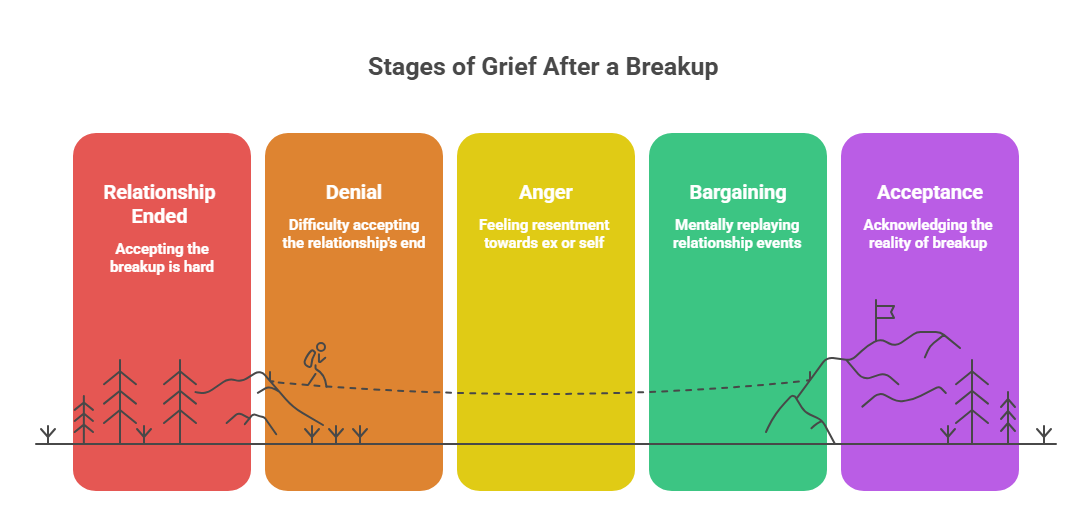
When people talk about the stages of grief after a breakup, they’re often referring to a framework adapted from Elisabeth Kübler-Ross, which is as follows:
- Denial: Finding it hard to accept that the relationship has ended.
- Anger: Feeling a grudge toward your ex or yourself.
- Bargaining: Mentally replaying the relationship or believing that change might restore what was lost.
- Depression: Experiencing deep sadness, emptiness, and withdrawal.
- Acceptance: Acknowledging the reality of the breakup.
Why Denial Often Shows Up First After a Breakup
Early on, your nervous system may struggle to process the loss, especially if the breakup was sudden or involved betrayal. You might catch yourself thinking that it cannot be over like this. Also, research shows that nearly 80% of people report depression after a breakup, and most describe heartbreak as more painful than physical pain.
In the stages of grief of a relationship breakup, denial acts like a temporary buffer. It gives your mind time to adjust before reality settles in. For people with earlier experiences of abandonment, neglect, or emotional shame, this stage can feel intense.
How Anger Fits into the Grieving Process of Breakup
You might feel angry at your ex, at yourself, or at the time you invested. In the grieving process of a breakup, anger can be energizing. But anger can also hide other feelings like shame, sadness, or fear of being alone.
In my work with adults who have lived through abusive or neglectful childhood environments, anger after a breakup can even scratch the older wounds. This is often where depression therapy becomes helpful to understand the stages of grief after a breakup.
What Bargaining Looks Like in the Grief Stages in a Breakup
In the grief stages of a breakup, bargaining can feel exhausting because it keeps you emotionally tied to the relationship.
These stages of grief of a breakup are especially common in people who learned early in life that love had to be earned. However, recognizing bargaining is not about stopping thoughts but noticing them and understanding what they are trying to fix.
When Sadness Turns into the Heavy Middle of Grief
Depression in breakup grief doesn’t always look like crying all day. It can be numbness, low energy, withdrawal, or a quiet sense of emptiness. In the phases of grief of a breakup, this stage often feels endless.
Those living with Dissociative Identity Disorder (DID), this phase can trigger dissociation or emotional shutdown. I work with clients who have DID, and we approach this stage with care and deep respect for how the system learned to survive.
What Acceptance Means after a Breakup
In the stages of grief after a breakup, acceptance is about acknowledging reality without constant resistance. The relationship ended. It mattered. And your life continues.
This is often where people begin to reflect on patterns with the support of relationship counseling to rebuild trust in themselves and others.
Is the Breakup Grieving Process always Non-linear
Yes, the breakup grieving process doesn’t follow a straight line. Besides, if you have a history of childhood adversity, including abuse, shame, or neglect, breakups can reopen attachment wounds that existed before the relationship.
How Earlier Trauma Can Intensify Grief After a Breakup
For adults who experienced unsafe caregiving, breakups can bring these feelings back. While I don’t provide child therapy, I work with adults processing childhood trauma. This deeper work can be supported through trauma-focused approaches, such as childhood trauma therapy for adults, that navigate how your system adapted to survive.
How Long Do the Stages of Grief Last After a Breakup
There is no fixed timeline. Many people notice the emotional pain easing within a few months, while others take longer. The key to the stages of grief after a breakup is self-compassion that you can attain from professional support.
FAQs
How long do the stages of grief last after a breakup?
There is no universal timeline. Some people feel stable within months, while others take a year or more.
What is the 72-hour rule after a breakup?
The 72-hour rule suggests avoiding contact or major decisions for three days. It allows emotions and stress responses to settle before reacting in ways you might later regret.
What is the 3-week rule of breakups?
The 3-week no-contact rule encourages space from your ex to reduce emotional dependency, gain clarity, and begin self-reflection.
Is it normal to feel shame after a breakup?
Yes, shame is common, especially for people who assume relationship endings as personal failure. Addressing shame with compassion is a crucial part of healing.
Moving Forward with Support
Healing from the stages of grief after a breakup is not about fixing yourself but understanding what hurts and why. Also, it does not happen overnight because emotions take time to settle in and accept the reality. And for that, you can also seek support from a professional counselor.
With over 30 years of experience, licensed in Maine and New Hampshire, I offer a space where your complex grief, trauma histories, DID, and relationship pain are met with respect and care. If you are ready to explore healing at your own pace, you can learn more about my work at Arlene Brewster, PhD. Take your time, be gentle with yourself, and trust that healing will come
