
Living in a marriage that feels confusing or emotionally draining can slowly affect how you see yourself, and has probably brought you here to learn about the 10 signs of a narcissistic husband and compare them with your situation.
As a professional, my goal is not to label anyone but to help you understand “what is a narcissist in a relationship?” and what you are facing feels painful. Before we move forward, it helps to understand that the narcissist’s meaning in a relationship often involves emotional imbalance and lack of empathy, which brings the other partner’s sense of safety down.
The 10 Signs of a Narcissistic Husband at a Glance
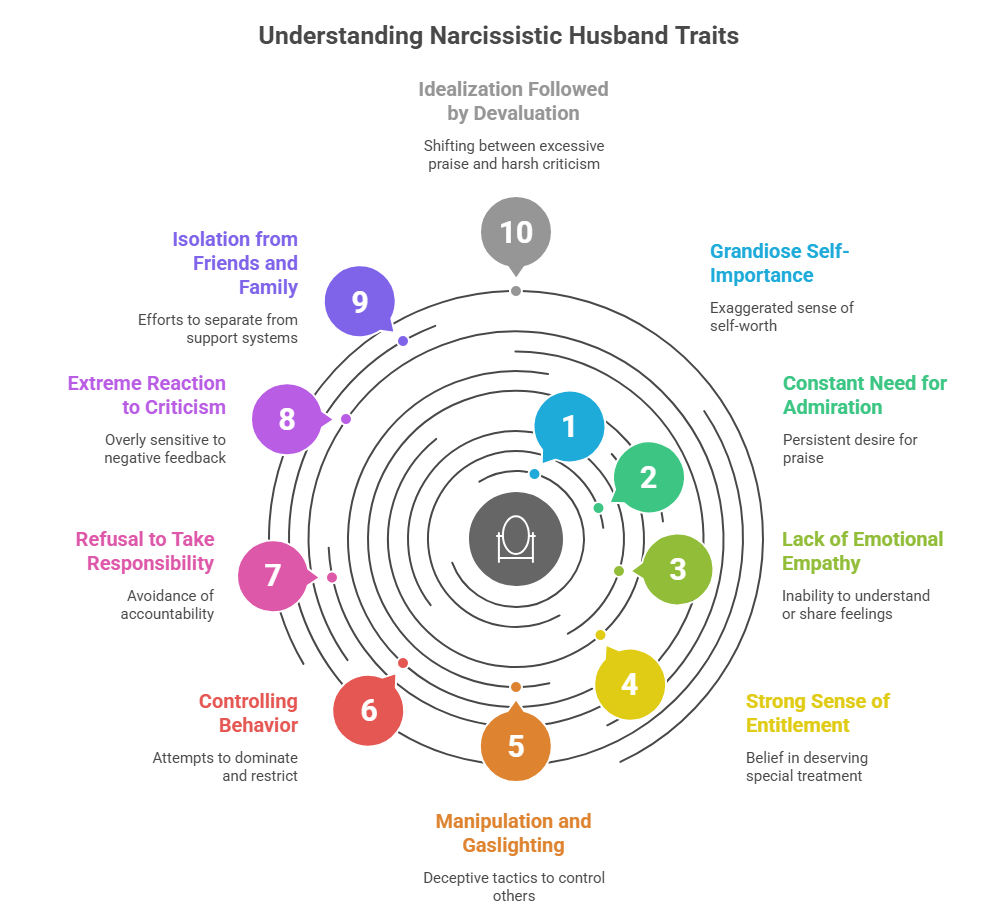
Here are the 10 narcissistic husband traits:
- Grandiose self-importance
- Constant need for admiration
- Lack of emotional empathy
- Strong sense of entitlement
- Manipulation and gaslighting
- Controlling behavior
- Refusal to take responsibility
- Extreme reaction to criticism
- Isolation from friends and family
- Idealization followed by devaluation
Each of these signs can show up differently, but together they form a pattern that deeply affects emotional well-being. Psychological aggression is one of the most common forms of partner abuse. The CDC data shows that tens of millions of people have experienced emotional or psychological harm from partners in their lifetime.
1. Grandiose Sense of Self-Importance
One of the most noticeable narcissistic husband traits is believing he is more important than others. He may exaggerate achievements, talk over you, or dismiss your opinions as unimportant.
Over time, this creates an uneven relationship where your thoughts and feelings are pushed aside. Many partners slowly stop speaking up, which can lead to self-doubt and emotional shutdown.
2. Constant Need for Praise and Attention
A narcissistic husband often needs steady attention to feel secure. Compliments are expected, not appreciated, and attention must stay focused on him. If praise fades, he may become distant, angry, or critical. This keeps you busy managing his emotions, leaving little space for your own needs or feelings.
3. Lack of Emotional Empathy
When you are upset, stressed, or hurt, he may ignore your feelings or tell you that you are overreacting. This type of narcissistic behavior in a relationship can feel deeply lonely.
Over time, you may stop sharing emotions altogether because it feels pointless or unsafe. Emotional distance becomes the norm, even in moments when you need support most. Among the 10 signs of a narcissistic husband, it is the common one and often appears as the first sign in many.
4. Strong Sense of Entitlement
Entitlement shows up when he expects special treatment without offering it in return. He may expect forgiveness, flexibility, or loyalty while giving very little back. This pattern can feel especially heavy for those who grew up with emotional neglect, where putting others first felt like survival rather than choice.
5. Manipulation and Gaslighting
An example of narcissistic behavior is gaslighting, which involves denying conversations, twisting facts, or making you question your memory. This creates confusion and shame in you as time passes.
Many people begin to doubt themselves deeply. But with the help of trauma-informed relationship counseling, you can rebuild self-trust and emotional clarity.
6. Controlling Behavior
Controlling is another common trait among the 10 signs of a narcissistic husband. It involves finances, friendships, routines, or how you express emotions, and often starts small and grows over time. As control increases, isolation often follows. Losing outside support makes the relationship feel harder to challenge and even harder to leave.
7. Refusal to Take Responsibility
Another of the 10 signs of a narcissistic husband is avoiding accountability. Mistakes are blamed on you, stress, or other people. And even if you offer apologies, your partner feels that it is strategic. This keeps you stuck explaining and defending yourself while your needs remain unmet.
8. Extreme Reaction to Criticism
Even gentle feedback may trigger anger or defensiveness. This teaches you to stay quiet to avoid conflict. However, silencing yourself can affect confidence, decision-making, and emotional health, and your voice slowly disappears from the relationship.
9. Isolation from Friends and Family
Isolation often happens quietly. He may criticize your loved ones or create tension around social plans. And as your support system shrinks, emotional dependence grows. In many cases, couples therapy helps clarify whether healthier communication is possible.
10. Idealization Followed by Devaluation
Early in the relationship, you may have felt deeply admired. Later, that admiration turns into criticism. This shift leads many people to ask, “Is my husband a narcissist?” especially when the relationship no longer resembles how it began. This cycle is one of the clearest signs of a narcissistic husband.
How These Patterns Affect Mental Health
Living in this dynamic often leads to anxiety, loss of identity, emotional numbness, and deep shame. I work with adults who have experienced abusive relationships, childhood adversity, and neglect, including clients with Dissociative Identity Disorder (DID).
When sexual boundaries have been violated, sexual abuse therapy provides a safe, structured space to heal without pressure or judgment.
FAQs
How do you shut down a narcissistic husband?
By setting clear boundaries. Also, you do not need to justify or defend yourself, and let boundaries protect your well-being.
What is a narcissist’s biggest fear?
Narcissists’ biggest fear is being exposed for who they truly are, which threatens their carefully maintained image.
What are the 3 E’s of narcissism?
Empathy impairment, Entitlement, and Exploitation of others for personal gain.
What is a narcissistic husband?
He is someone whose repeated patterns of control, emotional disconnection, and self-focus harm the relationship.
Moving Forward with Clarity and Support
Recognizing the 10 signs of a narcissistic husband is not about blame but understanding your experience and protecting your emotional health. Awareness is often the first step toward regaining your sense of self.
If you are ready to explore healing, you can learn more about my work at Arlene Brewster, PhD. Being a licensed therapist in Maine and New Hampshire with over 30 years of experience, I truly understand that you deserve support that respects your story and helps you move forward in life with strength and clarity.
