
The most common and painful question I hear in my work with couples and individuals is how to rebuild trust in a relationship. When trust breaks, it can feel like the ground underneath love has suddenly gone. However, rebuilding it is possible with commitment, clarity, and the right kind of support.
I have spent over 30 years working with adults navigating trauma and deep emotional injuries. I am licensed in Maine and New Hampshire, and my approach is grounded in compassion, nervous-system safety, and respect for how hard this work truly is.
How to Rebuild Trust in a Relationship Safely
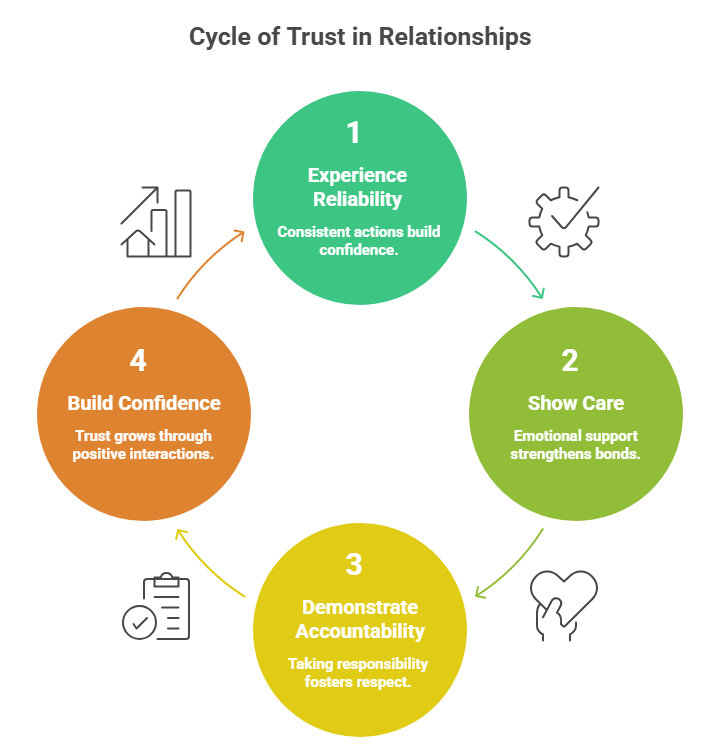
Trust is the felt sense that your partner is emotionally and physically safe, consistent, and honest, even when things are uncomfortable. The definition of trust in a relationship is not blind faith but a confidence that is built through repeated experiences of reliability, care, and accountability.
When clients ask me, “What is trust in a relationship?”, I often describe it as knowing you don’t have to stay guarded all the time. Trust allows vulnerability. It supports love and trust growing side by side rather than fear.
Why Is Trust Important in a Relationship
People often underestimate the question of why trust is important in a relationship until it’s gone. Without trust, even small interactions feel heavy. Over time, this can impact emotional, communication, and even self-worth. The recent U.S. data shows that roughly one in three first marriages ends in divorce, underscoring how common relationship strain is today.
In my clinical work, I also see how broken trust revives old wounds, especially for adults who experienced childhood abuse or neglect. For many, the loss of trust brings up intense shame, fear of abandonment. This is where rebuilding trust becomes not just relational work, but healing work because you begin to understand what trust in a relationship means.
How to Rebuild Trust in a Relationship After It Has Been Broken
The process starts with responsibility and transparency from the partner who broke trust and emotional safety for the partner who was hurt.
Repair requires consistency over time, not grand gestures. Trust grows when words and actions finally line up. This is where building trust shifts from an idea into daily practice.
What Should the Partner Who Broke Trust Do First
Rebuilding trust begins with owning your actions fully. An honest apology shows that you understand the impact, not just the mistake. Transparency is key here. Openness around communication, schedules, and emotional availability helps answer the unspoken question, which is the foundation of how to build trust again.
For many couples, structured support like couples therapy creates a safer atmosphere for these conversations, especially when emotions run high.
How Can the Hurt Partner Heal Without Hurrying in Forgiveness
Healing does not mean pretending everything is fine but expressing pain honestly, setting boundaries, and giving yourself permission to take time. Learning how to trust your lover again is not about forcing forgiveness but listening to your nervous system and your needs.
I often remind clients that patience here is not passive. It’s active self-protection. When people ask me about trust in love, I emphasize that real trust includes space for anger, grief, and clarity.
How Do Both Partners Rebuild Trust Together
Reconnection happens when both partners commit to open communication and new patterns. This is where developing trust in relationships becomes a shared responsibility. Small, consistent practices like checking in daily, following through on promises, and repairing quickly after conflict matter more than dramatic statements.
Besides, many couples benefit from relationship advice that is grounded in trauma-informed care. Support like relationship counseling can help you unpack deeper patterns, especially when trust issues are tied to attachment or past trauma.
How Does Past Trauma Affect Trust in Adult Relationships
For adults with a history of abuse, trust breaks often cut deeper. I work with adults who live with complex trauma, including clients with DID (Dissociative Identity Disorder), where trust absence can feel overwhelming.
Understanding how to develop trust in a relationship in these cases means slowing the process down. Safety comes first. When childhood adversity is involved, trust repair often overlaps with trauma healing and addresses the parts of you that learned closeness was not safe.
For some, this work connects back to unresolved childhood experiences, including neglect, which I address in adult-focused trauma work like childhood trauma support therapy.
How Long Does It Take to Rebuild Trust
How to rebuild trust in a relationship does not come with a timeline. Trust is rebuilt through repetition, showing up, repairing mistakes, and staying emotionally present even when the partner feels uncomfortable.
The goal is not perfection but having consistency in effort. Over time, these moments create a new emotional reality, where trust in love feels possible again.
When Is Professional Help the Right Choice
When conversations turn into constant conflict or a complete shutdown, outside support can make a difference. Therapy provides a space where both partners feel heard, understood, and guided without blame.
In my practice, I integrate an IFS-informed approach to help couples and individuals rebuild safety, reduce shame, and reconnect with themselves and each other.
FAQs
Can a relationship recover from broken trust?
Yes, recovery is possible when both partners are committed to honesty, accountability, patience, and consistent effort over time.
How do you know a relationship is over?
A relationship may be ending when emotional connection is gone, effort stops on both sides, communication shuts down, and there is no willingness to repair.
Is rebuilding trust harder after repeated betrayals?
Yes, repeated betrayals often require deeper work, clearer boundaries, and professional support to assess whether repair is realistic.
Does rebuilding trust mean forgetting what happened?
No, rebuilding trust means understanding what happened, learning from it, and creating safer patterns.
A Final Word on Moving Forward
If you are asking yourself how to rebuild trust in a relationship, you are already taking a meaningful first step. Healing trust is about creating safety, accountability, and compassion.
If you are looking for professional support, I am happy to assist you with my vast 30 years of experience as a licensed therapist in Maine and New Hampshire. You can learn more about my approach at Arlene Brewster, PhD, and rebuild your life around trust.
