
How to Let Go of the Past and Reclaim Your Future
If you have been searching for how to let go of the past, you may already feel tired of carrying memories that still sting. You might replay conversations, revisit painful chapters, or feel triggered by reminders you thought you had moved beyond.
Letting go is not about pretending something did not happen. It is about loosening the grip those experiences have on your present life.
As an IFS therapist, I interact with people who feel frustrated with themselves for “not being over it.” What I gently remind them is this: your mind and body hold onto experiences for a reason.
Healing is not about force. It is about understanding, processing, and integrating what happened so you can move forward with greater freedom.
Why Your Mind Holds On to Certain Memories or Fears
Your brain is designed to protect you. When something painful or overwhelming happens, your nervous system records it carefully to prevent future harm. In that sense, holding on once served a purpose.
You might find yourself:
- Overanalyzing past mistakes.
- Replaying conflicts in your head.
- Feeling guarded in new relationships.
- Avoiding situations that resemble earlier pain.
These reactions are not signs of weakness. They are protective adaptations. The challenge arises when those adaptations continue long after the threat has passed.
When we explore how to let go of the past, we are really asking how to teach our nervous system that we are no longer in danger.
The Difference Between Suppressing and Releasing
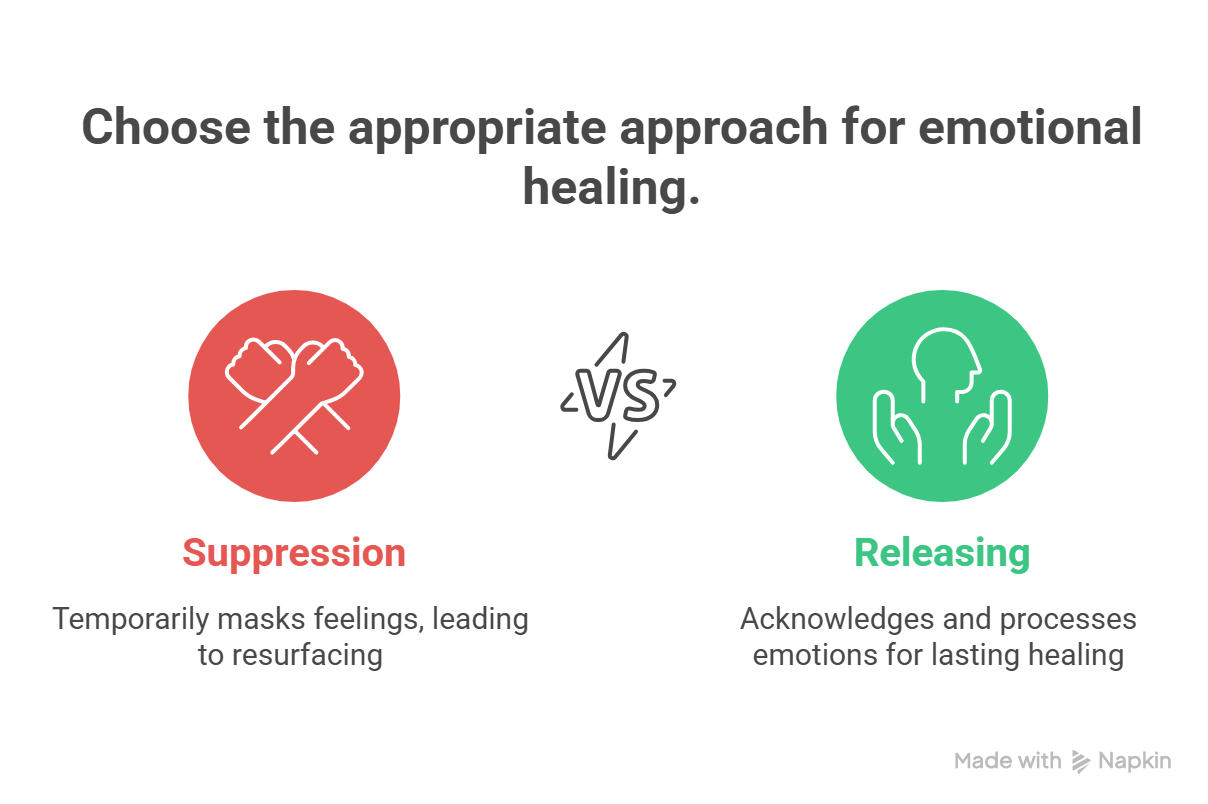 One of the most misunderstood aspects of healing is the belief that letting go means pushing feelings away. Suppression may work temporarily, but it leads to resurfacing emotions later.
Releasing is different. Releasing involves:
- Naming what happened.
- Acknowledging how it affected you.
- Allowing yourself to feel without judgment.
- Gradually shifting the meaning you attach to the experience.
In my therapy, this process unfolds at a pace that feels manageable. If your past includes experiences such as child trauma, those early wounds may require gentle exploration.
Similarly, survivors of sexual assault benefit from trauma-informed approaches that prioritize safety and control.
How to Let Go of the Past by Reframing Your Inner Narrative
A powerful step in letting go of the past involves examining the story you tell yourself about what happened.
You may carry beliefs such as:
- It was my fault.
- I should have known better.
- I am permanently damaged.
These interpretations create more suffering than the memory itself. Cognitive reframing does not mean denying responsibility where it exists. It means viewing events within a broader, more compassionate context.
You might begin asking:
- What did I know at the time?
- What strengths helped me survive?
- What would I say to a close friend in my position?
Shifting your inner narrative can reduce shame and open space for growth.
Reconnecting with Your Present Identity
Another aspect of healing is reconnecting with who you are now. When you stay anchored in old pain, it can become central to your identity.
Consider reflecting on:
- What values guide me today?
- What relationships feel supportive?
- What qualities have I developed through adversity?
You are not the same person you were during that painful chapter. Growth occurs quietly. Recognizing it helps rebalance your perspective.
This step is essential in understanding how to let go of the past without dismissing its impact.
Practical Daily Practices That Support Emotional Release
Healing does not happen only in therapy sessions. Small daily practices reinforce your progress.
You might experiment with:
- Grounding exercises to calm your nervous system.
- Journaling focused on self-compassion.
- Mindful breathing when intrusive memories arise.
- Limiting rumination by gently redirecting your attention.
Below is a simple framework to guide reflection:
| Experience | Automatic Thought | Compassionate Reframe | Present Choice |
| Painful memory | I ruined everything | I did the best I could with what I knew | I can act differently now |
| Betrayal | I cannot trust anyone | Some people have hurt me, others have not | I can build trust gradually |
| Loss | I will never feel whole | Grief reflects love and attachment | I can honor the past while living fully |
When Letting Go Feels Threatening
For some people, the idea of releasing the past feels frightening. You may worry that letting go means ignoring what happened or excusing harm.
Letting go does not mean:
- Forgetting.
- Approving of hurtful behavior.
- Losing your boundaries.
Instead, it means reducing the emotional charge so the memory no longer controls your reactions. You can still honor your experience while choosing not to relive it daily.
If you find resistance arising, that is information rather than failure. We can explore that resistance gently during counseling.
Building a Future That Is Not Defined by Old Pain
Part of how to let go of the past involves actively building something new. When you focus only on what you are trying to release, you may overlook what you are moving toward.
Consider:
- What relationships do I want to cultivate?
- What goals feel meaningful now?
- What small steps would align with my current values?
Forward movement does not require grand gestures. Consistent, intentional choices gradually shift your trajectory.
You are allowed to create a life that reflects who you are today, instead of who you were in pain.
Takeaway Message
The desire to let go of the past itself signals readiness for change. You deserve to live in the present without being pulled backward by unresolved memories.
Letting go is not about erasing your story. It is about reclaiming authorship of the next chapter. If you feel ready, let’s work together in a space that is safe and private. Together, we can explore what still feels heavy and move toward a future shaped by healing and mindful choice.
FAQs
- Why is it so hard to let go of painful memories?
Painful experiences are stored in both emotional and physiological memory. Your brain holds onto them as a protective mechanism.
- Does letting go mean forgiving someone?
Not necessarily. Forgiveness is a personal choice. Letting go focuses on reducing the emotional grip of the experience.
- Can trauma from childhood affect my present relationships?
Yes. Early experiences can shape attachment patterns, trust, and emotional regulation later in life.
- How long does it take to move on from the past?
Healing timelines vary. The process depends on the nature of the experience, available support, and your readiness.
