
When exploring marriage counseling vs couples therapy, understanding the core differences can help you determine the exact level of support your relationship needs right now. Many partners find themselves feeling disconnected, stuck in cyclical arguments, or wondering why past conversations never seem to resolve. Choosing the appropriate therapeutic framework allows you and your partner to focus your emotional energy where it matters most.
In my more than 30 years of clinical practice as a psychologist and Certified IFS Therapist, I have guided countless couples through both targeted problem solving and deep emotional repair. While these two approaches share the common goal of relieving relationship distress, their focus, timeline, and clinical depth differ in fundamental ways.
What Marriage Counseling Typically Involves
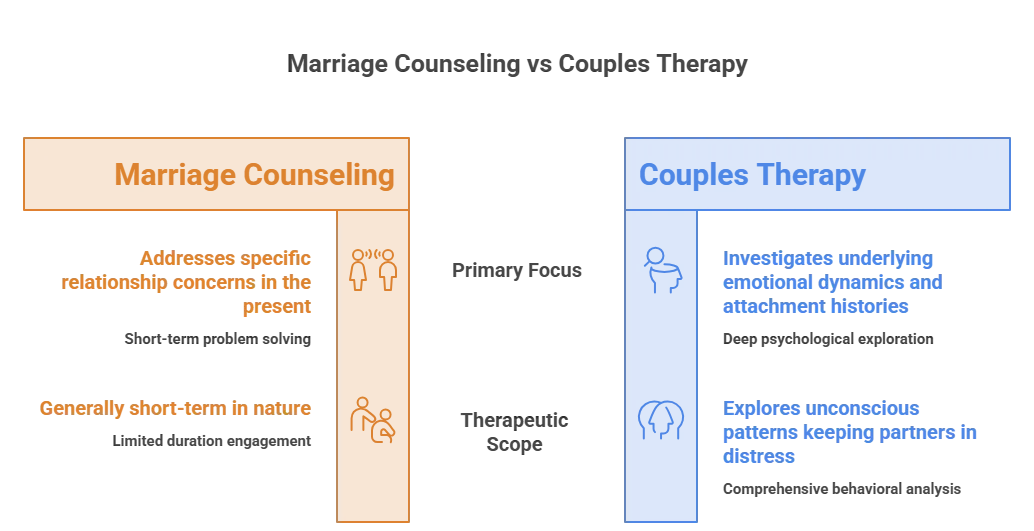
The distinction between marriage counseling vs couples therapy often starts with the purpose of treatment. Marriage counseling is generally short-term and focuses on addressing specific relationship concerns in the present.
The structure of marriage counseling is often focused on brief interventions, typically spanning six to twelve sessions. You and your partner work collaboratively to build actionable coping tools and de-escalation techniques that can be used immediately at home. According to the AAMFT, relational therapy can help partners recognize patterns of behavior that affect their relationships and work toward healthier interactions.
Couples often choose marriage therapy when their foundation feels reasonably stable, but external stressors have caused temporary friction. This practical style of couples counseling gives partners concrete strategies to restore cooperation and mutual respect without spending months analyzing emotional history.
How Couples Therapy Explores Root Patterns
When comparing marriage counseling vs couples therapy, the most significant distinction lies in depth and emotional focus. While counseling addresses current behaviors, couples therapy investigates the underlying emotional dynamics, attachment histories, and unconscious patterns that keep partners locked in relationship distress.
In my clinical work, couples therapy often reveals that modern arguments are driven by unresolved emotional wounds. One partner may shut down during disagreements because early family instability made emotional expression feel dangerous. Another partner may become intensely demanding because early emotional neglect created a fear of abandonment. These entrenched cycles rarely respond to simple communication tips alone.
Using Internal Family Systems, or IFS, I help partners identify the protective parts of themselves that fuel defensiveness and reactivity. By helping both individuals step into compassionate Self energy, couples therapy fosters authentic intimacy and emotional safety that lasts far beyond surface-level behavioral changes.
Why Trauma and Deep Adversity Require Couples Therapy Over Counseling
One of the most important factors I consider when helping couples evaluate marriage counseling vs couples therapy is whether unresolved childhood trauma is actively shaping the partnership. When early adversity is present, surface-level problem-solving often fails because the nervous system remains in a chronic survival state.
Adults who experienced childhood abuse, neglect, emotional abandonment, or chronic family instability often enter relationships carrying deep-seated shame and hypervigilance. These emotional burdens can turn simple disagreements into perceived threats to safety. For partners navigating these complex layers, specialized couples therapy provides the sustained, trauma informed space necessary for genuine healing.
At my practice, Brewster PhD, I bring over 30 years of clinical expertise to untangling how early family adversity impacts adult partnerships. I work exclusively with adults and do not provide child therapy, focusing my clinical practice entirely on helping adult individuals and couples heal historical wounds.
My specialized background also includes extensive experience supporting adults living with Dissociative Identity Disorder, or DID, a complex trauma condition that deeply influences trust and relational connection.
Navigating Online Marriage Counseling and Couples Therapy Sessions
All of my clinical sessions take place through secure online video platforms, allowing you and your partner to engage in therapy from the privacy and comfort of your home. I am licensed in Maine and New Hampshire and offer online sessions to adult clients across the United States.
Participating in virtual sessions eliminates travel stress and allows both partners to engage in delicate conversations within a familiar, grounded environment. This format is especially supportive when exploring vulnerable emotions, parts work, or traumatic memories that require a strong sense of personal comfort.
For couples seeking to resolve ongoing relationship distress, engaging in consistent relationship counseling online provides a steady, reliable rhythm for long-term growth. Whether you begin with focused marriage therapy or transition into deeper exploratory work, virtual access ensures your relationship care remains consistent and manageable.
Choosing Between Marriage Counseling and Couples Therapy
Deciding between marriage counseling vs couples therapy depends on the nature and depth of the struggles you are experiencing together. If your relationship feels secure but needs focused problem-solving for a specific life event, marriage counseling may be the ideal starting point. If you find yourselves trapped in recurring emotional disconnection, deep resentment, or mistrust, deeper couples therapy is typically the more effective choice.
In my practice, many couples begin by addressing communication hurdles only to realize that childhood adversity or personal trauma is driving their distress beneath the surface. When this happens, transitioning from brief couples counseling to comprehensive relational therapy can be life-changing.
For individuals who recognize that their personal past is heavily impacting their relationship, engaging in childhood trauma therapy alongside relational work helps create the internal stability needed for partnership success.
Frequently Asked Questions
Is couples counseling and couples therapy the same?
While people often use the terms interchangeably, couples counseling usually focuses on short term, practical problem solving for specific present day issues, whereas couples therapy goes deeper into long term emotional patterns, past traumas, and underlying psychological dynamics.
What should I avoid saying during couples counseling?
During sessions, try to avoid absolute accusations, blame, and emotional threats such as you always do that or it is all your fault. These statements trigger defensiveness, escalate conflict, and shut down the collaborative environment necessary for repair.
Can marriage counseling help if we are not legally married?
Yes, marriage counseling is beneficial for any committed relationship regardless of legal status. The primary focus is on communication skills, mutual expectations, and conflict management for partners at any stage of commitment.
How do I know when our relationship needs deeper therapy?
If you have tried communication exercises and practical problem-solving but find that the same emotional triggers, numbness, or intense reactions keep recurring, deeper couples therapy is often needed to address root emotional wounds.
Moving Toward Lasting Connection
Evaluating marriage counseling vs couples therapy allows you and your partner to take deliberate, meaningful action toward restoring your emotional bond. Whether your relationship requires practical tools to overcome a specific hurdle or deep, trauma-informed exploration to heal old patterns, investing in professional guidance is a courageous step toward lasting harmony.
At Brewster PhD, I provide trauma informed, IFS based relationship therapy exclusively through online sessions for adults in Maine, New Hampshire, and nationwide. With over 30 years of clinical experience as a licensed psychologist and Certified IFS Therapist, I help couples and individuals resolve entrenched conflict, heal from the lasting impact of childhood abuse, neglect, shame, and navigate complex trauma including DID.
