

Finding the best couples therapist for your unique relationship can feel like a daunting task when you and your partner are feeling disconnected, exhausted, or stuck in repetitive arguments. In my more than 30 years of clinical practice as an experienced IFS therapist, I have worked with many couples who spent months or even years hesitating before seeking professional guidance. Making the decision to invest in your partnership is a profound act of courage.
Relationship distress rarely resolves on its own when communication patterns have become rigid. When you know what qualities, credentials, and therapeutic approaches to look for, locating the right professional becomes much simpler. The goal is to find a clinician who creates a balanced, neutral environment where both partners feel deeply heard, respected, and supported.
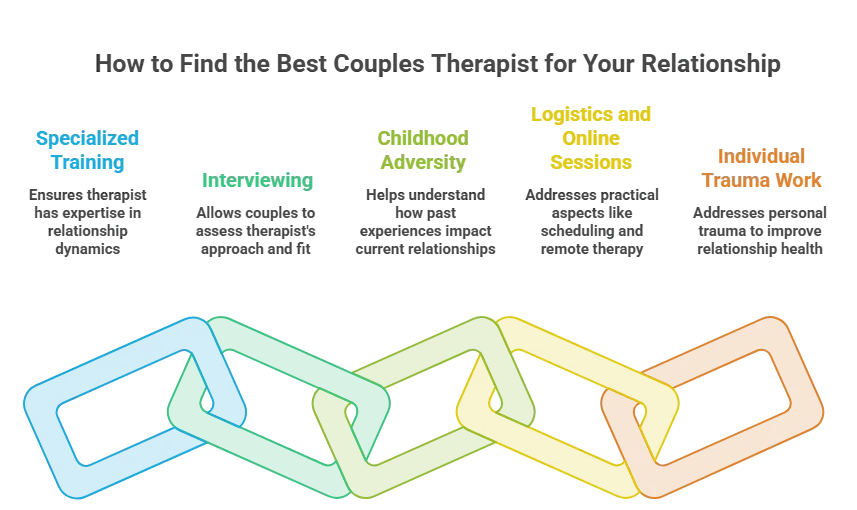
Look for Specialized Training in Relationship Work
General individual counseling differs significantly from relationship therapy. When searching for the best couples therapist, you should prioritize a clinician who has specific, advanced training in relational dynamics rather than someone who only occasionally sees couples.
Effective couples counseling requires a therapist to track the complex dance between two people simultaneously without taking sides. You can seek professionals trained in established approaches such as Emotionally Focused Therapy or the Gottman Method, which incorporates research-based assessments and interventions for couples therapy.
When both individuals feel confident that their marriage therapist is skilled in relational dynamics, therapy becomes a collaborative space for meaningful change.
Interviewing Your Prospective Marriage Therapist
Many providers offer brief initial phone or video consultations, and I encourage you to treat this conversation as an opportunity to assess the fit. Finding the best couples therapist means ensuring both partners feel comfortable with the clinician’s demeanor and therapeutic style.
During your initial consultation, consider asking practical questions about their clinical philosophy:
- What proportion of your clinical work focuses on relationship therapy?
- How do you maintain neutrality when high conflict or strong emotions arise?
- What is your overall approach to rebuilding trust after emotional disconnection?
- How do you structure your typical sessions and evaluate progress over time?
A qualified marriage therapist will welcome these inquiries with transparency and warmth. If one partner feels judged or alienated during this initial meeting, it is entirely reasonable to explore other options until you find a balanced fit.
Understanding How Childhood Adversity Shapes Adult Partnerships
In many struggling relationships, the core conflict is not merely about finances, schedules, or household tasks. It is often fueled by unhealed wounds from the past. Adults who endured abusive or neglectful situations in childhood frequently carry deep emotional burdens into their romantic lives.
When early caregivers were unpredictable or emotionally unavailable, intimacy in adulthood can feel inherently dangerous. Early neglect or abuse often leaves individuals carrying intense shame, making vulnerability feel like a threat. At Brewster PhD, I bring over 30 years of clinical experience to working exclusively with adults who experienced early family adversity. I do not provide child therapy because my focus is dedicated entirely to helping adults heal from historical wounds.
This specialized perspective is crucial when navigating complex trauma, including Dissociative Identity Disorder, also known as DID. DID is an adaptive survival response to severe trauma that deeply affects how an individual experiences safety, trust, and connection. The best couples therapist understands how early trauma and dissociation influence modern interactions.
For partners looking to heal these entrenched patterns, engaging in specialized couples therapy provides a safe container to dismantle old survival defenses.
Navigating Logistics and Online Sessions
Consistency is essential for relationship repair. As you evaluate your options, consider the practical logistics that make regular attendance realistic for both of you. Many couples juggle demanding careers, parenting duties, and busy schedules that make traveling to a traditional office difficult.
To make high-quality care accessible, I provide online therapy sessions for couples across Maine, New Hampshire, and throughout the United States. Meeting virtually from the privacy of your home can provide a calm, comfortable environment where you both feel grounded. When searching for the best couples therapist, ensuring that the scheduling format supports steady, uninterrupted progress will help your couples counseling succeed over time.
For partners seeking to restore emotional intimacy, exploring dedicated relationship counseling can transform communication barriers into bridges of connection.
Uncovering Root Causes Through Individual Trauma Work
Sometimes, relationship therapy reveals that one or both partners need individual trauma support to resolve deep-seated reactivity. When childhood adversity or chronic shame continues to overwhelm a partner during joint sessions, addressing those underlying wounds individually can dramatically improve the partnership.
In my practice as a licensed psychologist in Maine and New Hampshire, I often help individuals work through historical trauma so they can show up more securely in their marriage. Engaging in targeted childhood trauma therapy helps individuals unburden painful exiles and step out of defensive postures. When each person takes responsibility for their internal wounds, couples counseling becomes far more effective.
Frequently Asked Questions
What does the 5 5 5 couples therapy rule mean?
The 5 5 5 rule in couples therapy is a 15-minute structured communication exercise used to de-escalate conflicts. It breaks arguments down into three timed blocks of five minutes for the first partner to speak uninterrupted, five minutes for the second partner to do the same, and five minutes for joint discussion.
What credentials should I look for in a marriage therapist?
Look for professionals such as Licensed Marriage and Family Therapists, licensed clinical social workers, or doctoral-level psychologists who have extensive training and supervision in relationship therapy.
How long does relationship therapy usually take to show results?
Most couples begin noticing positive communication shifts within eight to twelve sessions of consistent work. However, the timeline depends on the depth of the issues, including whether unaddressed trauma or trust ruptures are present.
Can couples counseling help if only one partner is motivated?
While couples counseling is effective when both partners willingly participate, working with an experienced therapist can help a hesitant partner feel safe and understood, often transforming initial reluctance into active engagement.
Rebuilding Your Bond on a Stronger Foundation
Finding the best couples therapist is a vital investment in the health, longevity, and joy of your partnership. When you take the time to choose a skilled clinician who respects both perspectives and addresses root emotional patterns, you create the opportunity to transform painful cycles into deep, enduring closeness.
If you are searching for the best couples therapist to guide your relationship forward, I, Dr. Arlene Brewster, at Brewster PhD provides experienced, trauma-informed care grounded in over three decades of clinical practice. I am licensed in Maine and New Hampshire, helping adult couples and individuals navigate communication struggles, childhood neglect, abuse, shame, and complex trauma, including DID, via online therapy across the United States.
