

When asking how online counseling works, current scientific research and clinical evidence provide a resounding yes. Throughout my more than 30 years of experience as a licensed psychologist and Certified IFS Therapist, I have witnessed firsthand how virtual sessions provide powerful, life-changing support for adults facing profound emotional distress.
Many people initially wonder if a video screen creates an emotional barrier or reduces the warmth of the clinical relationship. Contemporary studies consistently demonstrate that telehealth therapy fosters deep therapeutic alliances while delivering results that equal traditional in-person care. Choosing online mental health treatment allows you to receive expert clinical guidance from the privacy and comfort of your own home.
What Clinical Research Says About the Efficacy of Online Counseling
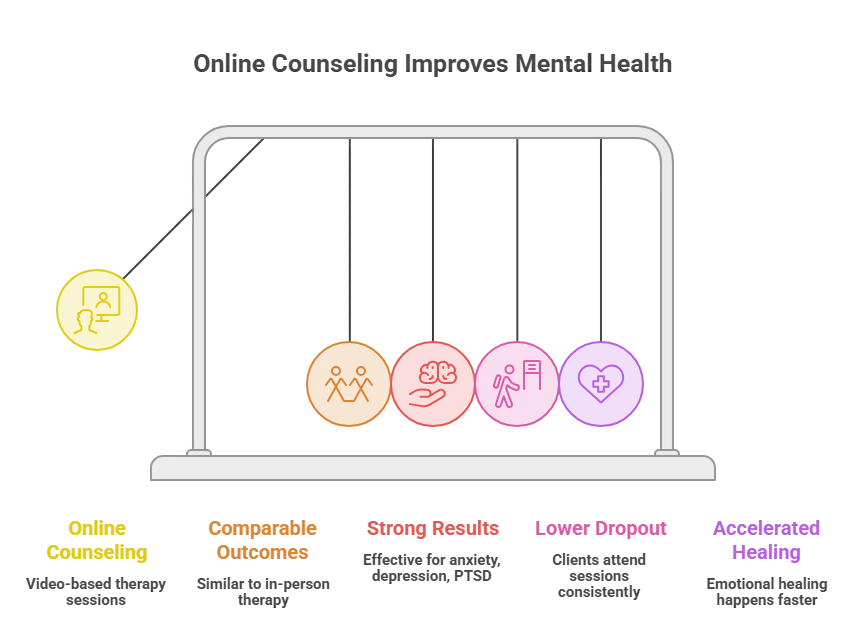
Over the past decade, extensive clinical trials have examined the effectiveness of online therapy across diverse psychological conditions. According to a meta-analysis highlighted by the APA, video-based therapy can produce outcomes comparable to in-person therapy, with particularly strong results for anxiety, depression, and PTSD.
The research reveals that the quality of the therapeutic alliance, which is the working bond between client and clinician, develops just as effectively through video calls as it does in person. When asking how online counseling works, researchers also point to significantly lower dropout rates. Because telehealth therapy eliminates commuting time and waiting rooms, clients attend sessions more consistently, which directly accelerates emotional healing.
Conditions That Respond Positively to Virtual Counseling
Clinical research confirms that virtual sessions successfully treat a wide range of psychological challenges. Adults struggling with panic, social phobias, and chronic worry experience substantial symptom relief through structured virtual protocols.
When clients engage in virtual anxiety therapy, being in their own environment often helps them process difficult feelings without the added stress of unfamiliar surroundings. Virtual platforms also allow adults to practice emotional regulation skills in the exact physical spaces where their daily stressors occur.
The clinical effectiveness of online therapy has also been documented in treating major depressive disorders. Meeting virtually provides a low-pressure doorway to care when energy is low, ensuring individuals stay connected to vital professional support.
How Teletherapy Supports Deep Trauma Recovery and Complex Healing
A common misconception is that video therapy is only suitable for mild stress. In my clinical practice, I routinely use virtual sessions to help adults process complex trauma, childhood adversity, and intense inner distress.
When adults carry the weight of early abuse, neglect, or family instability, entering an unfamiliar office can trigger defensive survival responses. Receiving care at home often provides a grounded sense of control that allows clients to safely explore painful memories and deep-seated shame. For individuals carrying heavy burdens from the past, engaging in virtual trauma therapy offers a steady space to restore internal safety.
At Brewster PhD, I work exclusively with adults navigating the long-term consequences of early family adversity, drawing on more than three decades of clinical expertise. I do not provide child therapy, as my focus is entirely on helping adults heal historical wounds.
This specialized work includes supporting individuals living with Dissociative Identity Disorder, also known as DID. DID is an adaptive survival response to severe childhood trauma, and online sessions provide a consistent, structured environment where all internal parts are treated with dignity and compassion. Through Internal Family Systems, or IFS, we work together online to unburden wounded parts and restore internal harmony.
The Core Advantages and Practical Limitations of Virtual Therapy Sessions
Understanding the practical realities of virtual care helps you determine how online counseling works for your specific lifestyle and emotional needs.
Key advantages of telehealth therapy include:
- Greater access to specialized trauma and IFS clinicians regardless of geographic distance.
- Elimination of travel time, parking hassles, and public waiting rooms.
- Increased privacy and comfort within your personal living space.
- Flexible scheduling that easily accommodates demanding careers or caregiving duties.
- Higher consistency in attending scheduled appointments.
While the benefits are significant, virtual therapy does have practical limitations. Success requires a stable internet connection and a completely private room where you cannot be overheard.
For adults dealing with chronic low mood, engaging in online depression therapy provides steady support that removes the logistical hurdles often associated with seeking help. For individuals seeking online mental health treatment, ensuring a quiet, distraction-free space allows for the emotional focus necessary for lasting change.
Frequently Asked Questions
How does online therapy compare with in-person therapy in terms of effectiveness?
Research indicates that virtual therapy can provide outcomes comparable to face-to-face treatment for concerns such as depression, anxiety, and PTSD. The quality of the therapeutic relationship and the suitability of the treatment approach often have a greater influence on progress than whether sessions take place online or in person.
Can artificial intelligence like ChatGPT replace a real therapist?
No, artificial intelligence cannot replace a trained therapist. While AI tools can assist with journaling or educational prompts, they lack human empathy, clinical judgment, and the relational attunement required to heal complex trauma and emotional wounds.
Why are so many therapists working entirely online today?
Many licensed therapists have transitioned entirely to online practices because research proves its clinical efficacy, and clients appreciate the flexibility, privacy, and convenience of meeting from home without commuting.
Can virtual therapy effectively treat severe childhood trauma and neglect?
Yes, when conducted by an experienced, trauma-informed clinician. Virtual sessions allow adult survivors of childhood abuse and neglect to process painful memories and shame from the safety of their own surroundings.
Finding Freedom Through Virtual Connection
The clinical evidence is clear when evaluating how online counseling works to foster meaningful emotional recovery. Modern telehealth therapy removes traditional barriers to care, giving you direct access to specialized support that fits seamlessly into your daily life.
If you are exploring how online mental health treatment can support your healing, I, at Brewster PhD provides trauma informed, IFS-based therapy tailored exclusively for adults. I bring over 30 years of clinical experience as a licensed psychologist in Maine and New Hampshire, offering specialized virtual therapy across the country for adults navigating childhood abuse, neglect, shame, dissociation, and complex trauma, including DID.
