
Every person moves through many types of relationships over the course of a lifetime. Some feel steady and nourishing. Others may feel confusing, intense, or even draining.
It’s common to think about why certain connections bring you comfort while others leave you feeling unsettled. As a therapist, I frequently sit with people who are trying to understand the patterns in their relationships and how those patterns affect their well-being.
When you begin to recognize the dynamics at play, you gain clarity. And with clarity comes choice, the ability to respond thoughtfully rather than react automatically.
Why Awareness of Your Relationship Habits Is Key to Healthier Bonds
Relationships influence how you see yourself, how safe you feel expressing emotion, and how you respond to closeness or conflict. Early attachment experiences shape expectations you may not even realize you carry.
You might notice:
- You pull away when things get emotionally intense.
- You feel anxious when someone becomes distant.
- You take on more responsibility than feels fair.
- You hesitate to express your needs clearly.
These patterns are not signs that something is “wrong” with you. They are learned strategies that once helped you cope. Understanding them allows you to approach yourself with compassion instead of self-criticism.
Secure Relationships That Make You Feel Seen and Emotionally Supported
A secure relationship is not free from disagreement. Rather, it is grounded in emotional safety. You feel comfortable being yourself. You trust that conflict will not threaten the stability of the connection.
In secure dynamics, you may experience:
- Open and respectful communication.
- Healthy emotional regulation during disagreements.
- Mutual support without losing individuality.
- Clear, flexible boundaries.
You feel valued for who you are. There is room for both closeness and independence. When misunderstandings arise, both people remain engaged instead of shutting down or escalating.
If this feels familiar, you likely have a foundation of trust that can continue to grow.
Anxious and Avoidant Patterns Where Closeness Feels Uncertain or Overwhelming
 Some types of relationships feel intense or unpredictable. These dynamics reflect attachment styles that developed earlier in life.
Anxious Attachment Patterns
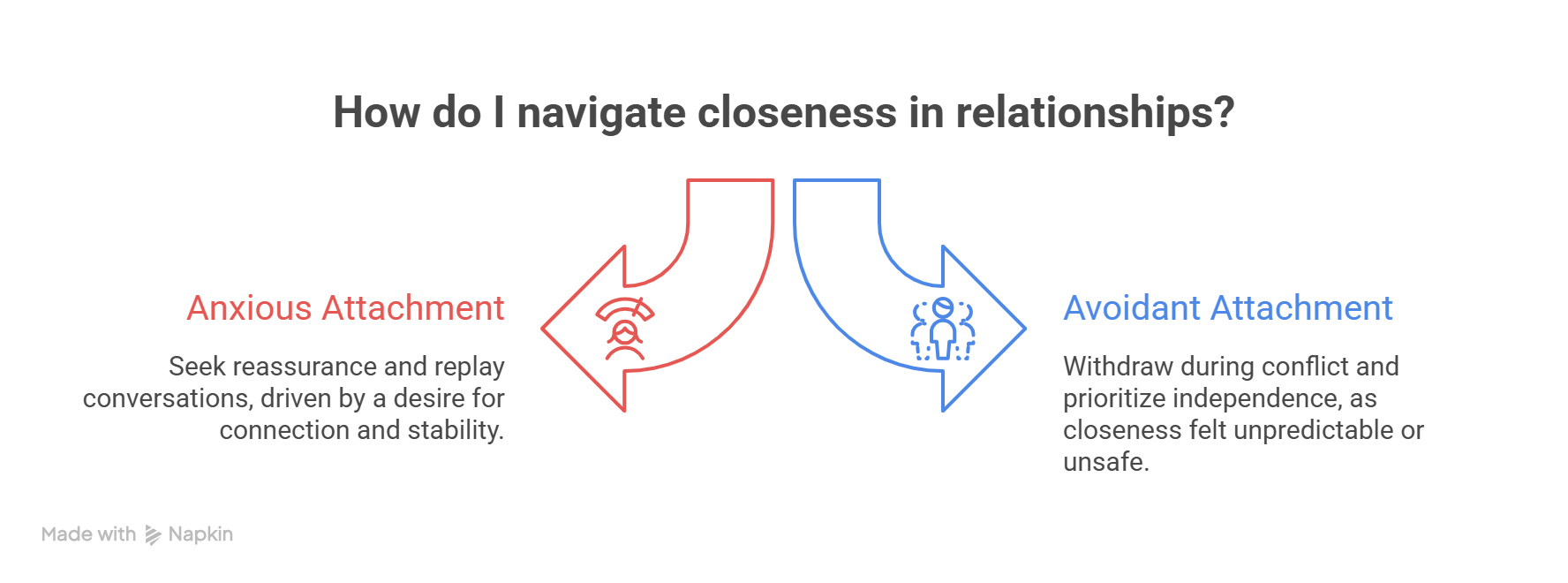
If you tend to worry about abandonment, you may seek reassurance frequently. Small shifts in communication can feel significant. You may replay conversations in your mind, wondering if something is wrong.
This heightened sensitivity is rooted in a deep desire for connection and stability.
Avoidant Attachment Patterns
If emotional closeness feels overwhelming, you might withdraw during conflict or restrict your needs. Independence may feel safer than vulnerability.
Avoidance is a protective strategy. It can be difficult to lean into connection if closeness once felt unpredictable or unsafe.
When anxious and avoidant patterns meet, one partner may pursue while the other retreats. Recognizing this cycle can reduce blame and increase understanding.
Codependent and Overfunctioning Patterns When You Take on More Than Your Share
In some connections, you may find yourself consistently prioritizing someone else’s needs above your own. You may feel responsible for their emotional stability or decisions.
Common experiences include:
- Difficulty saying no.
- Guilt when setting limits.
- Feeling needed but also exhausted.
- Losing sight of your own preferences.
At first, this dynamic may feel loving or purposeful. Over time, however, it can create resentment and emotional fatigue.
Learning to establish healthy boundaries is not rejection. It is self-respect.
3 Types of Relationships Other Than Romance
When we talk about different relationships, romantic partnerships are only part of the picture. Your broader relational world also influences your emotional health.
Friendships
Healthy friendships involve reciprocity, emotional presence, and shared experiences. If you consistently feel overlooked or drained, it may be worth evaluating the balance.
Family Connections
Family relationships usually carry a deep history. You may find yourself stepping into familiar roles during gatherings or conflict. Awareness allows you to choose different responses.
Professional Relationships
Workplace interactions impact stress levels and confidence. Clear communication and mutual respect support emotional well-being. Ongoing tension can weaken it.
Each area contributes to your sense of belonging and stability.
Recognizing Your Current Patterns Without Self-Judgment
Pause and gently ask yourself:
- Do I feel emotionally safe expressing concerns?
- How do I typically respond to conflict?
- Do I leave interactions feeling supported or depleted?
- Are responsibilities shared in a balanced way?
Understanding the different kinds of relationships you experience helps you shift from automatic reactions toward intentional choices.
In my relationship counseling sessions, I routinely help clients explore these questions thoughtfully and without blame. Patterns make sense when viewed in context.
Moving Toward Healthier and More Balanced Types of Relationships
Growth does not require dramatic change. Small, consistent shifts matter.
You might begin by:
- Naming your emotions before responding.
- Practicing “I” statements.
- Asking for clarification instead of assuming.
- Allowing space for both closeness and autonomy.
A secure connection may feel unfamiliar if you did not experience it consistently earlier in life. That discomfort can soften with practice.
Closing Thoughts
Your relationships reflect your history, your coping strategies, and your hopes for connection. By exploring the types of relationships in your life, you create space for awareness, compassion, and meaningful change.
You deserve connections that feel respectful, supportive, and emotionally safe. If you are feeling stuck in recurring patterns or navigating a difficult season, I invite you to reach out. Together, we can explore your relational dynamics and work toward healthier, more fulfilling connections.
You do not have to do this work alone. Contact me now!
FAQs
- Can insecure attachment patterns change over time?
Yes. Attachment styles are learned patterns, and they can shift with insight, emotional regulation skills, and supportive relationships.
- How do I know if my relationship is unhealthy?
If you feel consistently anxious, unsafe, unheard, or emotionally drained, it may signal an imbalance. Patterns matter more than isolated incidents.
- Is conflict a sign that a relationship is failing?
Not necessarily. Conflict handled with respect and openness can strengthen the connection. It is the pattern of avoidance or escalation that causes harm.
- What if I recognize multiple patterns in myself?
That is common. You may respond differently depending on the relationship or situation. Self-awareness allows flexibility.
- When should I consider therapy?
If recurring cycles cause distress, communication feels stuck, or trust has been damaged, professional support can provide you with clarity and guidance.
