
Understanding How Anxiety Affects Relationships
In many partnerships, emotional struggles show up quietly before anyone fully understands what’s happening. One of the most common questions I hear is how anxiety affects relationships, especially when loving partners suddenly find themselves stuck in cycles of worry, misunderstanding, or distance.
When anxiety becomes part of a relationship dynamic, it can reshape communication, trust, and emotional closeness. Understanding the effects of anxiety on relationships doesn’t mean blaming either partner, but it helps us see the patterns more clearly, so healing becomes possible.
Why Does Anxiety Create Strain Between Partners?
Anxiety is more than occasional stress; it’s a constant sense of threat that can affect how someone interprets everyday interactions. When we look at how anxiety affects relationships, we often notice that anxious thoughts distort otherwise normal situations. Some common relationship patterns connected to anxiety include:
- Seeking frequent reassurance from a partner
- Overanalyzing conversations or small behaviors
- Assuming the worst in neutral situations
- Feeling overwhelmed by uncertainty
In long-term partnerships across places like Portland, ME, Portsmouth, NH, or smaller coastal communities, couples often tell me they deeply care about each other, but anxiety keeps pulling them into repetitive conflicts. Recognizing these patterns is the first step toward rebuilding emotional safety.
How Does Anxiety Lead to Over-Dependence or Reassurance Seeking?
One of the clearest examples of how anxiety affects relationships is the constant need for reassurance. When someone feels chronically unsafe inside, they often look to their partner for validation that everything is okay.
This might sound like:
- “Are you sure you’re not upset with me?”
- “Do you still love me?”
- “Are we okay?”
Anxiety can also activate insecure attachment, where emotional safety feels fragile. The anxious partner may rely heavily on the relationship for stability, while the other partner may feel responsible for managing their distress.
Through approaches like anxiety treatment, individuals can learn ways to calm the nervous system, understand their triggers, and reduce the pressure placed on their partner for constant reassurance.
Why Do Some People Withdraw Emotionally When They Feel Anxious?
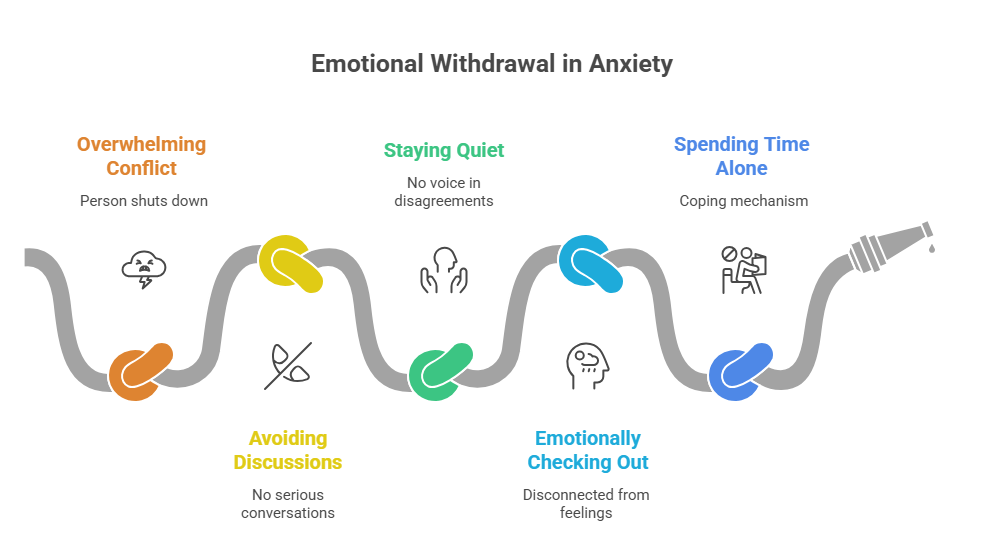 Anxiety doesn’t always lead to closeness. Sometimes it creates the opposite reaction: distance.
The other way anxiety affects relationships is emotional withdrawal. When conflict feels overwhelming, a person may shut down, avoid difficult conversations, or pull away to protect themselves. This withdrawal can look like:
- Avoiding serious discussions
- Staying quiet during disagreements
- Emotionally “checking out.”
- Spending more time alone to cope
These reactions are also linked to communication breakdown in couples, where both partners begin misreading each other’s intentions. The National Institute of Mental Health data shows that generalized anxiety disorder affects about 2.7% of adults each year, with millions experiencing chronic worry that interferes with daily life and relationships.
Can Anxiety Reduce Intimacy and Trust in a Relationship?
Yes, and it’s another important dimension of how anxiety affects relationships. When anxiety is high, emotional and physical closeness can become difficult. Constant worry may make vulnerability feel unsafe. Partners may notice:
- Less emotional openness
- Difficulty expressing affection
- Fear of conflict damaging the connection
- Overthinking during intimate moments
When depression accompanies anxiety, which is quite common, these struggles can deepen. Through supportive approaches like depression therapy, individuals can work through underlying emotions such as shame, sadness, and unresolved trauma that may be shaping their relationship patterns.
How Can Couples Break the Anxiety Cycle?
The encouraging news is that once we understand how anxiety affects relationships, couples can start shifting those patterns in healthier directions. Several strategies often make a meaningful difference:
- When anxiety is discussed openly, partners can begin viewing behaviors as symptoms rather than personal attacks. This reduces blame and increases empathy.
- Boundaries help prevent reassurance-seeking from becoming overwhelming while still maintaining emotional support.
- Techniques that calm the nervous system, such as grounding, breathwork, or internal self-compassion, can reduce reactive patterns.
- Couples therapy provides a safe space to understand relationship patterns and build healthier communication tools.
In my work with adults across Maine and New Hampshire, I often support them in navigating anxiety, trauma, and complex histories, including those living with Dissociative Identity Disorder (DID). With over 30 years of clinical experience, I help clients explore these internal dynamics using trauma-informed approaches such as Internal Family Systems (IFS).
Those seeking deeper relationship healing may benefit from relationship counseling, where both partners can safely explore these patterns together.
When Should Someone Seek Help for Anxiety in a Relationship?
Occasional stress is normal in any partnership. But if anxiety is consistently affecting trust, communication, or emotional closeness, professional support can make a meaningful difference. Seeking help can be especially valuable when:
- Arguments follow the same repetitive pattern
- One partner constantly fears abandonment
- Emotional withdrawal is increasing
- Shame or past trauma keeps resurfacing in conflicts
Recognizing how anxiety affects relationships is the turning point that allows couples to move from frustration toward compassion.
FAQs
Can anxiety ruin a healthy relationship?
No, anxiety doesn’t automatically ruin relationships, but unmanaged anxiety can create misunderstandings, reassurance-seeking, and emotional distance. With awareness and supportive communication, many couples successfully work through these patterns.
How do I support a partner who has anxiety?
Listening without judgment, encouraging open conversations about fears, and setting healthy boundaries can help. Professional therapy may also support both partners in developing healthier coping strategies.
Why does anxiety cause overthinking in relationships?
Anxiety keeps the brain on high alert for potential threats. This can cause someone to analyze conversations, behaviors, or small changes in mood as signs of rejection or conflict.
Can therapy help couples dealing with anxiety?
Yes, individual or couples therapy can help partners understand anxiety triggers, improve communication, and develop healthier emotional responses within the relationship.
Conclusion
Anxiety can quietly reshape the emotional rhythm of a relationship. From reassurance seeking to withdrawal and communication struggles, the patterns connected to how anxiety affects relationships often develop gradually. But with awareness, empathy, and the right support, those patterns can change.
If anxiety or past trauma is affecting your relationship, working with an experienced therapist can help uncover the deeper emotional roots behind these struggles. At Brewster PhD, I support adults across Maine and New Hampshire in understanding anxiety, healing from childhood adversity, and rebuilding healthier relationships grounded in trust and emotional safety.
