
What Does Moderate Depression Mean for Your Daily Life?
When people ask me what moderate depression means, they are often trying to understand why life suddenly feels heavier than usual. They may still be going to work, caring for relationships, and managing responsibilities, but everything seems to require more effort.
I often explain that moderate depression means experiencing depressive symptoms that noticeably disrupt daily life, even though someone may still be functioning. It’s more intense than mild depression but not always as disabling as severe depression. Let’s talk about what this experience often looks like in everyday life and why it deserves thoughtful attention.
Understanding What Moderate Depression Means
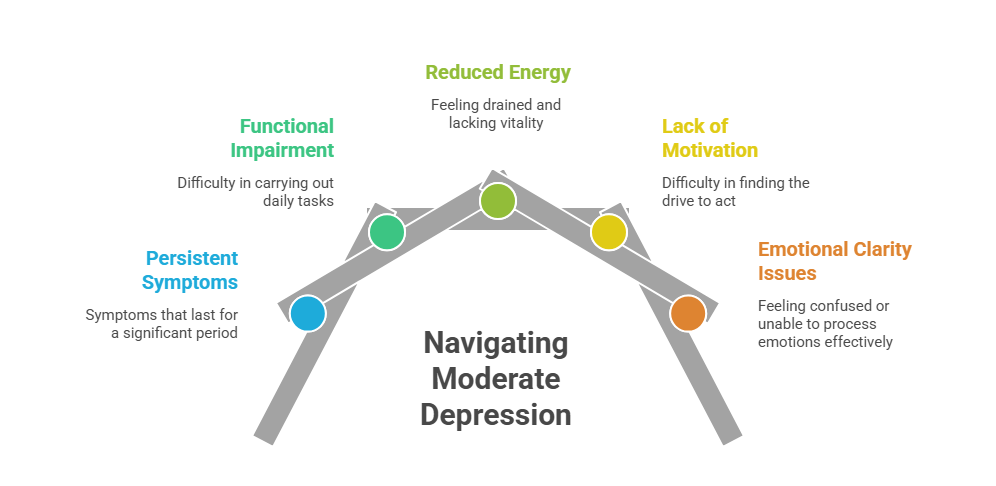 From a clinical perspective, moderate depression is a level of depression where symptoms are persistent enough to interfere with normal functioning. People may still be fulfilling their responsibilities, but it often feels like they are moving through the day with less energy, motivation, or emotional clarity.
Meanwhile, our large population has such an emotional imbalance. The National Institute of Mental Health report estimates that about 21 million adults in the United States experience a major depressive episode each year
In my practice in Kittery Point, Maine, many adults describe a similar pattern. They tell me they are still showing up for work and relationships, yet they feel disconnected from activities that once brought them joy. Common signs may include:
- Persistent sadness or emotional heaviness
- Loss of interest in hobbies or social activities
- Difficulty concentrating or making decisions
- Changes in sleep patterns
- Increased irritability or emotional sensitivity
- Feelings of guilt, shame, or worthlessness
These symptoms tend to last for weeks or longer, gradually affecting how someone experiences their daily routines.
How Moderate Depression Shows Up in Daily Life
One of the most important ways to understand what moderate depression means is to look at how it affects everyday functioning.
Reduced Motivation and Productivity
Many of the adults I work with say that tasks which once felt routine suddenly feel overwhelming. Writing emails, starting projects, or even preparing meals can feel surprisingly difficult. Even when responsibilities are completed, the effort involved can leave someone feeling emotionally and physically drained.
Persistent Fatigue
Moderate depression often brings a deep sense of exhaustion. People may sleep more than usual or struggle with insomnia, yet still wake up feeling tired.
Cognitive Difficulties and “Brain Fog”
Another way in which moderate depression becomes visible is through changes in thinking patterns. People may notice:
- Trouble focusing on conversations or tasks
- Difficulty remembering information
- Slower decision-making
Emotional Sensitivity and Self-Criticism
Moderate depression can also intensify emotional reactions. In my work using Internal Family Systems (IFS) therapy, I often help clients explore these internal reactions through the lens of different parts of ourselves. Rather than rejecting or criticizing these emotional responses, we approach them with curiosity and compassion.
Changes in Relationships and Social Life
Many people begin withdrawing from social activities because conversations or gatherings feel overwhelming.
Some couples I work with seek support through relationship counseling in Maine when depression begins to influence communication or emotional closeness. When one partner is struggling, both individuals may benefit from understanding what is happening emotionally and learning how to support one another.
Emotional History and Internal Reactions
Another important part of understanding what moderate depression means involves looking at emotional history. Many adults who seek therapy with me have experienced earlier life challenges such as trauma, adversity, or neglect. These experiences can shape how people respond to stress, relationships, and emotional pain later in life.
As a certified IFS therapist licensed in both Maine and New Hampshire, I work with adults navigating depression, trauma histories, and complex emotional patterns. My practice also supports individuals experiencing Dissociative Identity Disorder (DID), where understanding internal parts becomes especially meaningful.
When Depression Starts Affecting Daily Functioning
Some signs I frequently hear from clients include:
- Work tasks requiring much more effort
- Difficulty concentrating or staying organized
- Less interest in hobbies or meaningful activities
- Increasing isolation from friends or family
- Persistent feelings of inadequacy or shame
This experience is sometimes described as functional depression, where someone continues meeting responsibilities but feels emotionally depleted internally.
Why Seeking Support Can Make a Difference
In my experience, many people try to push through moderate depression on their own for a long time. But depression is not simply about willpower. Therapy can help individuals understand the emotional patterns underneath their symptoms and reconnect with their inner resilience.
In my work with adults throughout Portsmouth, NH, and Southern Maine, I often support clients through depression therapy, where we explore how internal experiences, emotional history, and different parts of the self influence depression.
Small Daily Practices That Support Emotional Healing
Some practices I often suggest include:
- Creating gentle daily routines
- Allowing space for rest without self-criticism
- Staying connected with supportive people
- Noticing emotional reactions with curiosity rather than judgment
- Seeking professional support when symptoms persist
For individuals whose depression overlaps with chronic worry or tension, exploring support options such as anxiety treatment can also be beneficial.
FAQs
1-How does depression affect lifestyle?
Depression can influence many aspects of daily life. People may lose interest in activities they once enjoyed, experience sleep disturbances, feel constant fatigue, and struggle with concentration. Even routine tasks may begin to require significant effort.
2-Can a person with depression live a normal life?
Yes, with proper support and treatment, many people with depression live fulfilling and meaningful lives. Therapy, supportive relationships, and emotional awareness can help individuals regain balance and resilience.
3-Is moderate depression serious?
Yes, moderate depression should always be taken seriously. While someone may still be functioning, the emotional impact can significantly affect well-being, relationships, and daily productivity.
4-How long can moderate depression last?
The length of time varies from person to person. Some individuals experience symptoms for several weeks, while others may struggle for months. Seeking professional support often helps people recover more effectively.
Support for Depression in Portsmouth, NH, and Southern Maine
Understanding what moderate depression means can be an important first step toward healing. If daily life has begun to feel emotionally heavier or more difficult than usual, support can make a meaningful difference.
At Brewster PhD, I work with adults throughout Portsmouth, NH, and Southern Maine who are navigating complex emotional patterns. As a certified Internal Family Systems therapist, I help clients understand their internal experiences. Together, we explore the different parts of ourselves and create space for genuine healing and emotional balance.
