

If you have been searching for trauma therapy near me, you are likely carrying something that has gone unaddressed for longer than feels comfortable to admit, whether a single difficult event or something quieter that has built over the years without ever being named.
I am Dr. Arlene Brewster, a certified IFS therapist, and I want to offer you a clearer picture of what genuinely effective trauma care looks like before you commit to anyone.
Why a Search for Trauma Therapy Near Me Misses the Real Question
Most searches for trauma therapy are organized around location and availability. That leaves out the question that actually determines whether the work helps: Does this therapist’s training reach the specific kind of trauma you carry?
Single-incident trauma, chronic early adversity, and relational trauma each require a different depth of understanding, and a generalist approach produces only partial relief.
A therapist who is genuinely trauma-informed treats your symptoms as adaptive responses, not flaws to correct. Anxiety, hypervigilance, emotional shutdown, and shame are signs that a part of you adapted to protect you from something that once felt unsafe.
Want to understand my approach before reaching out? Read more about my trauma therapy work here.
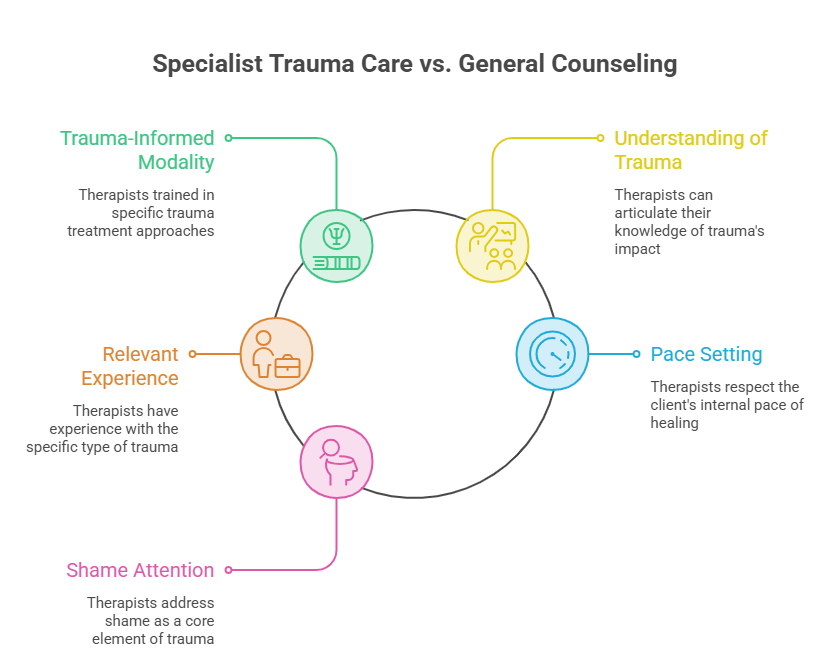
What Sets Specialist Trauma Care Apart From General Counseling
-
-
-
- Certification in a trauma-informed modality, not just general familiarity with the topic.
- A clear explanation of how the therapist understands trauma, not only what they call it.
- Experience with the type of trauma you carry, including chronic neglect, not only single incidents.
- Willingness to move at a pace set by your internal system rather than a fixed program.
- Attention to shame as a central piece of the work, not an afterthought to symptom management.
-
When the Trauma Has No Specific Single Event
One of the most underdiscussed aspects of trauma therapy near me searches is that many adults carry trauma without a dramatic, nameable incident behind it.
Growing up with neglect, emotional unavailability, or inconsistent care creates a different kind of wound, one that shapes your sense of safety and self-worth gradually, not all at once.
This kind of trauma is harder to validate, even to yourself. You may wonder whether what you experienced counts. If it left a lasting mark on how you relate to yourself and others, it matters and deserves the same depth of care as any other trauma.
How Internal Family Systems Therapy Approaches Trauma Differently
Internal Family Systems therapy works from the understanding that you carry multiple internal parts, each shaped by different experiences.
Protective parts keep painful material at a distance. Exile parts carry the original pain, often grief, fear, or shame. The work builds enough trust with protective parts that they can finally allow that material to be addressed with care.
This is meaningfully different from approaches that ask you to revisit traumatic memories repeatedly or push through distress quickly. IFS respects the wisdom of your internal system, working with its pace rather than against it.
The Role of Shame in Why Trauma Symptoms Persist
Shame is one of the most consistent threads running through unresolved trauma, and it rarely gets addressed directly in general counseling.
Many adults carry a private belief that they should have prevented what happened or that their reactions reflect weakness. That belief does not lift simply because time has passed. A part of you absorbed it, and it continues shaping how safe you feel being known.
Effective trauma therapy addresses that shame directly instead of only managing the anxiety or hypervigilance it produces. When the part carrying the shame finally feels genuinely understood, the connected symptoms soften in ways symptom management alone rarely achieves.
Are you new to therapy and curious whether this approach fits what you are carrying? Read more about my work and explore the support that may be right for you.
What Adults Experiencing Complex Trauma Should Know
Some presentations of trauma are more complex than others, and they deserve care from a therapist with specific experience. Adults navigating Dissociative Identity Disorder, for instance, carry an internal system where distinct parts hold separate histories.
A trauma therapy near me search that only surfaces generalist practitioners is unlikely to lead you to someone equipped for this level of complexity.
Type of Trauma What Specialized Care Offers Single-incident trauma Focused processing with attention to safety and pacing Chronic childhood neglect Long-term work addressing identity and relational patterns Dissociative Identity Disorder Careful, parts-aware work honoring each internal system’s history Relational trauma in adulthood Integration of individual healing alongside relationship patterns Access Trauma Therapy Without Geographic Limits!
If you live in Maine or New Hampshire, I offer in-person consultations from my practice. If you cannot visit my Kittery Point practice, you can book online consultations that carry the same depth and IFS-based approach.
Trauma work does not require physical proximity to be effective. It requires a therapist whose training genuinely matches what you are carrying.
I welcome new clients seeking trauma therapy near me, whether that means meeting in person or connecting through a secure online session.
Are you willing to take the next step toward healing? Reach out and schedule a consultation here.
FAQs
1. How do I know if I need trauma therapy or general counseling?
If your symptoms feel disproportionate to current circumstances, or if you notice patterns tracing back to earlier experiences, trauma-informed care is likely to reach more than general counseling alone.
2. Can trauma therapy help if I do not remember specific traumatic events?
Yes. Many adults carry the effects of chronic neglect or early adversity without clear memories. Trauma therapy works with how your internal parts function now, not only with recalled events.
3. Is trauma therapy available online if I do not live in Maine or New Hampshire?
Yes. I offer online consultations for adults throughout Maine and New Hampshire, carrying the same depth and approach as my in-person sessions.
4. How long does trauma therapy typically take to show results?
Many adults notice initial relief within a few months of consistent work, while deeper shifts in identity and relational patterns develop over a longer period.
-
