
Common Questions Therapists Ask and Why They Matter
When clients first come to me, one of the very first things I do is ask questions. The questions therapists ask are carefully designed to help me understand your experiences, emotions, and the different parts of yourself that influence how you relate to the world.
In fact, the very first question I often pose is, “What brings you here?” This helps me understand what matters most to you and sets the tone for our work together in Portsmouth, NH, and Southern Maine. Understanding why I ask certain questions can help you feel more engaged and empowered in the process.
“What Brings You to Therapy?”
One of the first questions therapists ask is often, “Why are you here?” or “What brings you to therapy?” This question allows you to define your primary concern in your own words. For adults dealing with the effects of neglect or childhood adversity, this helps start identifying patterns that might be influencing their current lives.
Sometimes the answer points directly to trauma, relational difficulties, or shame. Other times, it reveals layers of unresolved feelings that we’ll explore gradually. This foundational question sets the stage for the rest of our work together.
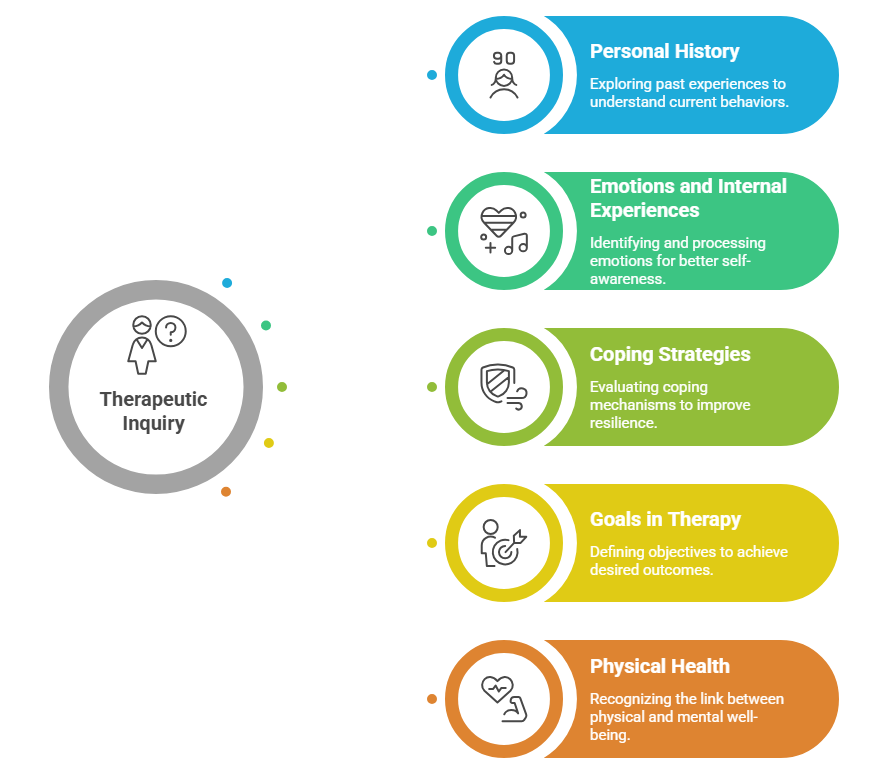
Exploring Your Personal History
I often ask about your family, education, work, and past experiences. These inquiries help me understand your environment, developmental patterns, and the internalized messages you may carry.
For clients navigating complex conditions like Dissociative Identity Disorder (DID), understanding history is essential. It allows us to map out how different parts of yourself have developed and how internal reactions may be influenced by past neglect.
At this stage, I also consider how trauma has shaped your coping strategies and your sense of self. This understanding comes from questions therapists ask, which are crucial for creating a plan tailored to you.
Understanding Emotions and Internal Experiences
Emotions are central to the work I do. I often ask, “How do you feel about that situation or person?” or “Where do you feel that emotion in your body?” These questions help you connect physical sensations to emotional experiences.
In Internal Family Systems (IFS) therapy, recognizing different parts of yourself and understanding their roles is key. For example, shame often shows up as a critical inner voice, and exploring these parts can help you separate your authentic self from internalized messages.
If you’re exploring relational patterns, I might invite you to reflect on how these emotions play out with partners, friends, or colleagues. This can prepare the groundwork for relationship counseling in Kittery Point, Maine when relational dynamics are part of the work.
Assessing Coping Strategies
I also ask questions like:
- “What have you tried so far to deal with this problem?”
- “What makes this problem better or worse?”
These inquiries help me understand your strengths and identify areas where support is needed. Recognizing what has worked and what hasn’t empowers you to build on your own resources rather than feeling stuck.
For couples or partners seeking guidance, this is especially important. Each person’s coping style influences the other, and in couples therapy in Kittery Point, Maine, understanding these patterns can help improve connection and communication.
Clarifying Goals in Therapy
Questions therapists ask often ask, “What does ‘feeling better’ look like to you?” This helps us define concrete goals and align expectations. For adults with a history of neglect or shame, this question encourages reflection on what emotional healing actually looks like, beyond simple relief from symptoms.
This is also where mindfulness comes into play. Connecting body and mind allows us to track progress more meaningfully than relying solely on external markers of success.
Considering Physical Health
I sometimes ask, “Do you have any medical conditions?” because physical health can impact mental well-being. Federal data show about one in 15 adults meets criteria for PTSD in any given year, which underscores why sensitive questions around past events and internal reactions are essential.
Considering these factors ensures a holistic approach to therapy, where we address the whole person, not just the emotions.
How These Questions Help
The questions I ask are not casual conversation; they’re designed to uncover patterns, challenge internalized shame, and foster self-awareness. They guide adults in navigating complex experiences, including trauma, relational difficulties, and the lingering effects of childhood neglect.
For those seeking trauma therapy, these questions create a roadmap for healing. They help clients feel seen, understood, and supported as we explore different parts of themselves.
Questions You Can Ask Me
Besides the questions therapists ask, it’s helpful for clients to have their own inquiries. Questions to ask the therapist might include:
- “How do you approach trauma therapy?”
- “What experience do you have with DID or complex trauma?”
- “How do you support clients dealing with shame?”
These questions help you ensure that therapy aligns with your goals and comfort level, creating a collaborative process.
Localized Support Matters
Working with a therapist familiar with Portsmouth, NH, and Southern Maine allows therapy to feel grounded and relevant. Understanding the community and cultural context informs how relational patterns and stressors appear in everyday life.
When adults come to me for help with difficult experiences, they benefit from local knowledge combined with evidence-based, IFS-focused practices. This approach creates a safe space for reflection and growth.
FAQs
1. Why do therapists ask so many personal questions?
I ask questions to understand your history, uncover patterns, and identify your emotional strengths. These insights guide the therapy plan and ensure it meets your needs.
2. What if a question makes me uncomfortable?
Feeling discomfort is normal. You can share that with a therapist. It’s valuable information and can open doors to deeper self-understanding.
3. How are therapy questions different from everyday conversation?
The questions I ask are intentional, aiming to uncover root causes, identify coping strategies, and support self-reflection, rather than simply exchanging information.
4. How often will I be asked these questions?
Early sessions focus on foundational questions, while later sessions may explore deeper patterns and emotional processing as we work toward your goals.
Partnering for Healing
Ultimately, therapy is a partnership. Questions therapists ask are designed to guide exploration, uncover hidden patterns, and help you interact more consciously with your thoughts, emotions, and relationships.
If you’re an adult in Kittery Point, Maine, or Portsmouth, NH, seeking compassionate, IFS-focused therapy, I work with clients navigating trauma, relational healing, and complex internal experiences. Starting with the right questions, we work together to foster insight and emotional balance. You can learn more and schedule your session at Brewster PhD.
