
How to Deal with Resentment in Your Relationships
Small disappointments accumulate, unspoken needs linger, and eventually partners begin wondering how to deal with resentment that seems to have quietly settled into the relationship. Resentment rarely shows up suddenly. In my work with couples and individuals across Portsmouth, NH, and Southern Maine, I often see it build slowly over time.
Beneath resentment, there are often deeper emotions: hurt, disappointment, grief, or even shame. Let’s explore what resentment really means and what I’ve seen help couples move through it.
Understanding Where Resentment Begins
Before figuring out how to deal with resentment, I always encourage people to slow down and understand where it’s coming from. Some of the most common roots I see include:
- Feeling emotionally unheard
- Carrying an unequal share of responsibilities
- Lingering pain from past betrayals
- Patterns of criticism or defensiveness
- Longstanding conflicts that never truly resolved
Through an Internal Family Systems (IFS) lens, I often help clients explore how different parts of ourselves react in these moments.
Recognizing the Early Signs of Resentment
One of the most important things I help couples learn is how to notice resentment early. Studies show that about 80% of healthy relationships include open and honest communication, reinforcing how important it is to express feelings.
Some signs I frequently see include:
- Feeling irritated by small things
- Withdrawing emotionally from conversations
- Mentally keeping track of past grievances
- Assuming negative intent in a partner’s actions
- Avoiding difficult discussions
When couples come to see me through couples therapy in Maine, we often begin by identifying these early signals. Once partners recognize them, it becomes much easier to address concerns before resentment deepens. Awareness alone can create meaningful change.
How to Deal with Resentment? Steps
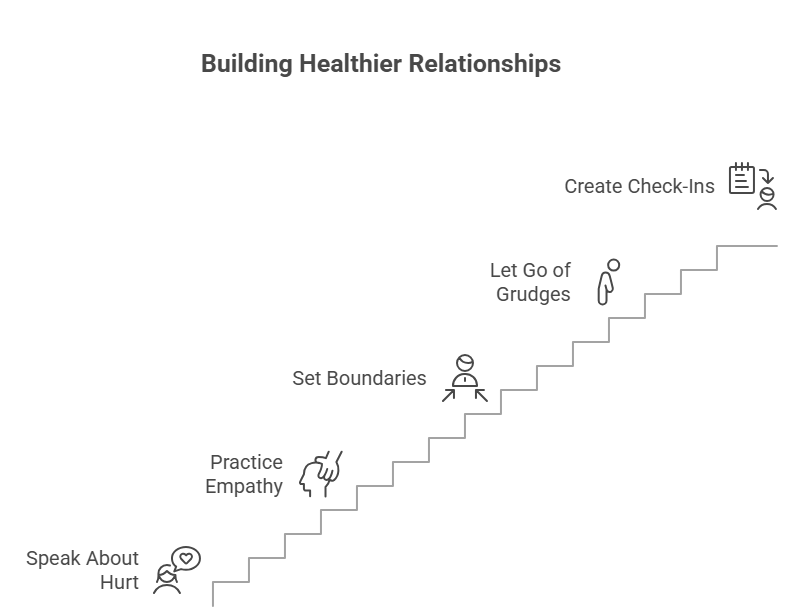
How to Deal with Resentment? Steps
Speaking About Hurt Without Blame
Communication plays a huge role in learning how to deal with resentment. Many couples I work with genuinely want to talk about their feelings, but the conversation quickly becomes defensive. When frustration has been building for a long time, it’s easy for discussions to turn into blame.
When both partners feel less attacked, they’re usually much more open to understanding each other.
Practicing Empathy and Listening With Curiosity
In my experience, resentment softens when partners feel genuinely understood. Active listening isn’t just about hearing words; it’s about trying to understand the emotional experience behind them. When I guide couples through this process, I often invite them to ask themselves questions like:
- What might my partner be feeling right now?
- What need could be underneath this reaction?
Sometimes, the reactions people bring into relationships are connected to earlier life experiences, including childhood adversity or neglect. Through relationship counseling in Maine, I help clients explore those internal reactions so that compassion begins to replace defensiveness.
Setting Boundaries That Protect the Relationship
Another key part of learning how to deal with resentment involves establishing clear boundaries.
Many people avoid setting boundaries because they worry it will create conflict. But in reality, the absence of boundaries often creates the very resentment they’re trying to avoid. Healthy boundaries might include:
- Asking for dedicated time to talk through concerns
- Clarifying expectations around responsibilities
- Agreeing to respectful communication during disagreements
When boundaries are communicated calmly and consistently, they create a sense of safety for both partners.
Letting Go of Past Grudges
I often remind clients that forgiveness doesn’t mean excusing harmful behavior. Instead, it means releasing the emotional hold that past pain continues to have on the present. For many people, working on how to deal with resentment, forgiveness is a gradual process. It may involve:
- Acknowledging the hurt openly
- Allowing accountability and repair
- Choosing not to replay painful moments repeatedly
When resentment is connected to deeper trauma, shame, or past violations of trust, additional therapeutic support can be helpful. For example, my work in sexual abuse therapy often involves helping adults process painful experiences that still influence their relationships today.
Creating Regular Relationship Check-Ins
One of the simplest tools I recommend to couples learning how to deal with resentment is scheduling regular relationship check-ins. During these check-ins, couples might talk about:
- What felt supportive this week
- Any tensions that came up
- What they would like more of in the relationship
In my experience, this simple habit helps couples maintain awareness and prevent resentment from quietly accumulating again. Small conversations often prevent much larger conflicts later.
When Professional Support Can Help
As an Internal Family Systems–certified therapist licensed in both Maine and New Hampshire, I work with adults navigating relationship challenges, trauma, shame, and complex emotional histories. Many of the people I see have also experienced difficult childhood environments, including neglect, or are living with Dissociative Identity Disorder (DID).
IFS therapy helps us understand how different parts of ourselves respond to conflict and emotional pain. When these internal reactions become clearer, people often begin to respond to each other with more compassion and less defensiveness.
Frequently Asked Questions
1-Can a relationship survive resentment?
Yes, many relationships can survive resentment when partners are willing to address the underlying issues. Open communication, empathy, and meaningful behavioral changes are often essential to rebuilding trust.
2-Why does resentment build in relationships?
Resentment typically grows when emotional needs go unspoken or repeatedly ignored. Over time, these unresolved frustrations accumulate and begin affecting the relationship dynamic.
3-Is resentment a sign that the relationship is over?
Not necessarily. In many cases, resentment simply signals that important concerns need attention. When couples address those concerns directly, relationships can actually grow stronger.
4-How long does it take to heal resentment?
The timeline varies for every couple. Healing often depends on how long the resentment has been present and how committed both partners are to addressing the underlying issues.
Moving Toward Healing and Connection
In my experience, learning how to deal with resentment isn’t about avoiding conflict altogether. Every relationship will experience tension at times. What truly matters is how partners respond when hurt arises.
If you’re in Portsmouth, NH, or Southern Maine and looking for compassionate, trauma-informed support, you can learn more about my work at Brewster PHD. Many clients find that understanding the different parts of themselves and each other creates space for healthier, more connected relationships.
