
Recognizing and Recovering from PTSD from Cheating
Experiencing betrayal in a relationship can leave deep emotional scars. In my over 30 years of practice, I often see clients who struggle with PTSD from cheating, and I want to help you understand that the trauma you’re feeling is real and valid.
From intrusive memories to emotional ups and downs, the effects of infidelity can mirror those seen in other forms of trauma, and recovery requires compassion, patience, and guidance. In this post, I’ll share what PTSD from cheating looks like, how it can affect your mind and body, and practical steps I use with my clients in therapy to support healing and restore self-worth.
Understanding Post-Infidelity Stress Disorder
Infidelity can trigger a unique form of trauma often referred to as Post-Infidelity Stress Disorder (PISD). This isn’t just heartbreak; it’s a psychological response that can affect your daily functioning. From my experience working with adults in Portsmouth, NH, and Southern Maine, I’ve seen common symptoms include:
- Intrusive Thoughts & Flashbacks: You may experience vivid memories of the betrayal or imagine your partner with someone else.
- Hypervigilance & Triggers: Everyday reminders like a phone alert or certain locations can cause sudden anxiety.
- Emotional Volatility: Intense highs and lows, from anger to deep despair, often accompanied by feelings of shame.
- Avoidance & Numbing: Withdrawing from social connections or feeling emotionally numb can be ways your mind tries to cope.
- Physical Symptoms: Insomnia, exhaustion, or changes in appetite often accompany the emotional responses.
Besides, research indicates that a significant portion of betrayed partners show trauma symptoms akin to PTSD, with some studies reporting up to 60% experiencing intrusive thoughts, hypervigilance, or chronic anxiety following infidelity.
Why PTSD from Cheating Happens
Betrayal shakes your sense of trust and safety, and often, different parts of ourselves respond in different ways. Some parts may feel shock and grief, others anger, and some may experience shame. Understanding these internal reactions is central to recovery.
Past experiences of neglect or difficult childhood situations can intensify the trauma from infidelity. For many clients, this history makes betrayal particularly hard to navigate, and it’s why compassionate, specialized support is so important.
Steps to Healing After Betrayal
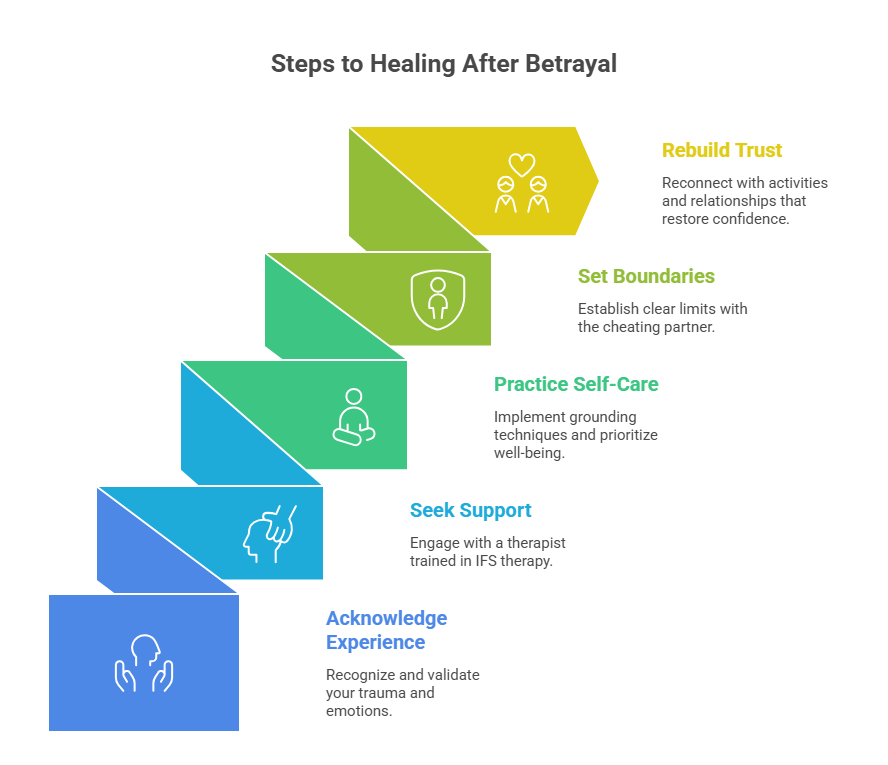
Steps to Healing After Betrayal
Recovery from PTSD from cheating is not linear, but there are strategies I often recommend to guide the process:
1. Acknowledge and Validate Your Experience
I encourage my clients to recognize that their trauma is real. Feeling fear, grief, or anger doesn’t mean you’re weak; it’s a normal response to a deeply violating experience. Validating these feelings is an important first step in healing.
2. Seek Professional Support
Working with a therapist trained in IFS therapy can help you process and understand the complex emotions that arise after betrayal. I am licensed in both Maine and New Hampshire, and I work with adults navigating betrayal trauma, past neglect, and challenges such as DID. If anxiety is part of your response, anxiety treatment can provide tailored support.
3. Practice Grounding and Self-Care
Techniques like mindfulness meditation, breathing exercises, and gentle yoga can help calm your nervous system. I also emphasize the importance of sleep, nutritious meals, and movement to restore balance after trauma.
4. Set Clear Boundaries
Protecting your mental health means setting boundaries with the cheating partner, even if you decide to stay. This might include limiting communication, insisting on transparency, or creating space for yourself to process emotions safely.
5. Rebuild Self-Worth and Trust
I often encourage clients to reconnect with activities and relationships that restore confidence and joy and divert their mind from their partner’s PTSD from cheating.
Engaging in any hobby, spending time with friends, or pursuing personal goals reminds you of your value outside the relationship. If lingering sadness is present, depression therapy can be especially helpful.
Healing Within Relationships
If you choose to continue the relationship, active repair is essential. Transparency from your partner, ongoing communication, and guided couples support are often necessary. In Portsmouth, NH, and Southern Maine, I work with couples to rebuild trust safely. A couple therapy can help navigate emotional triggers and develop strategies for lasting repair.
Even if you choose to separate, healing involves processing grief, acknowledging betrayal, and integrating the experience into your personal growth.
Local Support and Expertise
In my practice, I specialize in helping adults in Kittery Point, Maine, and Portsmouth, NH, who are experiencing shame, trauma from infidelity, or the lingering effects of neglect. Using IFS therapy, I help clients understand and work with different parts of themselves, fostering compassionate self-awareness and healing.
I often see that trauma-informed, IFS-centered care helps clients make sense of their internal reactions, reconnect with themselves, and rebuild a sense of emotional stability.
FAQs
1. How long does trauma last after infidelity?
Healing usually takes 2-5 years. Initial grief often eases within 1-6 months, and with therapy and reflective work, full recovery can happen in 1-3 years.
2. What does the 80/20 rule of infidelity say?
The 80/20 rule suggests people cheat because they focus on the small 20% of unmet needs in an otherwise largely satisfying relationship. Understanding this can help contextualize the trauma without minimizing its impact.
3. Can PTSD from cheating cause physical symptoms?
Yes, trauma can manifest physically through insomnia, appetite changes, fatigue, and heightened startle responses. Grounding techniques and self-care are critical to addressing these symptoms.
4. Is it normal to feel shame after infidelity?
Yes, many people feel shame or self-criticism, even when they were not at fault. Therapy helps separate these feelings from personal worth and encourages compassionate self-understanding.
Moving Forward
Recovering from PTSD from cheating is a journey of reclaiming safety, trust, and self-worth. Whether you decide to repair the relationship or move forward independently, understanding your internal reactions and seeking support is key.
At Brewster PhD, I help adults in Portsmouth, NH, and Southern Maine navigate trauma from betrayal, rebuild confidence, and restore emotional balance. Through IFS therapy, mindfulness, and personalized guidance, I help clients integrate their experiences, reconnect with themselves, and move toward a healthier, more empowered life.
