
There is a moment many couples reach where they find themselves asking the same quiet question: Is this fixable? And underneath that question is usually another one that feels more vulnerable: Is marriage counseling worth it, or are we just paying to have the same argument in front of someone else?
I understand why that fear exists. Many couples come to me after one or both partners have already tried something that did not work, or after so much has built up that hope feels distant.
I am a certified IFS therapist, licensed in both Maine and New Hampshire, and what I want to offer here is not a sales pitch but an honest look at what makes the difference between counseling that changes something and counseling that doesn’t.
The Question Beneath the Question Worth Asking First
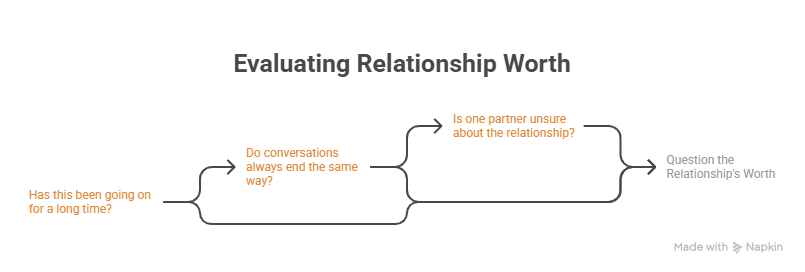
When couples ask, “Is marriage counseling worth it?” they are usually really asking one of several more specific things.
- Is it worth it, given how long this has been going on?
- Is it worth it when we have tried talking, and it always ends the same way?
- Is it worth it when one of us is still unsure about the relationship itself?
The honest answer is that counseling is more likely to produce meaningful change when both partners are willing to look at their own part in the dynamic, not only their partner’s behavior.
That does not mean both partners need to arrive feeling equally hopeful. But it does mean that each person needs to be open to understanding themselves, not only to being understood.
What Research and Experience Both Suggest About Outcomes
| Factor | Impact on Counseling Outcomes |
| Both partners are willing to self-reflect | Strongly associated with lasting change |
| Starting before patterns become entrenched | Leads to faster progress |
| One partner is uncertain about the relationship | Workable, but requires honest exploration |
| History of emotional neglect or childhood adversity | Benefits significantly from a trauma-informed approach |
| Presence of shame in the dynamic | Often, the central issue responds well to IFS work |
Why the Type of Therapy Matters More Than Most Couples Realize
Not all couples counseling works from the same foundation, and that distinction matters more than most people realize when they are weighing whether it is worth their time and energy.
Some approaches focus primarily on communication skills, which can be genuinely useful but often address symptoms, not sources. When the same argument keeps returning in slightly different forms, it is usually not because the couple lacks communication skills. It is because there are parts of each person that have not yet been understood.
The approach I use, Internal Family Systems therapy, works by helping each partner access their calm, compassionate core self and, from that place, genuinely listen to and understand their partner.
When one partner’s protective part shuts down, and the other’s part reads that as dismissal, the cycle escalates. When both partners can recognize what is actually happening internally, the cycle can finally change.
You can read more about how I work on my couples therapy page, where I also share what to expect from the first session.
Is Marriage Counseling Worth It When the Relationship Has Been Difficult for Years?
This is one of the most common situations I encounter. A couple has been struggling for a long time, and both partners carry varying degrees of exhaustion, resentment, and grief about what the relationship has not been.
There is no honest answer that applies universally here. What I can say is that I have worked with couples who were genuinely on the edge of giving up and who, through this process, found something they had stopped believing was possible.
What tends to make the difference is not the severity of the history, but whether each partner is willing to look at the parts of themselves that contributed to it. Shame is usually a significant part of this.
When each person carries private shame about their own behavior in the relationship, and that shame has never been directly addressed, it tends to drive the very patterns they are trying to change.
The Real Cost of Not Going
The question “Is marriage counseling worth it?” is often framed financially. But there is another cost that rarely gets named: the cost of continuing in the same dynamic without support.
That cost is paid in ongoing emotional exhaustion, in patterns that get passed on, and in the slow erosion of trust in yourself as much as in your partner.
- Chronic conflict reshapes how both partners experience themselves.
- Unaddressed shame compounds over time.
- Children in the home are affected by relational tension even when not directly involved.
- Delayed help often means more entrenched patterns to work through later.
If anxiety, unresolved childhood experiences, or emotional disconnection are also part of what you are navigating, my individual therapy for anxiety work for adults may be a meaningful complement to couples’ work.
A Gentle Answer to the Question You Actually Came Here With
Is marriage counseling worth it? When it is the right kind of counseling, with a therapist who understands trauma, shame, and the internal dynamics driving relational patterns, and when both partners bring genuine willingness, the answer for most couples is yes.
Not because every relationship can or should be saved, but because understanding what happened between you, with care and without judgment, tends to lead somewhere better than staying stuck in silence.
I offer online consultations for individuals in Maine and New Hampshire. If you would like to explore whether this work might be right for you, I welcome you to reach out when you feel ready.
FAQs
1. Is marriage counseling worth it if we are not sure we want to stay together?
Yes. Counseling can help you both gain clarity about what you want, whether that is reconciliation, a more conscious separation, or something in between.
2. What if one partner is more committed to counseling than the other?
This is very common. I work with that difference honestly rather than pretending it is not there. The uncertainty itself often becomes an important part of the work.
3. Does counseling only focus on communication skills?
Not in my approach. I focus on helping each partner understand the internal reactions driving their communication patterns, which leads to more lasting change than skill-building alone.
4. Can shame in a relationship actually be addressed in counseling?
Yes, and in my experience, it is often the most important thing to address. When shame is brought into the open with care, the patterns it was driving often soften naturally.
