

Relationships are not always in their beautiful and fulfilling phases. Yes, they also come with challenges. One of the most destructive patterns that I have noticed in any relationship is the cycle of conflict. If you’ve ever found yourself trapped in a cycle of negative interactions, you may be experiencing what Dr. John Gottman refers to as the four horsemen of relationships.
In this blog, you can have a closer look at four destructive behaviors that can predict the downfall of a partnership if left unaddressed. Addressing these behaviors can help you reconnect, heal, and rebuild your relationship.
What are the Four Horsemen of Relationships
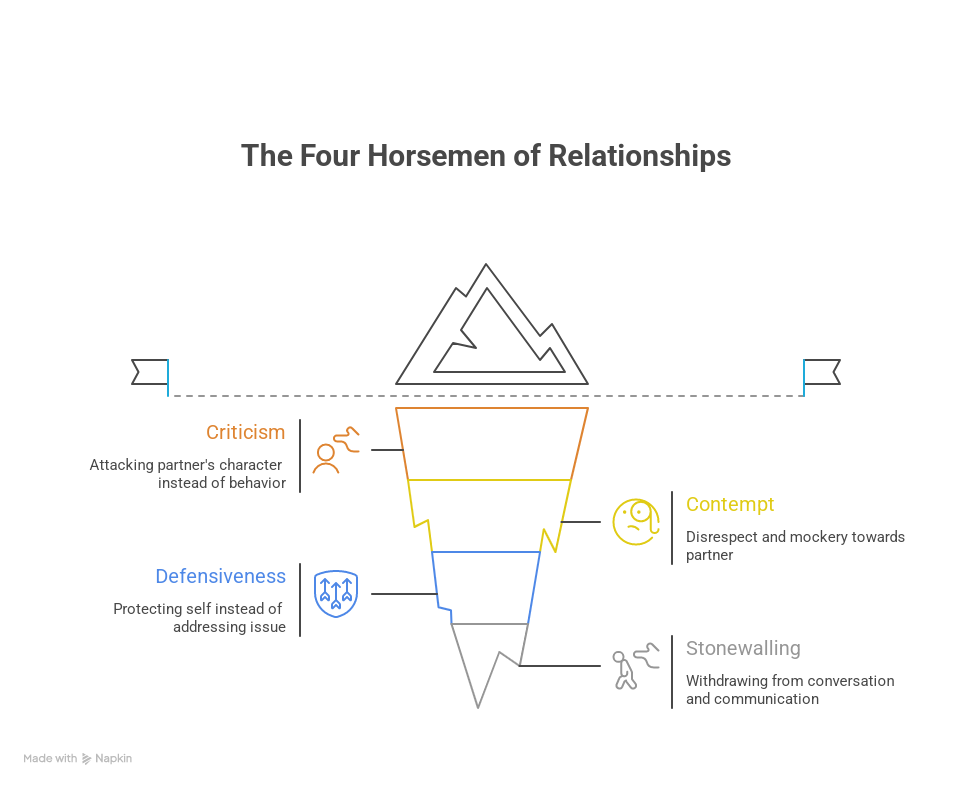
Here is a brief breakdown so that you can easily understand the problem in your relationship.
1. Criticism: Attacking the Person, Not the Problem
Criticism is often the first step toward deeper relationship issues. When criticism creeps into your conversations, it moves from addressing specific behaviors to attacking your partner’s character.
What You May Experience:
- Hurt feelings or defensive reactions from your partner.
- A sense of being misunderstood or not valued.
- A growing distance due to unresolved resentment.
How to Overcome Criticism:
To prevent criticism from taking over, you can express your feelings without blaming or attacking. I always suggest my clients use I statements instead of you statements to avoid putting your partner on the defensive.
2. Contempt: Disrespect and Dismissal
Contempt is the most dangerous of the four horsemen of relationships. It involves treating your partner with disrespect or mockery, often through sarcasm, name-calling, or eye-rolling. Contempt undermines the foundation of respect that every healthy relationship needs.
What You May Experience:
- Feelings of deep hurt and betrayal.
- A lack of emotional safety or trust in the relationship.
- A sense of hopelessness that things can’t change.
How to Overcome Contempt:
When contempt enters your relationship, it’s important to focus on restoring respect and empathy. You should know that feelings of contempt usually come from deeper struggles, like unmet needs or old wounds that haven’t been healed.
Do you need help managing contempt in your relationship? I am licensed in Maine and New Hampshire, and I offer a compassionate approach to healing relationships. With my therapy sessions for crisis in relationships, I can help you and your partner build trust and emotional safety.
3. Defensiveness: Protecting Yourself at All Costs
When you feel attacked, it’s natural to want to defend yourself. However, defensiveness can escalate conflict rather than resolve it. Instead of addressing the issue at hand, defensiveness shifts the focus back to your partner’s behavior. It usually leaves no space for resolution.
What You May Experience:
- A sense of being trapped in endless arguments with no resolution.
- Lack of accountability prevents growth in the relationship.
- Increased frustration and feeling unheard.
How to Overcome Defensiveness:
The key to overcoming defensiveness is to focus on understanding rather than protecting yourself. Try to listen openly and validate your partner’s feelings before responding. It’s also helpful to take a step back and reflect on your own part in the conflict. I, Dr. Arlene Brewster, can help make things work out if you both feel that you cannot resolve the issue.
4. Stonewalling: Shutting Down Emotionally
Stonewalling usually occurs when one partner withdraws from the conversation. It means you or your partner refuses to engage or communicate. It can look like giving the silent treatment or physically distancing yourself. This avoidance can leave your partner feeling abandoned and unheard.
What You May Experience:
- Frustration and loneliness, especially if you feel like your partner isn’t listening.
- Emotional disconnection and a lack of intimacy.
- A cycle of unresolved issues, where the problems continue to build over time.
How to Overcome Stonewalling:
When you feel overwhelmed or the conversation is getting too intense, it’s important to recognize when you’re shutting down emotionally, which is among the dangerous horsemen of relationships. Take a break from the discussion to cool off. After a few minutes, come back to the conversation with a goal to engage.
FAQs About Four Horsemen Of Relationships
1. How do I recognize criticism in my relationship?
Criticism is among the four horsemen of relationships. It generally involves you feeling like being attacked by your partner’s character, not just the behavior.
2. Why is contempt so damaging to a relationship?
Contempt is the most destructive horseman. Most couples usually experience disrespect, which can lead to emotional disconnection and hurt feelings.
3. How can I stop being defensive in an argument?
I’ll recommend listening to your partner’s feelings without immediately defending yourself. You should take a moment to reflect on your part in the issue.
4. What should I do if my partner is stonewalling?
The best you can do is give your partner space to cool off. However, you should both agree on when to return to the conversation to work through the issue together.
The Bottom Line
By overcoming the four horsemen of relationships, you can heal and create a deeper connection with your partner. While conflict is a natural part of all relationships, the way you both handle it really matters. But it’s easy when you both work together on improving communication and emotional awareness.
If you’re looking to transform your relationship, I can provide you with my insightful approach to couples therapy in Maine. With years of experience and a deep understanding of relationship dynamics, I can guide you and your partner toward greater intimacy, knowledge, and connection. Contact me to get started with your therapy session.
