
Are you asking yourself the same question: What are the 17 symptoms of complex PTSD, and could they describe what you are living with? If you have faced prolonged trauma, betrayal, or painful experiences over time, you deserve gentle care and clarity.
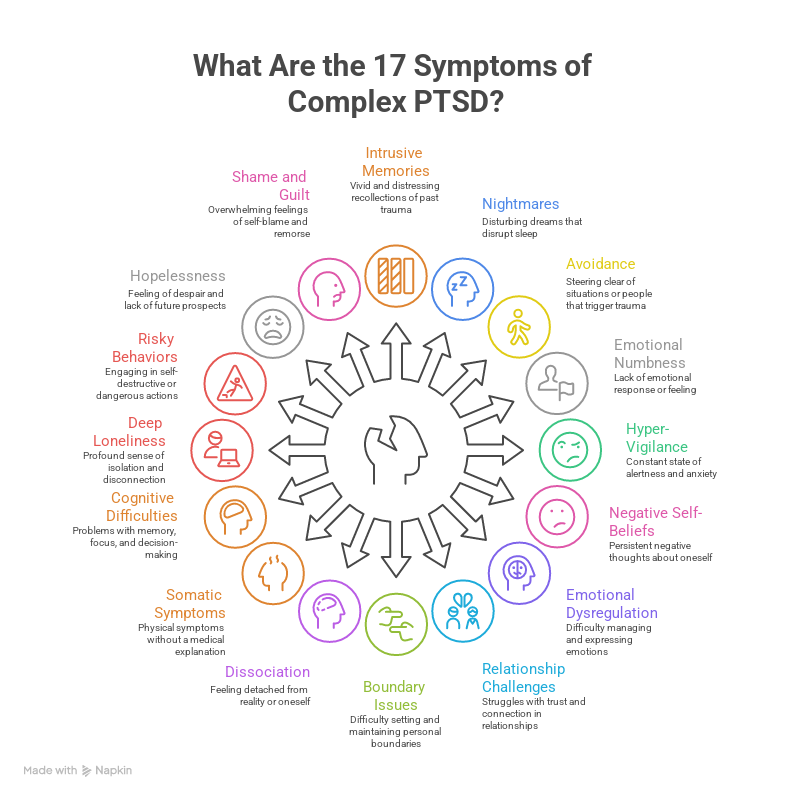
Here are some common symptoms of complex PTSD that many people with deep trauma carry. Each one may show up in different ways in your life.
1. Intrusive Memories or Emotional Flashbacks
You may experience sudden memories that pull you back into your trauma. Many people report feeling as though the trauma is happening all over again. I can help you recover from this issue with my adult trauma therapy session.
2. Nightmares or Disrupted Sleep
You may struggle with nightmares or disrupted sleep, where the sadness from your past follows you into your dreams. It’s one of the 17 symptoms of complex PTSD that does not let your mind feel relaxed.
3. Avoidance of Triggers
Avoiding people, places, or even specific situations that remind you of the trauma is one of the most common symptoms of complex PTSD. But many people keep themselves isolated or disconnected.
4. Emotional Numbness
Do you experience a sense of emotional numbness? Many people with complex post-traumatic stress disorder describe it as feeling like they are watching their life instead of living it. This emotional distance can make relationships and even self-care difficult.
5. Constant Alertness or Hypervigilance
Your body may stay on high alert, sensing danger even when there is none. Many of my clients describe feeling alert and always scanning the environment for threats. This feeling can be exhausting and overwhelming.
6. Persistent Negative Self-Beliefs
Feelings of worthlessness or shame are one of the most common symptoms when you learn what the symptoms of complex PTSD are. These negative thoughts might be so ingrained that they feel like part of who they are, and they find it hard to see their value.
7. Difficulty Regulating Emotions
Your emotions may feel overwhelming or unpredictable. One moment you may feel fine, and the next you may experience intense sadness, anger, or fear. For many people, this emotional roller coaster is one of the hardest parts of living with complex PTSD.
8. Challenges with Relationships & Trust
It can be incredibly difficult to trust others when your past has shown you the potential for deep betrayal, neglect, and even harm. Many people who suffer from complex PTSD feel a persistent sense of isolation or find it challenging to form or maintain close relationships.
9. Trouble Setting Boundaries
You might struggle to set boundaries with others or take care of your own needs. People with complex PTSD often find it hard to say no or prioritize themselves, which can lead to burnout or feeling used in relationships.
10. Dissociation
Dissociation is when you feel detached from your own body or the world around you. While most people with complex PTSD experience dissociation in some form, some individuals may also live with dissociative disorders such as Dissociative Identity Disorder (DID).
Although it’s mainly among the common symptoms of complex PTSD, DID can develop in response to severe and prolonged trauma. I support clients navigating these experiences so they can better understand their symptoms, feel safer in their daily lives, and build stronger internal stability.
11. Somatic or Physical Symptoms
Trauma can manifest in the body. Many people dealing with complex PTSD experience chronic pain, headaches, fatigue, or other unexplained physical symptoms that don’t have a clear medical explanation.
12. Cognitive Difficulties
You might notice that your mind feels foggy or your memory is unreliable. This can make it difficult to focus or remember details, adding another layer of frustration for many people who already feel overwhelmed.
13. Deep Loneliness
Even in the presence of others, you might feel disconnected or like no one truly understands you. Many people with complex PTSD report feeling like they are living in a different world or that they are somehow other.
14. Self‑Destructive or Risky Coping Behaviours
Many people turn to self‑harm or risky behaviors to escape the overwhelming pain of their emotions. With my therapy sessions, I have helped many people cope with this type of deep-seated emotional pain of trauma. Contact me to book your therapy session with me.
15. Hopelessness
You may feel as though life has lost its meaning or that things will never get better. Normally, people with complex PTSD experience a sense of hopelessness, but therapy with me, Dr. Arlene Brewster, can help you reconnect with a sense of purpose and possibility.
16. Feeling of Shame and Guilt
Feelings of shame or guilt may be a constant companion. Many people find that these feelings are deeply tied to the trauma itself and can be healed with the right support.
17. Suicidal Thoughts or Death Wishes
When the pain feels unbearable, many people think of ending it all or wish they were no longer here. You don’t have to carry this alone. There are ways to find relief and support.
Chronic PTSD vs. Complex PTSD vs. PTSD
With this table, you can get more clarity about how your experience differs from others. Knowing these distinctions, along with understanding what are the 17 symptoms of complex PTSD can guide your healing path.
| Aspect | PTSD | Chronic PTSD | Complex PTSD |
| Nature of Trauma | Results from a single traumatic event | Results from a single traumatic event (an accident or an attack) | Results from longer trauma (ongoing abuse or neglect) |
| Physical Impact | Similar to Chronic PTSD, but less likely to be long-lasting | Headaches, fatigue, or sleep disturbances are common | Chronic pain, digestive issues, or tension may occur |
| Core Symptoms | Flashbacks and hypervigilance | Flashbacks, intrusive memories of the trauma event | Emotional dysregulation, numbing, feelings of worthlessness |
Frequently Asked Questions
1. What causes complex PTSD?
Complex PTSD often develops after long-term trauma. It may be a result of constant abuse. It affects your emotions and your sense of safety.
2. How long does complex PTSD last?
Your healing time varies for each person. You can book my therapy sessions so that you can notice improvement in your emotional balance and daily functioning, just like my other clients.
3. Can I treat complex PTSD?
Yes, with trauma-informed therapy, you can understand your reactions, develop inner safety, and improve emotional regulation.
4. Is complex PTSD the same as PTSD?
Both of them share some signs, but you should know that complex PTSD involves some additional challenges. Patients might be facing identity struggles, emotional regulation issues, and relationship difficulties.
Closing Thoughts
Complex PTSD can affect your physical health and inner identity. If you recognize these signs in yourself, you can heal with the right care and support. With my therapeutic support, you can reconnect with yourself and discover strength within you. Connect with me to let me guide you throughout your healing journey.
