

Emotional intimacy exercises are structured practices that help couples slow down, tune in, and rebuild the deep bond that daily life often erodes over time. In my more than 30 years of clinical experience and IFS therapies, I have seen that most couples do not drift apart because of a single dramatic event but because they gradually stop paying close attention to each other.
The encouraging truth is that you can rebuild intimacy through small and consistent practices that create genuine emotional closeness. You do not need a grand gesture or a perfect weekend. What you need is a willingness to show up for each other with curiosity and care.
Why Emotional Intimacy Exercises Matter for Long-Term Couples
When I work with partners in IFS therapy, many tell me they feel more like roommates than lovers. The relationship connection that once felt effortless now requires effort neither person knows how to offer. Conversations become logistical. Touch becomes habitual. And the emotional closeness that once defined the partnership quietly fades.
Emotional intimacy exercises interrupt these automatic patterns by creating deliberate moments of presence. Research from the Gottman Institute consistently shows that small daily rituals of connection are far more predictive of long-term satisfaction than occasional grand gestures. In my practice, couples who commit to even one or two intimacy exercises each week begin to notice meaningful shifts within a matter of weeks.
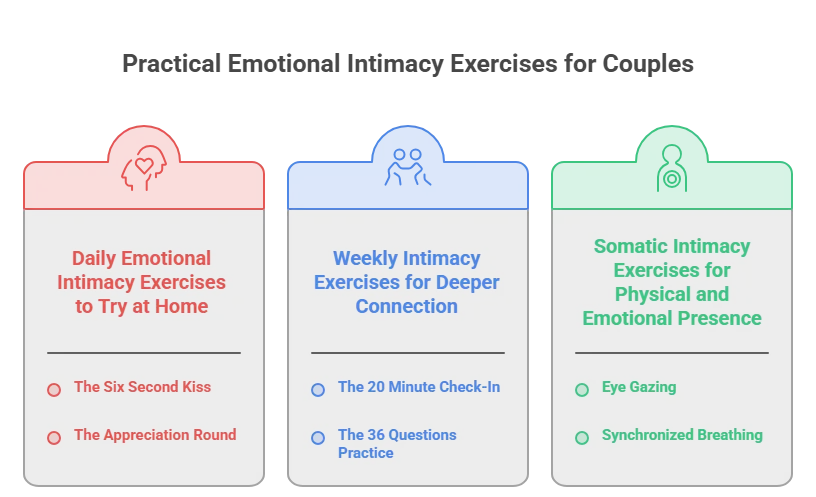
Daily Emotional Intimacy Exercises to Try at Home
The Six Second Kiss
Once a day, pause for a full six-second kiss. This brief moment is long enough to require genuine presence and short enough to feel manageable even on the busiest days. It interrupts the habit of quick pecks and signals to your partner that you are choosing relationship connection over routine.
The Appreciation Round
Before bed, each partner shares one specific thing they noticed and appreciated about the other that day. Specificity is essential. Rather than saying “you are a great partner,” try “I noticed you handled that stressful call with patience and it made me feel proud.” This practice trains both partners to look for evidence of care, which strengthens emotional closeness over time.
Weekly Intimacy Exercises for Deeper Connection
The 20 Minute Check-In
Set aside 20 minutes once a week with no devices. Each partner answers three questions. What was hardest this week? What am I grateful for? What do I need from you right now? The listener’s only job is to receive without fixing or defending. Being accurately heard is one of the most powerful forms of emotional closeness available in any partnership.
The 36 Questions Practice
Inspired by the well-known psychology study, take turns answering open-ended questions that gradually increase in vulnerability. This exercise helps partners remain curious about each other’s inner world and is one of the most effective ways to rebuild intimacy when conversations have become surface-level.
For couples who want additional guidance while exploring these deeper layers, couples therapy provides a supportive space to process what surfaces.
Somatic Intimacy Exercises for Physical and Emotional Presence
Eye Gazing
Sit face to face and look into each other’s eyes for five minutes without speaking. Acknowledge any feelings that arise without judgment. This practice bypasses the intellectual mind and creates a felt sense of relationship connection that words alone often cannot produce.
Synchronized Breathing
Lie facing one another and slowly synchronize your breathing for about five minutes. This calming practice can encourage relaxation and a greater sense of connection, which may help couples stay grounded when discussions become emotionally intense. When these practices bring up unexpected emotions, relationship counseling can help both partners understand what is being activated and why.
How Past Trauma Can Shape Your Experience With Intimacy Exercises
In my clinical work, I do not provide child therapy. My practice is devoted entirely to adults, including those who survived abusive or neglectful situations in childhood and now find that those early wounds interfere with vulnerability in their current relationships. When trauma is part of your history, emotional intimacy exercises can sometimes activate protective parts that shut down, withdraw, or flood with shame.
This is especially true for adults living with Dissociative Identity Disorder, or DID, a condition rooted in severe early trauma that profoundly affects how a person experiences trust and closeness. At Brewster PhD, I bring over 30 years of clinical expertise to helping adults understand how childhood abuse, neglect, and emotional instability continue to shape their capacity for intimacy.
When these exercises surface difficult feelings, that is not a sign of failure but an invitation to explore those responses with compassion, and trauma therapy can provide the steady support needed to move through that process safely.
Frequently Asked Questions
What does the 3-3-3 intimacy rule involve?
The 3 3 3 rule is a weekly consistency framework designed to balance togetherness, self-care, and partnership within a committed relationship. While it is sometimes referenced in dating contexts, for established couples it serves as a practical reminder to create regular rhythms of connection rather than leaving closeness to chance.
What is the 72-hour intimacy rule?
The 72-hour intimacy rule suggests that partners try not to go longer than three days without some form of physical or emotional connection. The goal is to prevent emotional drift and keep couples from slipping into a roommate dynamic. In my experience, even a brief moment of genuine attention within that window can maintain the thread of closeness.
How long does it take for emotional intimacy exercises to make a difference?
Most couples I work with begin to notice small shifts within two to four weeks of consistent practice. The key is consistency rather than intensity. A few minutes of genuine attention each day will produce more lasting change than an occasional marathon conversation.
Can emotional intimacy exercises help after a major breach of trust?
These exercises can support healing after a rupture, but they work best alongside professional guidance. Rebuilding trust after betrayal involves complex emotions including deep shame and fear, and having an experienced therapist to help both partners navigate that process makes a meaningful difference.
Rediscovering the Closeness You Both Still Want
Rebuilding intimacy is not about returning to the way things felt at the beginning. It is about creating something more honest and more resilient, built on the understanding that love requires ongoing attention. Emotional intimacy exercises give you practical tools to begin that process, and the real transformation happens when both partners commit to showing up with patience and genuine curiosity.
With over 30 years of clinical practice, I, Brewster PhD, work with individuals and couples navigating the lasting effects of abuse, neglect, shame, and complex trauma, including DID, helping them rebuild intimacy and rediscover the emotional closeness they deserve.
