

Childhood trauma symptoms in adults often show up most clearly within the relationships that matter most, yet many people never connect their current struggles to experiences from decades ago. In my more than 30 years of clinical practice, I have sat with countless adults in IFS therapy who describe feeling confused by their own reactions to their partners, wondering why small disagreements trigger overwhelming fear or why closeness feels both desperately wanted and deeply terrifying.
Recognizing childhood trauma symptoms in adults is not about assigning blame to your past or to your parents. It is about making sense of patterns that have been quietly shaping your adult relationships so you can begin to respond from choice rather than survival.
What Counts as Childhood Trauma
Many adults assume their experiences were not severe enough to qualify as trauma. In my clinical work, I hear this hesitation constantly. But childhood trauma is not limited to dramatic single events. It includes a broad spectrum of harmful experiences where safety felt unpredictable.
According to the CDC, adverse childhood experiences can have lasting effects on health, well-being, and relationship functioning well into adulthood. Even experiences that seemed normal at the time can leave deep imprints on a developing nervous system. When childhood trauma symptoms in adults go unrecognized, those imprints continue to influence how you relate to the people closest to you.
Trust and Attachment Struggles in Adult Relationships
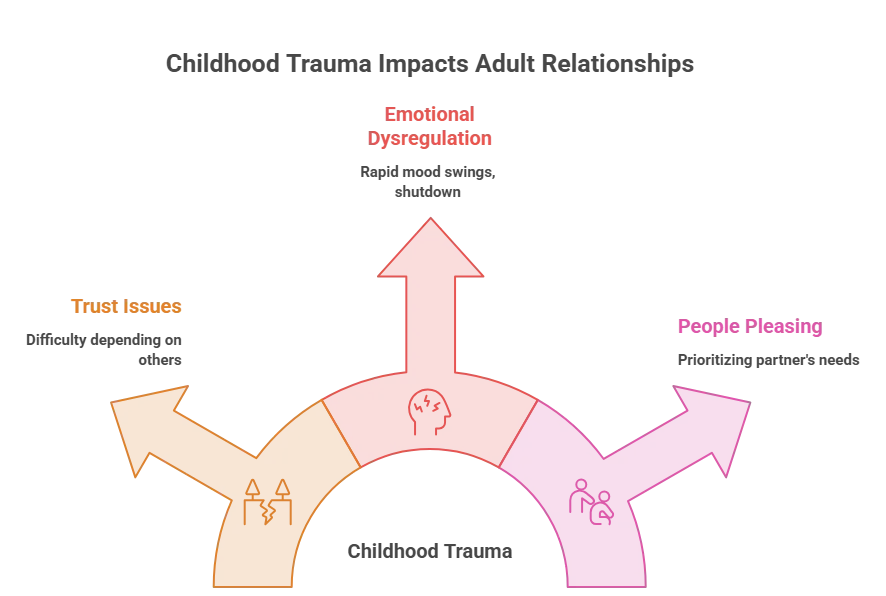
One of the most common childhood trauma symptoms I see in my practice involves difficulty trusting others. When your early caregivers were unreliable, inconsistent, or frightening, your nervous system learned that depending on others is dangerous. As an adult, this can look like keeping partners at a distance, testing their loyalty, or struggling to ask for what you need.
You may also experience intense fears of abandonment or engulfment. A delayed text message might trigger panic that your partner is leaving. Alternatively, normal closeness might feel suffocating, causing you to pull away just when connection is deepening. These trauma responses are not character flaws. They are protective strategies your mind developed to keep you safe.
For adults who want to explore these patterns more deeply, childhood trauma therapy offers a structured and compassionate space to begin untangling these attachment wounds.
Emotional Regulation and Hypervigilance Patterns
Childhood trauma in adults symptoms frequently include significant challenges with emotional regulation. You might shift rapidly from calm to intense anger during a minor disagreement, or you might shut down completely and become unable to speak when conflict arises. Your nervous system may read neutral situations as threatening, turning a simple question from your partner into something that feels like an attack.
These trauma responses occur because your brain is still scanning for danger the way it had to during childhood. Hypervigilance was once a survival skill. In your current adult relationships, it can create exhaustion and misunderstanding for both partners. Learning to recognize these patterns is a crucial step toward building the emotional regulation capacity that trauma disrupted.
People Pleasing, Boundaries, and the Weight of Shame
Growing up in an environment where you had to walk on eggshells often leads to chronic people pleasing and an inability to set boundaries in adult relationships. You may prioritize your partner’s needs above your own to keep the peace, even when doing so leaves you feeling resentful and invisible. Saying no may feel impossible because a part of you still believes that asserting your needs will result in punishment or abandonment.
Beneath these childhood trauma symptoms in adults, I often find deep shame. Many adults carry a quiet but persistent belief that they are fundamentally flawed or unworthy. This shame can lead to self-sabotage, pushing partners away before they can see the real you, or tolerating treatment you know you do not deserve.
At Brewster PhD, I bring over 30 years of clinical expertise and IFS therapy to helping adults understand how childhood abuse, neglect, and emotional instability create these painful relational patterns. I also work compassionately with adults living with Dissociative Identity Disorder, or DID, a condition rooted in severe early trauma that profoundly affects trust, identity, and the capacity for closeness.
When Trauma Responses Affect Physical Intimacy
The connection between early adversity and physical closeness is another area where childhood trauma symptoms often surface. Trauma keeps the nervous system in a survival state, and your body knows that vulnerability is not safe when it is focused on protection. This can contribute to difficulties with desire, arousal, or comfort with physical touch, even in relationships that feel emotionally safe.
Understanding that these responses are protective rather than broken can reduce the shame many adults feel around intimacy struggles. For couples navigating these challenges together, relationship counseling can provide a supportive space to rebuild physical and emotional closeness that feels safe for both partners.
Frequently Asked Questions
How does childhood trauma show up in adult relationships?
Childhood trauma shows up in adult relationships through insecure attachment styles, intense fears of abandonment, chronic people pleasing, and difficulty trusting partners. Unresolved early pain keeps the nervous system on high alert, turning ordinary conflicts into perceived safety threats and leading to emotional overreactions, withdrawal, or self-sabotage.
Can childhood trauma affect relationships even if I do not remember much from my past?
Yes. Trauma is stored in the body and nervous system, not just in conscious memory. Many adults I work with have limited recall of specific events but still experience powerful trauma responses in their relationships. The body remembers what the mind may have pushed away.
Is it possible to heal childhood trauma symptoms while staying in my current relationship?
Absolutely. Healing does not require leaving your partner or your life behind. With the right therapeutic support, you can begin to understand your trauma responses, develop new ways of relating, and build more secure attachment patterns within the relationship you already have.
When should I seek professional help for these patterns?
If you notice that your reactions in relationships feel disproportionate to the situation, if you struggle with persistent shame or emotional dysregulation, or if your patterns are causing significant distress for you or your partner, reaching out to a trauma-informed therapist is a meaningful and courageous step.
Turning Recognition Into Real and Lasting Healing
Recognizing childhood trauma symptoms in adults is a powerful first step, but awareness alone does not complete the healing process. Real change happens when you begin to respond to your triggers with compassion rather than judgment and when you give yourself permission to seek the support you deserve.
At Brewster PhD, I offer experienced, trauma-informed therapy for adults in Maine and New Hampshire through online sessions across the US. With over 30 years of clinical practice, I work with adults navigating the lasting effects of abuse, neglect, shame, and complex trauma, including DID, helping them transform painful relational patterns into secure and fulfilling connections.
