
Starting couples therapy can feel overwhelming, which is why having an understanding of couples therapy questions is essential. You might wonder what to say, where to begin, or how to ask the right questions to guide the conversation, uncover hidden patterns, and help both partners feel understood.
Asking these questions early can set the tone for meaningful growth in your relationship, whether it’s improving communication, intimacy, or resolving past issues. Over my 30 years of experience, I have seen that couples who prepare with therapy questions make faster progress in therapy. So, let’s understand what you should know before starting with therapy.
Why Knowing Couples Therapy Questions Matters
Many couples start therapy without knowing where to focus. Thoughtful marital counseling questions create a safe space to discuss difficult topics without blame. They reveal patterns in communication, unmet emotional needs, and unresolved issues that may affect your relationship today.
Answering these questions can help partners feel seen, heard, and validated. It also prepares you for deeper work, such as exploring emotional triggers rooted in childhood neglect or trauma. When partners understand each other’s experiences, therapy becomes more effective and productive.
In the U.S., up to 50% of marriages end in divorce, but counselors report that couples who engage in therapy often reduce that risk by up to 20-30%. Additionally, premarital counseling is linked with up to a 30% lower likelihood of divorce, showing that early dialogue and preparation matter.
Communication and Conflict
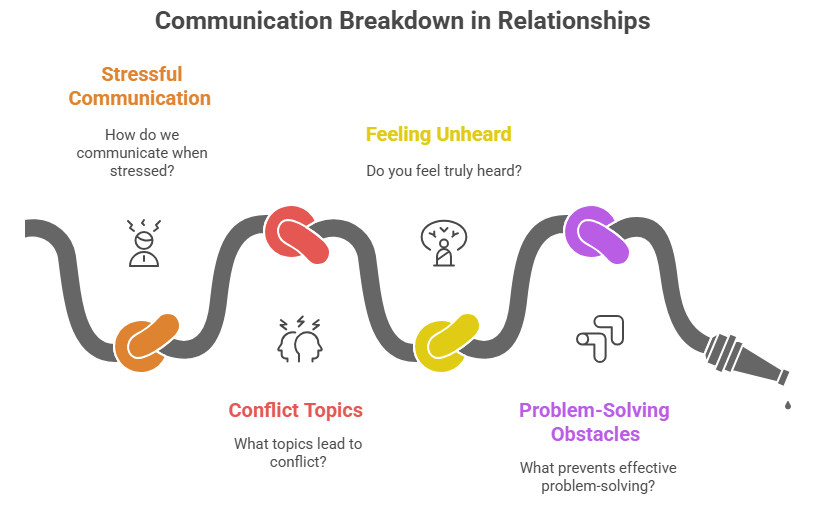
Communication challenges are often at the center of relationship struggles. Focusing on couples counseling questions about communication and conflict can reveal areas that need attention and improvement. Some examples include:
- How do we communicate when we are stressed or upset?
- What topics most often lead to conflict, and how do we usually handle them?
- Do you feel truly heard and understood by me?
- What obstacles prevent us from solving problems together effectively?
Understanding these patterns, followed by couples therapy questions, is especially important for partners who carry past trauma or unresolved feelings of shame. Discussing communication in therapy can help partners build trust and improve problem-solving.
Emotional Needs and Vulnerabilities
Emotional needs play a huge role in relational satisfaction. Asking marriage counseling questions to strengthen your relationship helps identify unmet needs before they create distance. Here are some of the questions you can consider:
- What emotional or physical needs are not being understood in our relationship?
- When do you feel most disconnected or alone?
- How do you show love and appreciation, and how do you like to receive it?
- What emotions are difficult for you to express to me?
Exploring these questions allows partners to feel supported and understood. Adults who experienced childhood neglect or trauma often need guidance in safely expressing emotions. Some couples find that couples therapy helps them apply these conversations in practical ways.
Recognizing Strengths and Future Goals
Therapy is not only about addressing problems, but it is also about celebrating what works. Asking relationship therapy questions about strengths and future goals helps partners focus on growth as well as healing. Consider asking couples therapy questions like:
- What are our relationship’s biggest strengths and weaknesses?
- Which shared memories or activities do we want to revisit?
- Where do you see us in the future, and what goals do we have together?
- What would you like to improve in our life as a couple?
Exploring strengths can help couples identify resilience and positive patterns, even when past trauma or neglect has affected their connection.
Intimacy and Connection
Asking for counselling for husband and wife questions about intimacy can help partners understand each other’s needs, desires, and boundaries. Some questions to explore here are:
- What does intimacy mean to you emotionally, physically, and sexually?
- Are you satisfied with our emotional closeness?
- What prevents us from feeling more connected?
Discussing intimacy can feel vulnerable, especially for adults carrying childhood trauma, neglect, or shame. Therapy offers a dependable space to explore these topics and strengthen emotional bonds. Many couples benefit from childhood trauma therapy to work through unresolved shame and relational patterns.
Therapy-Specific Questions
It’s important to clarify expectations for therapy itself. Asking couples therapy questions about the process ensures both partners feel invested and understood. Useful questions include:
- What are your specific hopes and expected outcomes for therapy?
- What are you willing to do to improve the relationship?
- How will we know if therapy is working?
Having clarity about therapy goals helps couples stay aligned and motivated. Using an approach informed by IFS, therapy can guide adults to work through complex emotions and relational patterns safely. Some find that relationship counseling helps support the practical application of these strategies.
FAQs
1. What not to say in couples therapy?
Avoid blaming or abusive language, comparing past relationships, using negative labels, or reacting defensively. Speaking with curiosity and openness creates a safer, more productive space.
2. What are the 5 C’s of therapy?
The 5 Cs are Clarity, Connection, Coping, Control, and Compassion. They are essential for emotional health and help guide therapeutic conversations.
3. What is self-IFS?
In IFS, the SELF is the undamaged core of your being, full of calmness, curiosity, compassion, clarity, confidence, and connectedness. Accessing your SELF helps partners relate more authentically.
4. Can couples therapy help with childhood trauma?
Yes, therapy can help adults process neglect or trauma, reduce shame, and develop healthier relational patterns. It is especially helpful for those with DID or unresolved emotional wounds.
Taking the First Step
Starting couples therapy can feel intimidating, but asking thoughtful couples therapy questions is a powerful first step toward growth. Whether exploring communication, emotional needs, intimacy, or past trauma, these questions help create a roadmap for meaningful dialogue.
If you are ready to take the next step, Arlene Brewster, PhD, provides compassionate, professional guidance to help adults deal with complex relational challenges and strengthen their connections.
