
Separation anxiety symptoms in adults tend to appear silently, as part of daily lives, relationships, and decisions. I observe a lot of adults who do not understand that the suffering that they experience when they are not with people that they love can be healed.
Adult anxiety separation is not related to weakness or neediness. It is about safety, bondage, and the nervous system trying its best to keep you safe, and this can be influenced by previous experiences regarding loss, neglect, or emotional unreliability. Keep reading this guide to understand what to look for when identifying anxiety symptoms in adults.
What are Separation Anxiety Symptoms in Adult Life
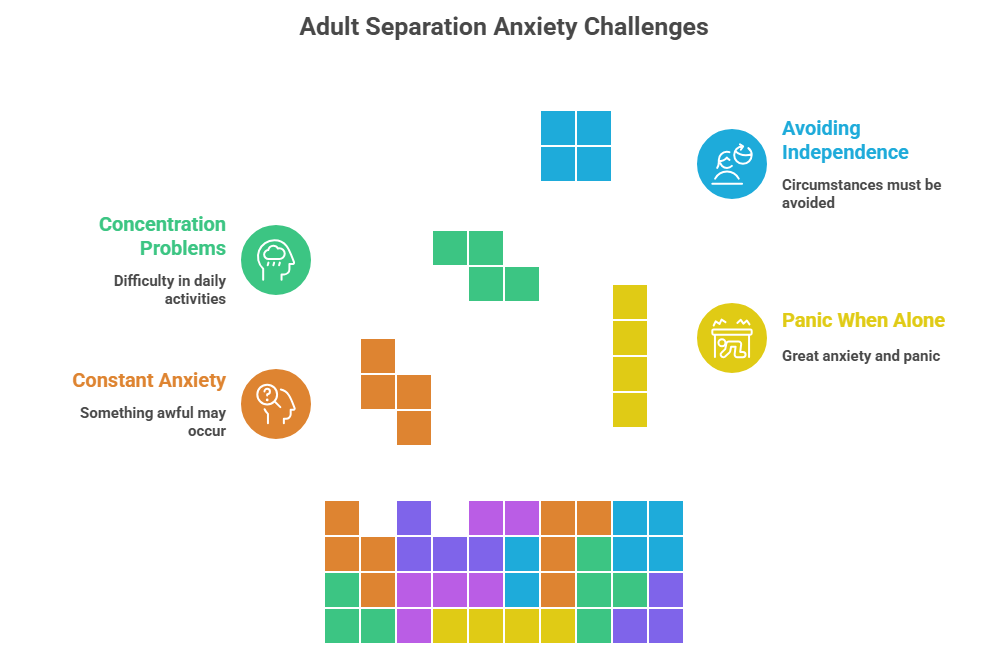
The symptoms related to separation anxiety in adulthood are a feeling of severe emotional or physical discomfort when you are not in the presence of a person to whom you are deeply attached. This can be a partner, or even a relative or a close friend. It is more than a feeling of missing somebody. Common experiences include:
- Constant anxiety that something awful may occur.
- Great anxiety or panic when alone.
- Problem with concentration in work or daily activities.
- Avoiding circumstances where one has to be independent.
To most adults, this trend is also associated with attachment anxiety, particularly when early attachment relationships were not felt to be safe or predictable. And across 18 countries, the World Mental Health surveys found that nearly one in twenty adults globally may experience separation anxiety in their lifetime, and 43% of cases begin after age 18.
What are the Emotional Manifestations of Adult Separation Anxiety
Separation anxiety symptoms in adults are also usually worry and fear-oriented as opposed to sadness. One of my clients tells me of how his brain is always on high alert to danger, and he envisions accidents and situations of abandonment.
This emotional burden is tiresome. Many adults go through it, but they do not make a noise because they are supposed to be able to cope with it by pressing the feeling.
What Are the Behavioral Facts to Be Conscious of
Separation anxiety symptoms can also gradually reduce the size of your world, behaviorally. To prevent the inconvenience of being separated, people tend to change their lives. This can look like:
- Polite declines of working or social engagements.
- The requirement to be in touch all the time via texts or calls.
- Do not sleep alone or stay at home.
- Living day to day, and basing it around a single figure of attachment.
In the long run, this avoidance strengthens anxiety. In my practice of providing anxiety treatment to adults, I tend to observe how these actions started out as defenses that end up restricting freedom of emotions.
Is Separation Anxiety Responsible for Physical Symptoms
Yes, physiological symptoms that simulate medical conditions are quite common in separation anxiety symptoms among adults. These may include:
- Stomach pain, headache, or nausea
- Pain in the chest or fasted heartbeat
- Dizziness or shortness of breath
- Muscle tension or trembling
What are the Effects of Separation Anxiety on Sleep and Thought
Separation anxiety symptoms in adults may affect concentration, memory, and decision-making capabilities. It is difficult to be present when a certain segment of your brain is continuously on alert. These sleeping disorders tend to influence mood and behavior. I also observe this pattern in adults while conducting depression therapy.
Factors That Cause Separation Anxiety in Adults
The usual factors contributing to them are:
- Emotional unavailability or childhood neglect.
- The death of a loved one or a caregiver.
- Mistreating or having a bad childhood situation.
- Divorce or relocation of major adult transitions.
My clients are all adults, and most of them were victims of abuse or were neglected during childhood. I apply childhood trauma-informed therapy to treat adults with dissociation as well as DID, to assist them in understanding the ways in which childhood wounds persist to cause anxiety in the present day.
At which point is Separation Anxiety a Mental Health Issue
The symptoms of separation anxiety in adults are of concern when they persist longer than six months and disrupt the working, relationship, or normal functioning of the individual. It may be time for you to seek help if:
- Anxiety regulates the significant choices in life.
- It seems there is always a demand for reassurance in relationships.
- You are not independent even when you want to be.
- You are stuck in a shame or self-critical loop.
When prior trauma or neglect is present, these patterns may come out without therapy.
FAQs
What are the reasons when I should be concerned about separation anxiety?
In case anxiety about the separation is chronic, extreme, and disrupts everyday life or relationships, it should be discussed with a mental health expert.
Is there a test of separation anxiety in adults?
Yes, the Adult Separation Anxiety Questionnaire (ASA-27) is an instrument that is usually used in understanding the symptoms and patterns of adult separation anxiety.
What causes separation anxiety in adults?
The causes may be premature attachment disturbances, trauma, neglect, significant life events, or other disorders associated with anxiety.
Is it possible to treat the separation anxiety of adults?
Yes, therapies like IFS-informed can assist adults to feel safe, more grounded, and more independent over time.
Walking on the Road to Recovery and Settlement
Separation anxiety symptoms in adults can shape how they move through relationships, work, and even their sense of self. Many adults I work with have spent years managing this anxiety that developed in response to earlier neglect. I always say that healing does not mean forcing yourself, but helping your nervous system learn that connection and independence can coexist.
With the right support, it’s possible to build internal safety. And for that, you can contact me, Arlene Brewster, PhD, for guidance. I am a licensed therapist in Maine and New Hampshire and bring over 30 years of experience. With me, you do not have to rush healing. You just have to start where you are.
