

Understanding how childhood trauma affects adulthood is essential for anyone who feels that their past continues to disrupt their current emotional well-being and relationships. In my more than 30 years of clinical practice as a psychologist and Certified IFS Therapist, I have worked with countless adults who struggle to understand why minor conflicts feel catastrophic or why intimacy feels terrifying.
The pain of early life does not simply vanish when you reach adulthood. When a child grows up in an unpredictable, abusive, or neglectful environment, survival mechanisms become wired into the nervous system. These adaptations shape beliefs, self-worth, and romantic connections decades later.
How Early Adversity Alters Nervous System Development
When exploring how childhood trauma affects adulthood, we must recognize that overwhelming early stress fundamentally alters brain development. The human brain develops rapidly during early childhood, establishing neural pathways that govern emotional responses, threat detection, and attachment.
When a child experiences ongoing instability, the nervous system remains in a continuous state of high alert. As noted by the American Psychological Association, adverse early experiences can produce long-lasting changes in stress hormone regulation and emotional functioning.
This chronic state of survival often leads to significant emotional regulation difficulties in adult life. Adults may find themselves shifting rapidly from calm to intense panic or shutting down completely during minor disagreements. The nervous system continues scanning for danger even in safe environments, causing ordinary interactions to feel threatening. Recognizing these patterns helps normalize the struggles of childhood trauma in adults.
Insecure Attachment Styles and Relational Dynamics
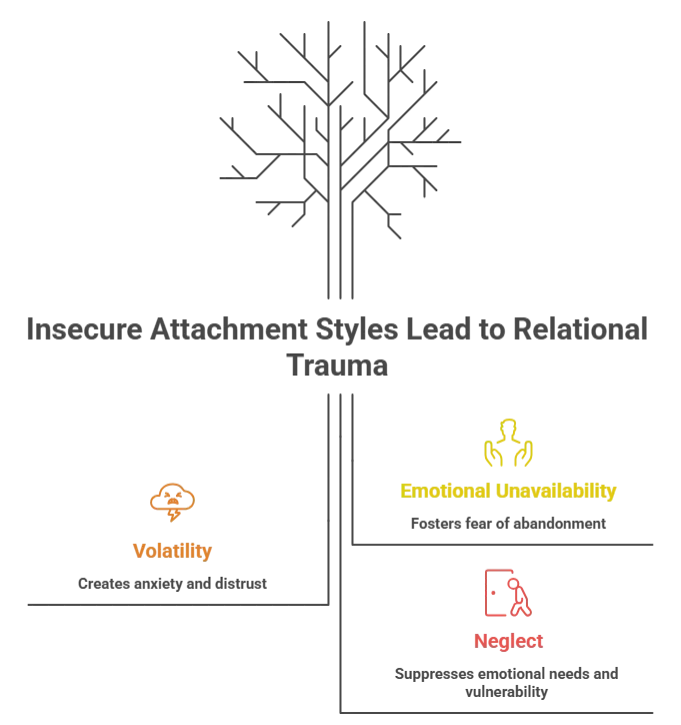
Another significant aspect of how childhood trauma affects adulthood involves relational bonding. The emotional bonds formed with primary caregivers create internal templates that dictate how we approach closeness, vulnerability, and conflict.
When early caregiving is marked by emotional unavailability, volatility, or neglect, individuals often develop insecure attachment styles. These patterns frequently generate intense trauma responses in relationships, including:
- Anxious attachment where an individual constantly fears abandonment and seeks perpetual reassurance.
- Avoidant attachment, where an individual suppresses emotional needs and pushes partners away to avoid vulnerability.
- Disorganized attachment, where an individual experiences a painful push-pull dynamic, deeply craving closeness while feeling terrified of intimacy.
These attachment styles are not personality flaws. They are protective strategies developed to navigate unsafe early environments. When unhealed childhood wounds are activated by a partner’s behavior, an adult may react from the perspective of their younger, frightened self. For couples struggling with these painful patterns, participating in relationship counseling provides a structured space to untangle old survival defenses.
Trust, Boundaries, and Chronic Shame
Childhood trauma in adults frequently manifests as a profound disruption in the ability to establish trust and maintain healthy boundaries. If early caregivers violated boundaries or made love conditional, an adult may grow up believing that asserting needs will lead to rejection.
This dynamic often results in chronic people-pleasing and self-abandonment. You might find yourself agreeing to things you dislike, tolerating disrespectful behavior, or feeling incapable of saying no. Alternatively, some adults build rigid walls, refusing to let anyone close enough to cause harm.
Beneath these boundary struggles lies deep-seated shame. Many adults carry a quiet, persistent conviction that they are fundamentally defective, unlovable, or to blame for the adversity they experienced. This internalized shame fuels intense anxiety and emotional regulation difficulties, making it difficult to believe that a partner’s care is genuine.
Further, persistent fear and anxiety can be among the symptoms of childhood trauma in adults, and specialized anxiety therapy may help individuals work through these ongoing responses.
Healing Complex Trauma and Dissociative States
Understanding how childhood trauma affects adulthood requires a trauma-informed approach that honors the complexity of the human psyche.
In my practice, I work extensively with adults navigating Dissociative Identity Disorder, also known as DID. DID is a highly creative, survival-based organization of the self formed in response to severe early childhood adversity. When trauma is overwhelming, the mind creates distinct parts to hold intolerable memories, terror, and shame while allowing other parts to function in daily life.
Through Internal Family Systems, or IFS, I help adults with DID and complex trauma cultivate internal communication, compassion, and safety among all parts of their system. Rather than attempting to force change, we gently unburden the protective parts that manage trauma responses in relationships. Engaging in targeted childhood trauma therapy allows adults to heal unhealed childhood wounds at a pace their internal system can safely tolerate.
Navigating Trauma Recovery Through Online Sessions
Learning how childhood trauma affects adulthood allows you to replace survival strategies with conscious choices. To make specialized care accessible, I provide all therapy sessions through secure online video platforms for adult clients in Maine, New Hampshire, and throughout the United States.
Online therapy provides a uniquely grounded environment for trauma recovery. Meeting virtually from the comfort of your own home allows you to maintain control over your physical surroundings, which reduces hypervigilance and helps soothe emotional regulation difficulties.
By eliminating the stress of commuting and unfamiliar waiting rooms, virtual sessions make it easier to attend therapy consistently. This regular rhythm of support is vital when processing childhood trauma in adults, resolving trauma responses in relationships, and healing unhealed childhood wounds.
Frequently Asked Questions
How can childhood trauma affect adulthood?
Childhood trauma can change brain development, stress responses, and emotional health, leading to long-term physical, mental, and relational struggles in adulthood.
What are the psychological consequences of childhood trauma?
Childhood trauma causes lasting psychological harm, including high rates of depression, anxiety, panic disorders, and post-traumatic stress disorder.
What are the usual symptoms of childhood trauma in adults?
Childhood trauma causes strong emotional effects like ongoing fear, severe sadness, chronic shame, and trouble controlling feelings. It changes how a person handles stress, trusts others, and views the world.
Can childhood trauma be resolved in adult life?
Yes, with appropriate trauma-informed therapy, the brain and nervous system can form new neural pathways. Adults can unburden painful memories, develop secure attachment patterns, and build fulfilling relationships.
A Compassionate Path Forward
Making sense of how childhood trauma affects adulthood is the first step toward reclaiming your agency and creating healthier relational patterns. You do not have to remain trapped in the survival strategies that once protected you from early neglect, abuse, or instability.
If you are ready to begin processing your history in a safe and supportive setting, I, Dr. Arlene Brewster, at Brewster PhD, offer specialized, trauma-informed care for adults. I bring over 30 years of clinical experience as a licensed psychologist in Maine and New Hampshire, offering IFS-informed therapy online across the country to help individuals heal from childhood abuse, neglect, shame, and complex trauma.
