

Determining when it is too late for marriage counseling is a question that often arises when emotional exhaustion, quiet resentment, and long-standing silence have settled into a partnership. In my more than 30 years of clinical practice as a psychologist and Certified IFS Therapist, I have sat with many couples who feared they had waited far too long to ask for help.
The encouraging reality is that the door to healing remains open much longer than most people realize. While saving a marriage requires authentic commitment and emotional honesty, understanding when it is too late for marriage counseling depends less on the duration of your struggles and more on whether both individuals still possess a genuine willingness to try.
Clear Signs That It Is Not Too Late for Marriage Therapy
Many couples arrive in my virtual office convinced they have passed the point of no return. Yet, as we begin to talk, it often becomes clear that their relationship still has a strong pulse beneath the layers of frustration.
It is rarely too late for marriage therapy when the following elements are present:
- Mutual willingness to attend sessions and engage in the process, even when uncertainty and skepticism exist.
- The ability to recall fond memories and appreciate what originally brought the two of you together.
- Underlying care for each other’s well-being, even when day-to-day interactions feel strained.
- A shared understanding that poor communication patterns, rather than a total absence of love, are the primary source of conflict.
When these indicators exist, saving a marriage is entirely possible. The conflict you experience is often evidence that both partners still care deeply about being understood. For couples who want to move past destructive communication cycles, engaging in structured couples therapy provides the clarity and safety needed to re-establish meaningful connection.
Understanding When Relationship Counseling Reaches the Point of No Return
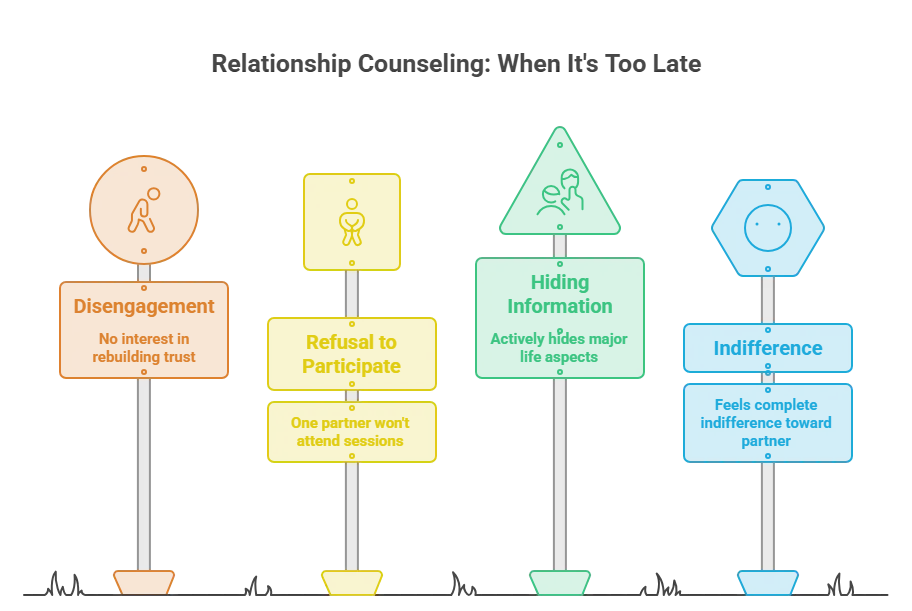
While there is always hope when two people are willing to engage, there are situations where knowing when it is too late for marriage counseling becomes essential for emotional clarity. Professional guidance cannot rebuild a partnership if the foundational desire to connect has entirely disappeared.
According to research shared by The Gottman Institute, patterns such as contempt, defensiveness, and stonewalling are harmful communication behaviors associated with relationship distress. Therapy reaches a true impasse when one or both partners have completely disengaged emotionally and have no interest in rebuilding trust.
If one partner refuses to participate in sessions, actively hides major aspects of their life, or feels complete indifference toward the other person, relationship counseling becomes difficult. In these moments, therapy can still provide a valuable space, but the goal may shift from saving a marriage toward navigating an amicable and respectful separation.
How Childhood Adversity and Trauma Impact Marital Hope
In my clinical experience, many couples mistakenly believe they are at the end of their rope when they are actually colliding with unhealed personal trauma. When early childhood adversity is part of a partner’s past, adult intimacy can feel inherently dangerous.
Adults who experienced early abuse, neglect, emotional instability, or chaotic home environments often carry deep, unspoken shame into their adult partnerships. These early wounds cause protective parts of the self to erect defensive walls such as emotional withdrawal or sudden anger. What looks like marital failure is often a nervous system stuck in protective survival mode.
At Brewster PhD, I work exclusively with adults who experienced abusive or neglectful situations in childhood, bringing over 30 years of expertise to untangling how historical trauma impacts adult intimacy.
This specialized approach includes working compassionately with adults living with Dissociative Identity Disorder, or DID. DID is a complex survival response to severe early adversity that deeply influences how safety and attachment are experienced. When unaddressed personal history threatens your relationship, participating in childhood trauma therapy helps individuals process their past so they can show up with openness in their marriage.
Cultivating Connection Through Online Relationship Counseling Sessions
Understanding when it is too late for marriage counseling also means recognizing that modern care should fit smoothly into your daily life without adding logistical stress. Many couples find that traveling to an office creates additional tension that interferes with their therapeutic progress.
I provide relationship counseling entirely through secure online video sessions for adults in Maine, New Hampshire, and across the United States. Meeting virtually from the privacy of your home allows both partners to engage in delicate conversations within a comfortable, grounded setting.
Regular participation plays an important role in achieving positive outcomes in marriage therapy. By removing travel time and scheduling challenges, online sessions can make it easier for couples to consistently invest in improving their relationship over time. For couples seeking to rebuild trust and rekindle affection, engaging in ongoing relationship counseling online creates the steady, dependable rhythm necessary for lasting emotional repair.
Frequently Asked Questions
At what point is it too late for couples therapy?
It is generally not too late for couples therapy as long as both partners still have some emotional investment and are willing to show up, though it becomes ineffective if one or both have completely checked out or refuse to engage.
What are the four signs that a marriage will end in divorce?
According to relationship researcher Dr. John Gottman, the four main signs that a marriage may end in divorce are criticism, contempt, defensiveness, and stonewalling.
Can marriage therapy help if one partner has emotional doubts?
Yes, ambivalence is extremely common when couples begin therapy. An experienced clinician helps partners explore their doubts safely without forcing premature decisions about the future of the relationship.
How long does it usually take to see progress in relationship counseling?
Many couples begin noticing positive communication shifts within eight to twelve consistent sessions, though deeper issues involving chronic shame or past trauma may require more time to heal fully.
Rediscovering the Shared Path Ahead
Asking yourself when it is too late for marriage counseling is often a sign that you still care enough to wonder if your bond can be restored. Even when emotional distance feels wide and previous conversations have fallen flat, compassionate and skilled guidance can help you uncover the care that lies beneath your frustration.
If you and your partner are ready to explore the possibilities for your relationship, I, at Brewster PhD, provide trauma-informed online marriage therapy and relationship counseling for adults in Maine, New Hampshire, and nationwide. With over 30 years of clinical experience as a licensed psychologist and Certified IFS Therapist, I help couples and individuals move past painful cycles, heal from childhood abuse, neglect, and shame, and navigate complex trauma.
