

Understanding the difference between a therapist and a counselor can help you find the exact type of emotional care you need when life feels heavy or confusing. When you decide to seek support, navigating the different titles, degrees, and clinical approaches can feel overwhelming. Many people use these terms interchangeably, but there are distinct nuances in how each professional approaches mental health care.
In my more than 30 years of clinical practice as an IFS therapist and psychologist, I often hear people ask about counseling vs therapy and wonder which practitioner is right for their unique journey. Choosing the right path depends on whether you are looking for short-term tools to navigate an immediate challenge or seeking deeper psychotherapy to heal long-standing emotional wounds.
The Core Distinction in Approach and Goals
The primary difference between a therapist and a counselor lies in the scope, depth, and duration of the treatment provided. While both roles aim to improve your overall emotional well-being, their everyday methods and long-term goals often diverge.
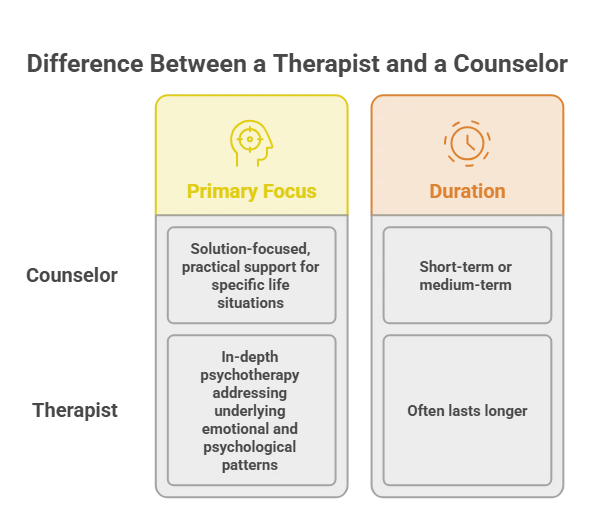
A counselor typically provides solution-focused, practical support designed to help you manage specific life situations. Counseling is often short-term or medium-term and focuses heavily on present-day concerns. A counselor helps you build immediate coping skills for circumstances such as job stress, grief, divorce, or major life transitions.
A therapist generally focuses on in-depth psychotherapy to address underlying emotional, relational, and psychological patterns. Therapy often lasts longer because it explores how past experiences, unconscious beliefs, and family dynamics shape current difficulties. Rather than only addressing surface symptoms, a therapist helps you discover the root causes of distress to foster fundamental, lasting transformation.
Education, Credentials, and Clinical Scope
Both counselors and therapists must complete rigorous graduate education, supervised clinical hours, and state licensing examinations. However, their specific training backgrounds often influence the types of therapy they offer in clinical practice.
Mental health counselors typically hold a master’s degree in counseling, clinical mental health, or social work. They specialize in practical interventions, behavioral adjustments, and goal-oriented problem-solving.
Therapists and psychologists often complete doctoral-level education, such as a PhD or PsyD, or specialized master level clinical degrees. This advanced training provides deep immersion in psychodynamic theory, diagnostic assessment, and evidence-based clinical frameworks.
Organizations like the American Psychological Association outline how doctoral-level clinicians are uniquely trained to treat complex conditions and conduct advanced psychological interventions. When considering counseling vs therapy, understanding these credential levels ensures you choose a mental health professional equipped for your specific needs.
When Deeper Psychotherapy Is Needed for Trauma and Adversity
For individuals carrying deep psychological distress, working with a therapist is often essential. When emotional struggles stem from early childhood adversity, brief problem-solving is rarely enough to create lasting peace. Early experiences of abuse, neglect, emotional abandonment, or chronic family instability fundamentally alter the nervous system.
Adults who endured early adversity often carry profound, quiet shame that affects their self-worth, boundaries, and emotional safety. At Brewster PhD, I work exclusively with adults who experienced abusive or neglectful situations in childhood, bringing over three decades of clinical expertise to this delicate work. I do not provide child therapy, as my focus is entirely on helping adults heal historical wounds and reclaim their lives.
This advanced care is especially vital for adults living with Dissociative Identity Disorder, also known as DID. DID is a complex survival response to severe early trauma and requires specialized, non-judgmental psychotherapy. A qualified therapist helps clients understand their internal system with deep compassion.
When chronic low mood or numbness is tied to these early wounds, engaging in specialized depression therapy allows you to safely process root causes rather than simply managing daily symptoms. Understanding this difference between a therapist and a counselor ensures that complex trauma receives the specialized care it requires.
Navigating Relationship Dynamics and Relational Pain
Relationship difficulties represent another area where the distinction between modalities becomes evident. When couples face communication hurdles or minor conflicts, counseling can provide structured communication tools and practical de-escalation techniques.
However, when relationship distress is fueled by unhealed attachment wounds, infidelity, or recurring emotional disconnection, deeper relational therapy is often necessary. A trained therapist looks beneath the arguments to examine how each partner’s personal history and emotional triggers interact.
In my practice, I help couples explore the vulnerable parts of themselves that drive defensiveness or withdrawal. For partners seeking to transform entrenched relational patterns, engaging in relationship counseling provides a safe container to rebuild authentic trust and emotional intimacy.
Healing Early Wounds Through Specialized Modalities
Choosing the right mental health professional also involves looking at the specific clinical modalities they utilize. Different types of therapy offer distinct pathways to emotional resolution. Experiential modalities like Internal Family Systems, or IFS, allow adults to connect with the protective and wounded parts of their inner system.
When working through early relational trauma, exploring childhood trauma therapy helps unburden the exiles that carry fear and self-blame. While I am licensed in Maine and New Hampshire, I also offer online sessions across the United States, allowing adults to access specialized trauma-informed psychotherapy from the comfort and privacy of their own homes.
Recognizing the clear difference between a therapist and a counselor helps you select the exact level of support your healing requires.
Frequently Asked Questions
Is it better to see a therapist or a counselor?
Neither professional is objectively better because the right choice depends on your personal goals. A counselor is usually best for short-term support focused on a specific, immediate life challenge. A therapist is generally better for deep-rooted, ongoing emotional patterns or diagnosed mental health conditions.
How do I know if I need therapy or counseling?
You likely need therapy or counseling if emotional distress, sadness, or anxiety lasts for weeks, disrupts your daily routine, or strains your relationships. If you find yourself wondering whether you need professional help, that curiosity itself is often a clear sign that reaching out could benefit you.
Can a counselor help with severe childhood trauma and neglect?
While some counselors have specialized trauma training, complex trauma and severe childhood adversity generally require a licensed psychotherapist or psychologist experienced in trauma-informed modalities.
Do therapists and counselors use the same treatment methods?
Therapists and counselors often share certain techniques, such as active listening and cognitive reframing. However, therapists tend to integrate deeper psychodynamic, somatic, and parts work approaches that address root origins rather than focusing primarily on immediate problem-solving.
Choosing the Optimal Path for Your Personal Growth
Gaining clarity on the difference between a therapist and a counselor empowers you to make an informed, confident decision about your mental health. Whether you require focused tools for an immediate transition or deep psychotherapy to heal long-standing pain, honoring your emotional needs is a vital act of self-care.
If you are evaluating the difference between a therapist and a counselor to address complex trauma, childhood adversity, or relationship pain, I, Dr. Arlene Brewster, at Brewster PhD offers experienced, compassionate care backed by over 30 years of clinical practice. I’m licensed in Maine and New Hampshire, working exclusively with adults navigating the painful legacies of childhood abuse, neglect, shame, and Dissociative Identity Disorder (DID) via online therapy across the country.
