

Knowing how to choose a therapist is one of the most significant decisions you can make for your emotional well-being. When you are feeling overwhelmed, anxious, or weighted down by past experiences, searching for the right professional can feel like a daunting task. However, finding a clinical space where you feel genuinely safe, respected, and heard is the most critical foundation for healing.
The process of finding a therapist does not have to be mysterious or overwhelming. By breaking the journey down into clear steps, you can navigate your options with confidence. I want to guide you through this process so you can locate a practitioner who possesses both the professional qualifications and the personal approach that aligns with your specific healing goals.
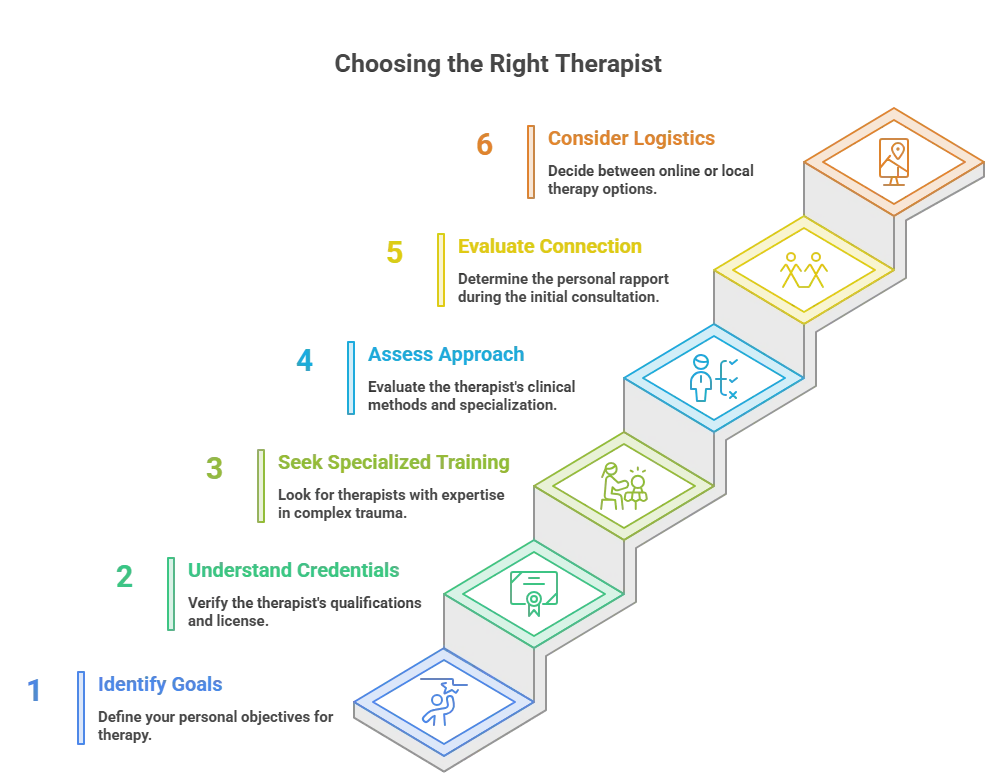
Identify Your Personal Goals and Needs
Before you begin searching directories, it helps to clarify what you hope to address. Many adults seek support because they are struggling with persistent worry, low mood, or relationship conflicts. Others are trying to make sense of deep-seated shame and emotional blockages that have lingered since childhood. If you are clear about your primary concerns, the process of finding a therapist becomes much more focused and effective.
Take time to consider whether you want to focus on practical coping skills for current symptoms or explore how your history shapes your present. If you are dealing with chronic fear or panic, seeking specialized anxiety therapy might be your starting point. Clarifying these needs allows you to look for practitioners with the specific training required to support your journey.
Understand Therapist Credentials and Licensing
As you look at profiles, the alphabet soup of letters after a provider’s name can feel confusing. It is crucial to verify therapist credentials to ensure that your provider is legally licensed to practice and adheres to strict ethical standards. Common credentials include licensed clinical social workers, marriage and family therapists, and licensed psychologists who hold doctoral degrees like a PhD or PsyD.
You can check licensing boards or utilize professional search tools like the American Psychological Association to verify credentials. Understanding therapist credentials helps you know the level of education and supervised training your practitioner has completed. This verification is a vital step in learning how to choose a therapist who has the expertise required for complex psychological work.
Look for Specialized Training in Complex Trauma
If your history includes childhood abuse, neglect, or severe instability, you need a professional who understands trauma deeply. In my practice, Brewster PhD, I focus on helping adults who experienced emotional or physical adversity during their early years. I do not offer child therapy because my focus is entirely on helping adults heal from the long-term consequences of childhood neglect and violation.
For adults living with Dissociative Identity Disorder, also known as DID, specialized care is even more essential. DID is a highly creative survival response to early trauma, and it requires a therapist who works with dissociation compassionately and skillfully.
When you are finding a therapist, look for someone who operates from a trauma-informed framework and understands how early wounds generate shame. Learning how to choose a therapist who is truly equipped for this work is key, and seeking trauma therapy with a specialist can prevent re-traumatization.
Assess the Clinical Approach and Specialization
Different practitioners utilize different modalities to facilitate change. Some focus on cognitive behavioral patterns while others, like myself, specialize in experiential and relational modalities such as Internal Family Systems, or IFS. If you carry deep shame from early neglect or abuse, finding a therapist who works with your protective inner parts can be incredibly healing.
As you consider how to choose a therapist, ask prospective providers about their specific methods. In my over 30 years of experience as a psychologist licensed in Maine and New Hampshire, I have found that integrating parts work with specialized childhood trauma therapy helps clients heal the roots of their distress rather than just managing symptoms on the surface. Understanding these clinical approaches helps you prepare for your upcoming therapy sessions.
Evaluate the Personal Connection in Your Initial Consultation
The absolute best predictor of success in healing is the quality of the relationship between you and your provider. Many practitioners offer a brief initial consultation, which you should treat as an opportunity to assess the fit. Pay close attention to how you feel during this conversation, including whether you feel heard, respected, and physically at ease.
Ask questions about their experience with your specific concerns, their clinical style, and what you can expect during your typical therapy sessions. It is perfectly normal to interview a few different professionals before making a decision. Your comfort and safety are paramount, and you deserve to find a space where you can speak honestly without fearing judgment.
Consider the Logistics of Online and Local Care
The practical details of your care matter just as much as therapist credentials when it comes to maintaining consistency. Consider whether you prefer meeting in an office or if the convenience of online therapy fits your lifestyle better. I offer online sessions for adults in Maine and New Hampshire, as well as clients across the United States, allowing individuals to access specialized care from the comfort of their home.
Consistent attendance is vital for long-term progress. If traveling to an office adds stress or makes you miss appointments, virtual sessions can make a significant difference. Ensure that your provider uses a secure, confidential platform and that you have a private space where you can participate in your therapy sessions without interruption. Understanding how to choose a therapist involves balancing these practical logistics with clinical alignment.
Frequently Asked Questions
What is the 2-year rule in therapy?
The 2-year rule in therapy is an ethical guideline from organizations like the American Psychological Association stating that therapists must not engage in sexual or romantic relationships with former clients for at least two years after treatment ends.
What is a red flag for a therapist?
A red flag for a therapist is any behavior that breaks professional trust, ignores your boundaries, or makes you feel unsafe. Warning signs range from poor communication and judgment to severe ethical violations like sharing your private secrets. You deserve a safe space where you feel respected and heard.
How many sessions should I commit to before deciding if a therapist is a good fit?
I generally recommend attending three to five sessions before making a final decision. It takes time to build trust and move past the initial awkwardness of sharing your story with someone new. However, if you feel unsafe or disrespected during your very first meeting, it is entirely appropriate to look elsewhere immediately.
Can a therapist help me if I am struggling with severe childhood neglect and dissociation?
Yes, provided they have specialized training in complex trauma and dissociative disorders. Adults who experienced early neglect or abuse often require a trauma-informed approach that honors their protective strategies, including dissociation, rather than pathologizing them.
Beginning the Path to Wholeness
Understanding how to choose a therapist is a profound first step toward reclaiming your peace of mind, self-trust, and emotional freedom. Taking the time to find a qualified professional who truly understands your history ensures that your investment in your mental health leads to lasting, transformative change.
If you are exploring how to choose a therapist who specializes in trauma and deep emotional healing, I, at Brewster PhD, provide experienced, compassionate care backed by over 3 decades of clinical expertise. I am licensed in Maine and New Hampshire, working exclusively with adults navigating the long-term effects of childhood abuse, neglect, chronic shame, and Dissociative Identity Disorder (DID) via online therapy across the country.
