
The Connection Between Depression and Anger Explained
In my clinical work, I often see how depression and anger appear together in ways many people don’t expect. Most of us grow up believing depression only looks like sadness or withdrawal. But emotional reality is far more complex.
Over the past 30 years of working with adults in Portsmouth, NH, and Southern Maine, I’ve seen that frustration, irritability, and emotional shutdown are often part of the same emotional landscape. When we begin to understand these emotional patterns rather than judge them, real healing can start.
Why Anger Often Appears Alongside Depression
Depression is rarely just one feeling. It often includes exhaustion, hopelessness, shame, and a sense of being emotionally overwhelmed. When those feelings build up, anger can naturally surface.
In my experience, depression and anger often interact because anger becomes a protective response. Instead of expressing vulnerability, certain parts of us react with irritation or frustration. People might notice:
- Feeling easily annoyed
- Reacting strongly to small frustrations
- Losing patience quickly
- Feeling emotionally overwhelmed
With Internal Family Systems (IFS) therapy, I often help clients explore these reactions as different parts of ourselves trying to protect us from deeper pain. When we approach these parts with curiosity instead of criticism, our emotional system begins to soften.
Can Depression Show Up as Irritability Instead of Sadness?
A question I hear frequently in therapy is: Can depression make you angry instead of sad? Yes, it absolutely can. This might look like:
- Snapping at loved ones
- Feeling overwhelmed by daily stress
- Experiencing sudden frustration
- Having difficulty tolerating minor problems
These responses aren’t character flaws. They’re signals that the nervous system is under strain. When people begin to understand how anger and depression are connected, many feel a sense of relief. The reactions that once felt confusing start to make emotional sense.
When Anger Turns Inward
In many cases, anger doesn’t show up outwardly at all. Instead, it gets directed inward. Psychologically, depression and anger often become linked through intense self-criticism. Rather than expressing frustration toward others, people may blame themselves. This inner pattern may include:
- Harsh internal judgment
- Persistent shame
- Feeling “not good enough.”
- Constantly replaying past mistakes
Over time, this internal pressure deepens depressive feelings.
In my work using Internal Family Systems therapy, I help people understand these critical parts rather than trying to silence them. Often, those parts formed long ago as a way to protect against emotional pain. Understanding their role can reduce the intensity of self-criticism and bring more compassion into the internal conversation.
Is Anger a Sign of Depression?
Sometimes it is. Depression doesn’t always appear as quiet sadness. For some people, it shows up as irritability, emotional tension, or frustration with others. In my practice, I often see anger emerge when someone feels:
- Chronically overwhelmed
- Emotionally unsupported
- Unable to express vulnerability
- Stuck in difficult life circumstances
Even public health data shows that depression has become increasingly common. Recent reports from the CDC indicate that more than 13% of adolescents and adults experienced depression symptoms between 2021 and 2023.
Biological and Emotional Factors Behind the Connection
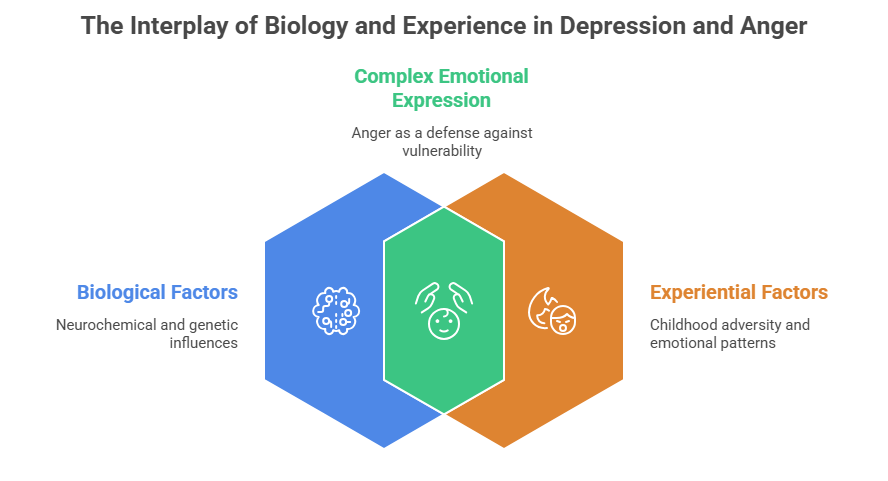
The relationship between depression and anger also has biological components. But biology alone doesn’t explain everything. Over my more than 30 years of clinical work, I’ve seen how long-term stress, unresolved emotional wounds, and early life experiences shape how emotions surface.
For many adults, childhood adversity, including neglect, creates internal patterns that make certain emotions feel unsafe. Anger may emerge as a protective shield against deeper vulnerability.
Understanding Emotional Patterns Through Therapy
When someone begins therapy, they’re often confused by their reactions. They may wonder: Does depression cause anger, or are these separate struggles?
Through my work in depression therapy, I help adults explore these patterns gently and without judgment. My approach is based on Internal Family Systems (IFS) therapy, which focuses on understanding the different parts of ourselves that shape our emotional responses.
I’m certified in IFS therapy and licensed in both Maine and New Hampshire, and much of my work involves helping clients across Portsmouth, NH, and Southern Maine develop a more compassionate relationship with their internal world.
The Cycle Between Anger, Guilt, and Depression
One of the most painful aspects of depression and anger is the cycle they can create. Often it unfolds like this:
- Someone feels hurt, overwhelmed, or misunderstood
- Anger surfaces as a reaction
- Guilt follows the emotional outburst
- Shame deepens the depressive feelings
When we begin to understand these patterns with curiosity rather than criticism, the cycle can start to shift.
The Role of Anxiety in Emotional Reactivity
Anger connected to depression often overlaps with anxiety. When the nervous system remains in a state of chronic tension, emotional reactions become stronger and faster. Through anxiety treatment, I often help clients understand how persistent stress influences both anger and depressive feelings.
How Childhood Experiences Shape Adult Emotional Reactions
Adults who experienced difficult childhood environments, including neglect, often developed protective emotional responses that continue into adulthood. Through work exploring early experiences in childhood trauma recovery, I frequently see how anger originally served as a survival strategy.
Further, in my work with adults, including individuals experiencing complex trauma and Dissociative Identity Disorder (DID), understanding these internal reactions often becomes a powerful step toward healing.
Healing the Relationship Between Anger and Depression
When people begin to understand the connection between depression and anger, something important shifts. Instead of feeling ashamed or confused by their emotions, they start to see those reactions as meaningful signals. Healing often involves:
- Recognizing emotional triggers
- Understanding protective internal reactions
- Developing compassion for different parts of ourselves
- Learning healthier ways to process difficult emotions
Over the years, I’ve seen many people discover that anger softens naturally when the deeper feelings beneath it are finally acknowledged and understood.
FAQs
1. Why do I feel angry when I’m depressed?
Anger can act as a protective emotional response. When sadness, helplessness, or shame feel overwhelming, certain parts of the mind may express frustration instead.
2. Can depression cause sudden irritability?
Yes, depression can affect emotional regulation and make people more sensitive to stress, leading to irritability or emotional outbursts.
3. Is it common to feel guilt after anger?
Very common. Many people experience a cycle where anger leads to guilt, which can deepen depressive feelings.
4. When should someone seek therapy for anger and depression?
If anger, irritability, or emotional shutdown are affecting relationships, work, or overall well-being, therapy can help uncover the underlying emotional patterns.
Finding Support in Portsmouth, NH and Southern Maine
Over my more than three decades of clinical experience, I’ve learned that understanding the connection between depression and anger can be a powerful turning point for many people. If you’re navigating depression, emotional reactivity, shame, or unresolved trauma, thoughtful support can make a meaningful difference.
Through my practice at Brewster PhD, I work with adults across Portsmouth, New Hampshire, and Southern Maine to better understand their internal emotional patterns and move toward greater balance, clarity, and self-compassion.
