
Effective Methods for Healing Childhood Trauma
If you are carrying pain from early life experiences, you may already know that healing childhood trauma is not about “just moving on.” It is about gently untangling the ways your past still lives in your body, your relationships, and your beliefs about yourself.
As a therapist, I want you to know that your reactions make sense. The coping strategies you developed as a child were intelligent adaptations. They helped you survive. Now, as an adult, some of those same strategies may feel limiting or overwhelming.
The work of healing is not about blaming your past. It is about helping you feel safer, steadier, and more whole in the present.
Below, I will walk you through therapeutic methods I use in my practice to support deep and lasting healing.
Recognizing How Your Past Still Shapes Your Present
You might notice patterns you cannot quite explain. Perhaps you struggle with trust, feel intense fear of rejection, or shut down emotionally during conflict. Maybe you are highly self-critical or constantly on alert.
These patterns are not character flaws. They are rooted in early experiences where your emotional or physical needs were not consistently met. Trauma is not only about extreme events. It can also stem from chronic emotional neglect, unpredictable caregiving, or growing up in an environment where your feelings were dismissed.
Understanding the subtle and profound impacts of childhood trauma can help you see your symptoms through a lens of compassion rather than shame.
Creating Safety Before Revisiting Painful Memories
One of the most neglected aspects of healing is pacing. You do not need to go deeper into painful memories immediately. In fact, true healing begins with building internal and external safety.
In my work together, I focus first on helping you regulate your nervous system. This may involve grounding techniques, breathwork, and identifying safe relationships in your life. When your body feels steadier, it becomes possible to explore the past without becoming overwhelmed.
Healing childhood trauma requires safety as the foundation. Without it, processing can feel retraumatizing, not restorative.
Reconnecting With Your Inner Child Through Compassionate Awareness
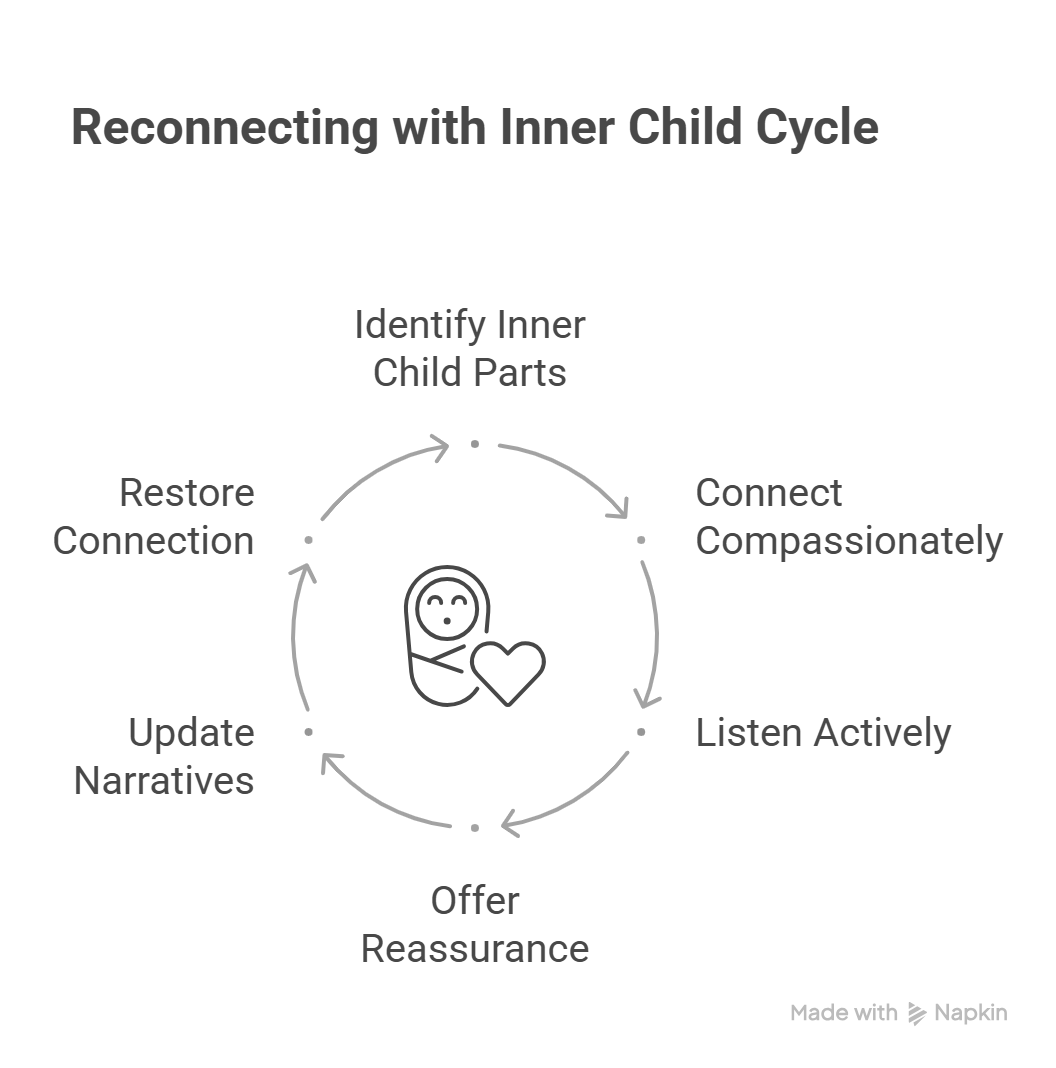 You may have heard the phrase “inner child,” but it is more than a metaphor. Parts of you are still holding the emotions, fears, and unmet needs from earlier years.
Using approaches such as Internal Family Systems, I help you gently connect with younger parts of yourself. Instead of judging them, you learn to listen.
You might notice a part that feels scared when someone raises their voice. Another part may strive for perfection to avoid criticism. These parts were developed to protect you. When you offer them compassion and reassurance, you begin to update old narratives.
This inner dialogue becomes a powerful method for healing childhood trauma because it restores connection without reinforcing avoidance.
Repairing Attachment Wounds Through Relational Healing
Many childhood wounds occur within relationships. That means healing needs to happen in the relationship as well.
In therapy, you have the opportunity to experience consistent attunement, validation, and boundaries. This corrective emotional experience can gradually reshape how you view connection.
You may begin to notice that you can express needs without fear of abandonment, tolerate disagreement without shutting down, and experience closeness without feeling engulfed.
These relational shifts are central to healing child trauma because they update the attachment patterns formed in early life.
Releasing Toxic Shame and Rewriting Core Beliefs
Childhood trauma leaves behind core beliefs such as “I am not enough,” “I am too much,” or “I am unlovable.” These beliefs can quietly impact your choices and relationships for years.
One important step is identifying these narratives and tracing where they began. When you see that they were formed in response to circumstances beyond your control, self-blame starts to soften.
Cognitive restructuring and parts work can help you replace these outdated beliefs with ones grounded in truth. You are not broken. You adapted.
Below is a simple framework I use with my clients:
| Old Belief | Where It Came From | Updated Truth |
| I am unworthy | Emotional neglect | My needs matter |
| I must be perfect | Conditional approval | I am valuable even when imperfect |
| I cannot trust anyone | Betrayal or instability | I can learn to build safe relationships |
Rewriting beliefs is not about forced positivity. It is about aligning your inner narrative with your present reality.
Allowing Grief as Part of the Healing Process
A piece that is often missing from conversations about trauma recovery is grief. You may need to grieve the childhood you did not have, the protection you deserved, or the innocence that was disrupted.
Grief does not mean you are stuck in the past. It means you are honoring your experience. When grief is acknowledged rather than suppressed, it makes room for acceptance and growth.
Healing childhood trauma includes this emotional honesty. It is not about pretending everything was fine. It is about integrating your story with dignity and self-respect.
Closing Remarks
Healing is not linear. There may be moments of progress and moments that feel like setbacks. Both are part of the process.
If you are ready to begin healing childhood trauma in a compassionate and structured way, I am here to walk alongside you. Together, we can create a space where your story is valued, your nervous system can settle, and your inner child can finally feel safe.
You deserve a future that is not limited by what happened in the past. Reach out to me when you are ready!
FAQs
- Do I have to talk about every painful memory?
No. Therapy focuses on what feels safe and manageable. You are always in control of the pace and depth of exploration.
- Can childhood trauma affect my adult relationships?
Yes. Early attachment experiences can influence trust, communication, and emotional regulation in adulthood. Therapy can help reshape these patterns.
- What if I do not remember much of my childhood?
Lack of memory is common. Healing can still occur by focusing on current symptoms, emotional responses, and body sensations.
- Is it ever too late to begin healing?
It is never too late. Your brain and nervous system remain capable of change throughout your life. With support and intention, growth is always possible.
