
If you feel trapped in a relationship that constantly cycles between intense closeness and emotional pain, you may be experiencing the 10 signs of trauma bonding. In my more than three decades of work with adults who have endured abuse and neglect, I have seen how these invisible bonds can make seeing the truth feel impossible.
Recognizing these patterns is the first step toward freedom. By understanding the question of “what is trauma bonding” and learning to identify the warning signs, you can start reclaiming your life.
What Is Trauma Bonding?
The trauma bonding definition refers to a condition in which a person forms a strong attachment to someone who causes harm, often through cycles of abuse. In a trauma-bonded relationship, intermittent care creates emotional dependency. On average, around 24 people per minute are physically abused by a partner in the U.S., which translates to over 10 million victims each year.
These bonds often echo earlier experiences of childhood abuse or neglect, teaching the nervous system that survival depends on staying connected, even in unsafe situations. Understanding this can reduce self-blame and help you approach healing with compassion.
10 Signs of Trauma Bonding
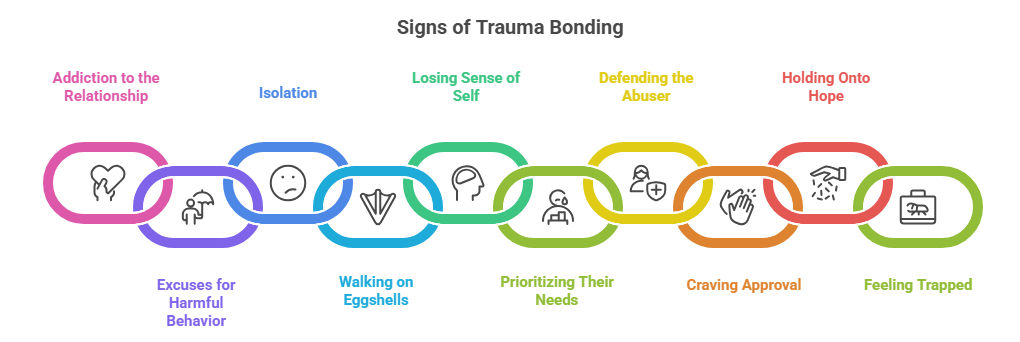
- Feeling Addicted to the Relationship
- Making Excuses for Harmful Behavior
- Isolating From Friends and Family
- Walking on Eggshells Constantly
- Losing Your Sense of Self
- Prioritizing Their Needs Over Your Own
- Defending the Person Who Hurts You
- Craving Their Approval
- Holding Onto Hope for the “Good Times”
- Feeling Trapped and Powerless
1. Feeling Addicted to the Relationship
One of the first signs of a trauma bond is feeling emotionally hooked. You may want to leave but repeatedly return, feeling powerless to walk away. Over time, this addiction reinforces the cycle of trauma bonding.
2. Making Excuses for Harmful Behavior
Do you find yourself yelling, manipulation, or causing emotional harm? Constantly making excuses is another trauma-bonding sign. You might tell yourself, “They didn’t mean it” or “It’s not that bad”. While this helps you survive the relationship, it also keeps the unhealthy dynamic alive.
3. Isolating From Friends and Family
A trauma bond relationship often leads to isolation. You may pull away from supportive friends or family because you fear judgment, or the partner may subtly discourage connections. Losing external support reinforces dependency and deepens the bond, making it harder to see the situation clearly.
4. Walking on Eggshells Constantly
If you find yourself monitoring every tone, expression, or mood to avoid conflict, this is a common sign of a trauma bond. Relief when things are calm often replaces genuine happiness, signaling that your emotional system is in survival mode. Recognizing this is crucial to reclaiming your sense of safety.
5. Losing Your Sense of Self
In long-term trauma bonds, it’s common to lose touch with personal goals, values, or preferences. Adults who experienced childhood abuse may especially recognize this pattern. Your identity becomes defined by the relationship instead of your own inner personality. Therapy and structured support help reconnect you with your authentic self.
6. Prioritizing Their Needs Over Your Own
Putting the other person first, repeatedly sacrificing your needs to maintain peace, is a core trauma bonding sign. This pattern can lead to exhaustion, shame, and resentment. Addressing it often starts with learning self-compassion and boundaries. Support through relationship counseling can help restore balance in adult relationships.
7. Defending the Person Who Hurts You
You may find yourself defending the partner or minimizing harmful behaviors when others raise concerns. This defensive stance is another of the 10 signs of trauma bonding and is rooted in fear of abandonment or loss. With guidance, you can begin separating your sense of loyalty from unhealthy patterns.
8. Craving Their Approval
Approval or validation from the partner may feel essential to emotional stability. Withdrawing affection often triggers panic, shame, or despair. Recognizing this pattern is a step toward healing. Professional support, like trauma therapy, helps address both the attachment and the underlying trauma safely.
9. Holding Onto Hope for the “Good Times.”
Many trauma bonds begin with intensity. Holding onto the hope that the early “good times” will return is a subtle but one of the powerful trauma-bonding signs. Awareness of this cycle helps you stop chasing fantasy and reclaim emotional clarity.
10. Feeling Trapped and Powerless
Finally, a sense of being unable to leave is also among the 10 signs of trauma bonding. You may feel responsible for fixing the other person or believe leaving is impossible. For adults with DID (Dissociative Identity Disorder) or complex trauma histories, this sense can feel overwhelming. Trauma-informed therapy can help untangle these feelings gradually and safely.
How Trauma Bonding Affects Mental Health
Long-term trauma bonding often leads to depression, chronic shame, and self-blame. You may judge yourself for staying, instead of recognizing the adaptive survival patterns your nervous system has learned. Support through approaches like depression therapy can help restore self-worth while addressing the emotional toll of prolonged trauma.
FAQs
How do you break from a trauma bond relationship?
Breaking a trauma-bonded relationship involves recognition, trauma-informed therapy, strong boundaries (sometimes including no contact), and rebuilding a support network. Healing focuses on nervous system regulation, not forcing immediate separation.
At what age does narcissism peak?
Narcissistic traits often peak in late adolescence and young adulthood, typically in the late teens and twenties.
What can be mistaken for narcissism?
Complex PTSD, ADHD, Autism Spectrum Disorder, depression, and dissociative adaptations can resemble narcissistic behaviors.
Can childhood neglect lead to trauma bonding?
Yes, experiences of childhood abuse or neglect can create attachment patterns that increase vulnerability to trauma bonding in adult relationships.
A Final Word on Healing
Recognizing the 10 signs of trauma bonding is not about blame but about clarity and compassion for yourself. It begins with noticing the patterns, setting boundaries, and reconnecting with your own needs and values.
Over the past 30 years of working with adults who have experienced childhood abuse or live with DID, I have seen how compassionate, trauma-informed support can help rebuild trust in themselves. If you feel ready to explore these patterns and start healing, you can learn more about my approach at Arlene Brewster, PhD, and take steps toward lasting change.
