
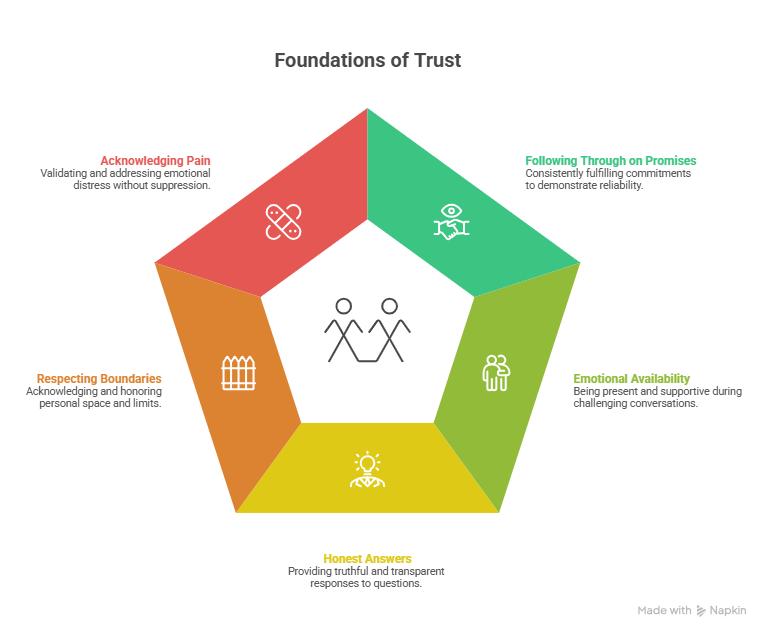
In most relationships, trust erodes through repeated disappointments, emotional distance, dishonesty, or one deeply painful moment that changes the way you see each other.
If you are wondering how to regain trust in a relationship, you are likely carrying a mix of confusion, grief, anger, and hope at the same time.
In my work with couples, I see people rush toward forgiveness before they have actually rebuilt emotional safety. They try to “move on” because they are afraid the relationship will not survive if they slow down. But trust is not restored through pressure. It grows when two people are willing to tolerate honesty, accountability, and vulnerability over time.
One of the most overlooked truths about healing after betrayal is that trust is not just about believing your partner again. It is also about learning whether you can trust your own emotional instincts after your reality has been shaken.
Why Emotional Safety Matters More Than Quick Reassurance
Many couples focus on reassurance after a rupture.
They say things like:
- “I promise it will never happen again.”
- “You just need to trust me.”
- “I already apologized.”
While reassurance can help temporarily, it does not rebuild the nervous system’s sense of safety.
When trust has been damaged, your body becomes alert to inconsistency. You may overanalyze tone changes, notice emotional withdrawal more quickly, or feel anxious when communication patterns shift. This is especially true if you already carry unresolved attachment wounds or childhood trauma.
In my couples therapy sessions, I help partners understand that rebuilding trust requires emotional steadiness, not perfection.
How to Regain Trust in a Relationship Through Consistent Actions
Consistency is one of the clearest forms of emotional repair.
If your partner says they will call, they call. If they say they will be transparent, they follow through without defensiveness. These smaller moments matter because your nervous system is looking for evidence that emotional unpredictability is decreasing.
I encourage couples to focus less on dramatic gestures and more on repeatable behaviors.
Small Actions That Rebuild Trust Over Time
| Action | Why it matters |
| Following through on promises | Rebuilds reliability |
| Being emotionally available during difficult conversations | Creates emotional safety |
| Answering questions honestly | Reduces fear and confusion |
| Respecting boundaries without resentment | Restores emotional stability |
| Acknowledging pain without suppressing it | Helps the injured partner feel seen |
These actions may seem simple, but repeated consistency creates emotional predictability, which is essential if you want to learn how to regain trust in a relationship in a healthy way.
The Hidden Role of Shame After Betrayal
The partner who broke trust carries intense shame, even if they do not openly express it. Shame can lead to defensiveness, emotional withdrawal, irritability, or attempts to “fix things quickly” so the discomfort disappears.
The problem is that shame-focused reactions usually block genuine accountability.
Instead of saying:
- “I understand why this hurt you.”
The conversation becomes:
- “I already said sorry.”
- “You keep bringing it up.”
- “Nothing I do is enough.”
When this happens, the injured partner feels emotionally abandoned all over again.
Part of my work in marital and couples therapy involves helping both partners stay emotionally present without collapsing into blame or shame.
How Can You Regain Trust in a Relationship Without Forcing Forgiveness?
One of the healthiest things you can do is stop measuring healing by how quickly forgiveness happens.
Forgiveness is not the first step. Emotional honesty is.
I remind my clients that trust returns gradually when:
- Your pain is acknowledged consistently.
- Defensive communication decreases.
- Transparency becomes normal rather than performative.
- Emotional responsiveness improves.
- Both partners participate in the healing process.
If only one person is doing the emotional work, the relationship usually stays stuck in imbalance.
Reestablishing Trust After Emotional Disconnection
Not every betrayal involves infidelity.
Sometimes trust erodes through emotional absence.
A partner may become unavailable, dismissive, secretive, or chronically disengaged over time. Emotional loneliness inside a relationship can damage trust just as deeply as one major event.
One important question I encourage couples to explore is:
“What emotional experience has been missing between us?”
Often the answer involves:
- Feeling emotionally unseen.
- Lack of emotional responsiveness.
- Fear of vulnerability.
- Avoidance of difficult conversations.
- Chronic invalidation.
Repair begins when both people stop arguing only about behaviors and start understanding the emotional meaning underneath them.
Figuring Out How to Regain Trust in a Relationship Also Means Rebuilding Self-Trust
After betrayal, you may stop trusting your own judgment.
You might think:
- “How did I miss this?”
- “Why did I ignore the signs?”
- “Can I trust myself again?”
Healing is not only about deciding whether to trust your partner. It is also about reconnecting with your own emotional clarity.
That process usually involves:
- Listening to your emotional reactions without judgment.
- Setting healthier boundaries.
- Communicating needs more directly.
- Learning to tolerate difficult conversations without shutting down.
- Recognizing patterns that no longer feel emotionally safe.
Conclusion
If you are trying to understand how to regain trust in a relationship, remember that real healing rarely happens through pressure, perfection, or forced positivity.
Trust returns slowly through emotional honesty, consistency, accountability, and the willingness to stay present during uncomfortable conversations.
You do not have to navigate that process alone. As an IFS therapist licensed in both Maine and New Hampshire, I work with individuals and couples who want to repair emotional disconnection, understand deeper relational patterns, and create relationships that feel safer and more emotionally grounded.
If you are ready to start restoring trust with greater clarity and support, reach out today to schedule an online therapy session with me.
FAQs
1. How long does it take to regain trust in a relationship?
There is no fixed timeline. Trust usually rebuilds gradually through consistent emotional safety, accountability, and communication over time.
2. How can you regain trust in a relationship after repeated dishonesty?
Repeated dishonesty often requires deeper emotional repair, not just apologies. Transparency, boundaries, and therapy can help rebuild stability.
3. Can relationships survive after trust is broken?
Yes, many relationships can heal after betrayal if both partners are willing to participate honestly in the repair process.
4. Why do I still feel anxious even after my partner changed?
Your nervous system may still be responding to past emotional pain. Healing often takes longer than behavioral change alone.
5. Is couples therapy helpful when rebuilding trust?
Yes. Therapy can help both partners communicate more openly, understand emotional triggers, and rebuild connection in a healthier way.
