
Essential Coping Skills for Anxiety and Stress Relief
It can be hard to believe relief is possible when your thoughts feel relentless, and your body won’t seem to settle. The bright side is that coping skills for anxiety are not about forcing yourself to “calm down.” They are about learning how to gently support your nervous system so you can feel more grounded, present, and in control.
As a therapist, I often remind my clients that anxiety is not a flaw in their personality. It is your system trying to protect you. When we approach it with curiosity instead of criticism, meaningful change becomes possible.
Below, I will walk you through practical, compassionate tools you can begin using right away, along with deeper therapeutic approaches that can create lasting relief.
What Your Anxiety Is Trying to Tell You
Before jumping into techniques, it helps to understand that anxiety is a signal. It may show up as racing thoughts, tightness in your chest, irritability, difficulty sleeping, or a sense of impending doom. Rather than treating these experiences as enemies, I encourage you to ask, “What is my body trying to communicate?”
Generally, anxiety is connected to unmet needs, unresolved experiences, or internal pressure to perform, please, or stay in control. When you slow down long enough to listen, you may notice that beneath anxiety is fear, grief, or even exhaustion.
Effective coping skills for anxiety start with acknowledging that your reaction makes sense in the context of your life. Validation is not indulgence. It is the foundation for healing.
Grounding Techniques That Help You Feel Safer in the Present Moment
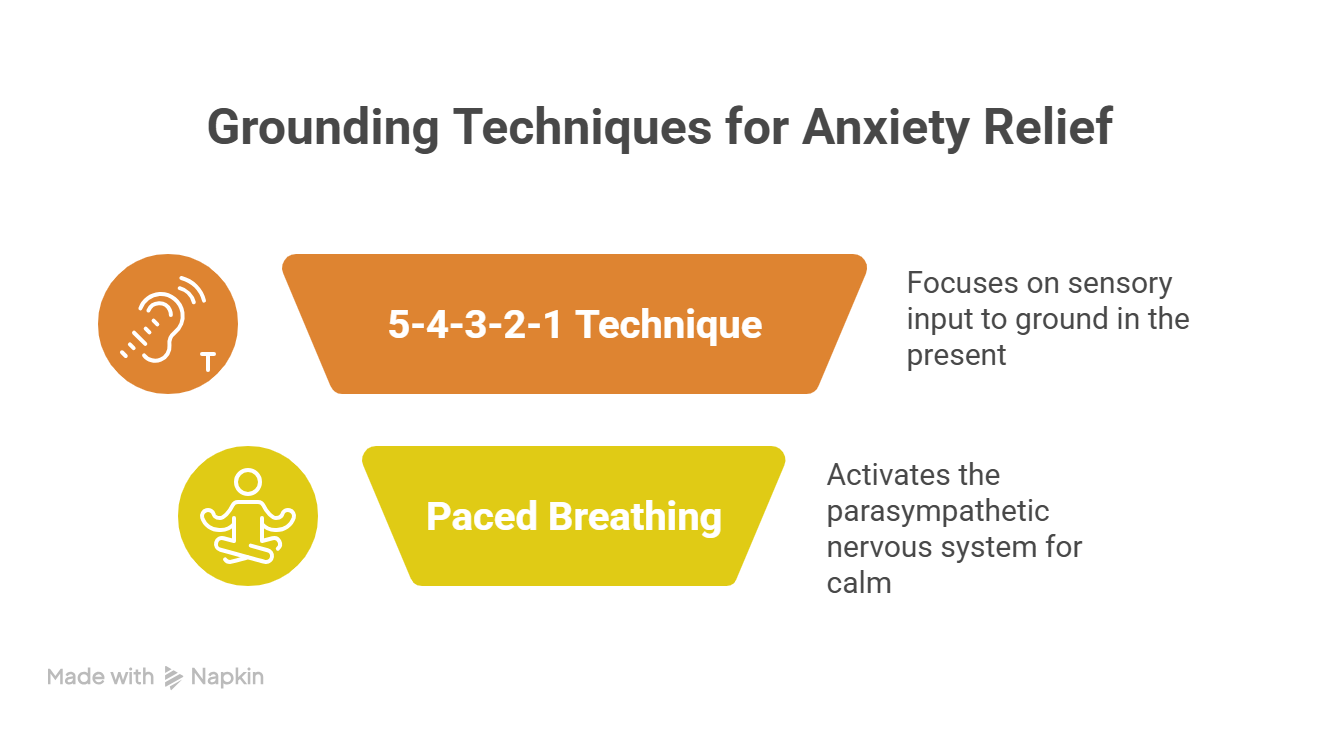
Grounding Techniques
When anxiety spikes, your nervous system shifts into survival mode. Grounding helps signal to your body that you are safe right now.
You might try the 5-4-3-2-1 technique. Look around and name five things you see, four things you feel, three things you hear, two things you smell, and one thing you taste. This pulls your focus out of catastrophic thoughts and back into your physical environment.
Another powerful tool is paced breathing. Inhale slowly for four counts, hold for four, and exhale for six. A longer exhale helps activate the parasympathetic nervous system, which promotes calm.
If anxiety feels overwhelming or persistent, working with a therapist who is experienced in anxiety treatment can help you tailor grounding practices to your unique triggers and history.
Using Internal Family Systems to Develop Coping Skills for Anxiety
One approach I use in my work is Internal Family Systems (IFS). Instead of seeing anxiety as something to eliminate, IFS views it as a “part” of you that has taken on a protective role.
For example, you may have a hyper-vigilant part that scans for danger or a perfectionist part that pushes you to avoid mistakes. These parts are not trying to sabotage you. They are trying to keep you safe in the only ways they know how.
When you learn to turn toward these anxious parts with curiosity, you can begin to unburden them. You might internally ask, “What are you afraid would happen if you didn’t worry so much?”
This compassionate dialogue builds internal trust. Over time, anxiety-related coping techniques become less about managing symptoms and more about creating harmony within your internal system.
Creating a Daily Rhythm That Supports Emotional Regulation
Anxiety intensifies when your body is depleted or overstimulated. Establishing a predictable rhythm in your day can significantly reduce stress.
Consider these areas:
| Area of Focus | Supportive Practice | Why It Helps |
| Sleep | Consistent bedtime routine | Regulates the nervous system |
| Nutrition | Balanced meals with protein | Stabilizes blood sugar |
| Movement | Gentle daily activity | Releases stored tension |
| Boundaries | Limiting overcommitment | Reduces overwhelm |
| Digital Input | Scheduled screen breaks | Decreases mental noise |
You do not have to overhaul your life overnight. Small, consistent shifts create sustainable change.
Reframing the Thoughts That Fuel Your Stress
Anxiety is amplified by cognitive distortions such as catastrophizing, mind reading, or all-or-nothing thinking. You may notice thoughts like, “If I make one mistake, everything will fall apart.”
Instead of arguing with your thoughts, try gently questioning them. Ask yourself:
- What evidence supports this belief?
- What evidence challenges it?
- Is there a more balanced perspective?
You are not trying to force positivity. You are expanding your thinking so it is less rigid and fear-driven.
Over time, this mental flexibility becomes one of your most powerful coping skills for anxiety, allowing you to respond rather than react.
Learning to Tolerate Discomfort Without Escalation
One overlooked skill is distress tolerance. Anxiety can feel urgent, which leads you to seek immediate relief through avoidance, reassurance, or over-preparation.
Instead, try experimenting with staying present with mild discomfort for short periods. Notice the sensations in your body, rate your anxiety from 1 to 10, and watch how it rises and falls like a wave.
This practice gives you confidence in your ability to survive difficult emotions. You begin to realize that anxiety is uncomfortable but not dangerous.
As your tolerance grows, your reliance on avoidance decreases, improving your overall resilience.
Last Words
Anxiety does not define you. It is a response pattern that can be understood, softened, and transformed. When you approach yourself with curiosity, build practical regulation skills, and address underlying wounds, meaningful change becomes possible.
Are you ready to shift from coping with stress to actually living with more ease and joy? I invite you to connect with me. Together, we can develop personalized coping skills for anxiety that help you feel steady, empowered, and more at home within yourself.
FAQs
- What are the fastest ways to handle anxiety during a panic spike?
Grounding exercises, paced breathing, and adjusting to your physical environment can quickly reduce nervous system activation. These tools help signal safety to your body.
- Can coping skills completely eliminate anxiety?
The goal is not to eliminate anxiety but to manage it effectively and reduce its intensity. With consistent practice and therapeutic support, symptoms become much more manageable.
- How do I know if my anxiety is trauma-related?
If your anxiety feels constant, intense, or triggered by reminders of past experiences, trauma may be a contributing factor. A trauma-informed therapist can help you explore this safely.
- How often should I practice coping skills?
Daily practice builds familiarity and resilience. Even five minutes a day of intentional breathing or mindfulness can make a difference.
- Is therapy necessary if I already use self-help tools?
Self-help tools are valuable, but therapy can help you understand deeper patterns and personalize strategies. Many people find that combining both approaches leads to stronger and more lasting results.
